Now he stood beside me as a seasoned partner, defending the dignity of the life we had forged through sweat and sacrifice.
My mother swung her attention back to me, raising her voice in desperation.
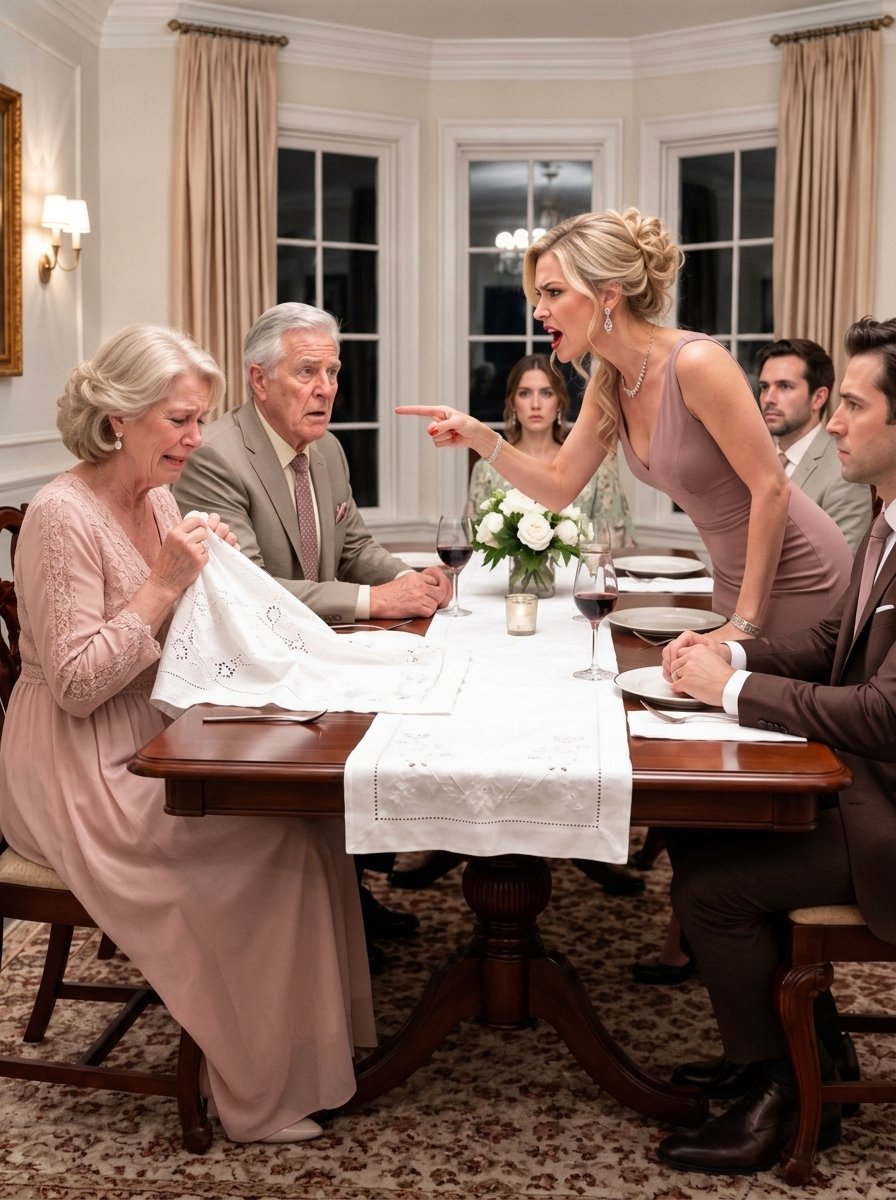
“Lauren, tell your husband to mind his own business, because we paid for your private schooling, bought your clothes, and gave you every advantage, so the very least you can do is support us when we are facing hardship,” she demanded.
“And what exact kind of support are you expecting from us, Mother?” I asked.
“A decent place to live with our family!” she declared.
“For how long, exactly?” I countered.
“For as long as it takes us to feel comfortable again,” she replied plainly.
“And who do you expect to pay for your groceries, your medical bills, your utilities, and your personal debts?” I asked.
My mother threw her hands into the air, exclaiming, “With the millions you have sitting in accounts, taking care of two elderly parents will not make a dent in your lifestyle!”
“You expect us to absorb your entire life while treating us like distant strangers,” I pointed out with a heavy heart.
“Stop interrogating us like we are unwanted beggars on the street!” she shouted.
“Strangers are precisely what you chose to be when you walked out of my life fourteen years ago, Mom,” I said, my voice cracking slightly under the emotional weight.
My father lifted his head, his eyes brimming with sorrow.
“Lauren, please listen, because you deserve to know the whole truth,” he said softly.
“Arturo, do not start airing our personal business,” my mother warned, using his full name with sharp agitation.
My father ignored her completely, determined to speak after years of swallowing his words.
“Two years ago, I pulled almost all of our retirement savings out of safe funds to invest in a trendy restaurant franchise, hoping to dramatically boost our cash flow in our golden years,” he explained.
“Why did you never mention any of this to me before?” I asked with a furrowed brow.
“The franchise collapsed completely, and in a panic, we poured the rest of our emergency funds into trying to keep the doors open before selling our home in Omaha at a massive loss just to cover vendor lawsuits,” he confessed.
My mother stared out toward the street, refusing to look at any of us.
“We still receive our monthly social security and a tiny corporate pension, which means we can afford a modest apartment, but we can no longer afford the luxurious lifestyle we used to show off,” my father continued.
“How much total debt are you currently carrying?” I asked, bracing for the number.
“Around one hundred and twenty thousand dollars across high interest personal loans and credit cards, and the collectors have been calling daily,” he answered quietly.
A cold chill ran down my spine, recognizing that while it was a substantial hole, moving into our guest suites would never cure their deep financial mismanagement.
“Why didn’t you just tell me the real truth over the phone instead of showing up with luggage?” I asked.
“Because we were terrified, humiliated, and ashamed of our failure,” my father whispered.
“Speak for yourself, Walter, because children are supposed to rescue their parents, and our daughter can fix this entire problem with a stroke of a pen without sacrificing a thing!” my mother yelled.
The ugly reality clicked into focus with crystal clarity.
My mother had not reached out out of maternal love or regret over lost time; she had seen our success in a magazine, calculated our bank balance, and tried to commandeer our wealth to preserve her social standing.
“Mom, what you need is a certified debt counselor and a budget, not a luxury five bedroom house in our neighborhood,” I told her plainly.
“What we need is for our only child to show some basic human compassion!” she shouted back.
“Having compassion does not mean allowing you to bulldoze our boundaries and demand our hard earned savings,” I responded.
My father gave a slow, mournful nod, looking directly at his wife.
“Lauren is completely right, Constance,” he said firmly.
My mother looked at him as if he had lost his mind, gasping, “Are you seriously betraying me to side with them right now?”
“This is not about choosing sides, because you lied to me about being invited here, and I was too much of a coward to pick up the phone and verify it with my own daughter,” he said, his voice trembling with genuine regret.
“Just like you stayed silent fourteen years ago when she needed you most,” I added softly.
My father turned his full attention toward Wyatt, bowing his head slightly.
“Wyatt, I owe you a sincere, long overdue apology,” he said.
Wyatt remained quiet, listening with open ears.
“When Lauren told us she was going to marry you, I convinced myself you were entirely incapable of providing her with a secure life, seeing only your physical injury and your thin wallet while deciding you were inferior,” my father admitted.
He paused to swallow the lump in his throat before finishing his thought.
“I was completely wrong about you, son, and you have proven to be twice the man I ever was,” he said with absolute humility.
My mother made a disgusted sound, rolling her eyes, “Oh wonderful, now we are painting ourselves as horrible villains.”
“No, Constance, I am simply owning up to my own terrible choices instead of blaming innocent people for our misery,” my father countered with newfound spine.
For the first time in my life, I saw the principled man my father used to be in the corporate world, rather than the quiet husband who always yielded to my mother’s harsh demands.
“Dad, do you honestly believe I should unpack your bags and let you live here just because you showed up unannounced?” I asked him.
“No, sweetheart, you have zero obligation to clean up our mess,” he replied with sad eyes.
My mother opened her mouth to protest, but my father cut her off before she could utter a single syllable.
“We have enough pension money to secure a safe, modest one bedroom rental in town, and we have no right to demand that you pay the price for our foolish gambles,” he told her.
“I am more than willing to connect you with our financial planner to help negotiate your debt settlements, and I will gladly help you research affordable rental options, but you will not be moving into this house,” I declared firmly.
My mother took an aggressive step toward me, her eyes wide with outrage.
“What about our mounting debt balances?” she pressed.
“Those debts belong entirely to you and Dad, and you will have to work through them responsibly,” I replied.
“You have millions in equity, Lauren!” she shrieked.
“Our business capital is not an early inheritance for parents who discarded me the moment I needed their blessing,” I answered without backing down.
My mother stared at me as though I had struck her across the face, utterly stunned that her control had shattered.
“I never dreamed my own flesh and blood could treat her mother with such absolute coldness,” she hissed.
A deep wave of sorrow washed over me, remembering the young woman who had spent years craving a single word of maternal approval.
Yet the mature woman who had stood side by side with Wyatt through poverty and triumph knew that giving in would only invite toxicity back into our home.
“I never dreamed my own mother could abandon her daughter for fourteen years over pure social vanity either, but I learned to survive that heartbreak every single day,” I replied.
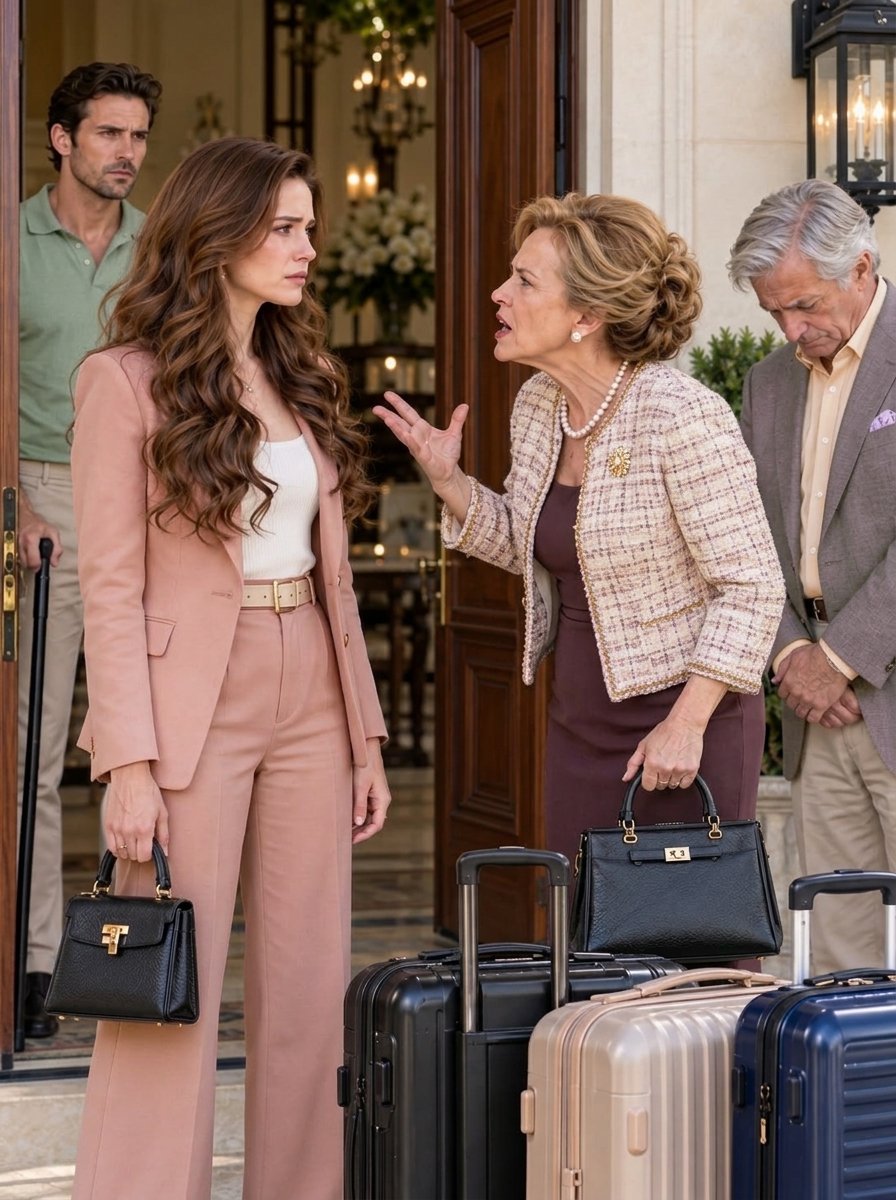
My father picked up two of the heavy suitcases from the porch, turning toward the driveway.
“Come along, Constance, we are leaving right now,” he stated.
“I am not taking one step off this porch until Lauren comes to her senses!” she argued, refusing to budge.
My father stopped and looked back at her with absolute finality.
“Then you can find your own ride to a hotel, because I refuse to participate in humiliating our daughter for another second,” he said.
My mother froze, realizing her husband was no longer under her thumb.
With a sharp huff of indignation, she snatched her handbag, stomped down the stone steps, and climbed into the passenger seat of their rental car.
Before pulling the door shut, she leaned out the window and shouted, “One day you are going to desperately need your parents, Lauren Bennett!”
I looked at her from the threshold of my home, feeling a profound sense of closure.
“I needed you every single day for fourteen years, Mom, and that was the real tragedy,” I called back softly.
My father promised me he had sufficient funds for a temporary motel while they secured a lease, before turning to Wyatt and offering a firm, respectful handshake.
“Thank you for taking care of my daughter when I failed to do so, Wyatt,” he said.
“Take care of yourself, Walter,” Wyatt answered warmly.
As the taillights of their car faded down the tree lined avenue, I gently pulled the front door shut and locked the deadbolt.
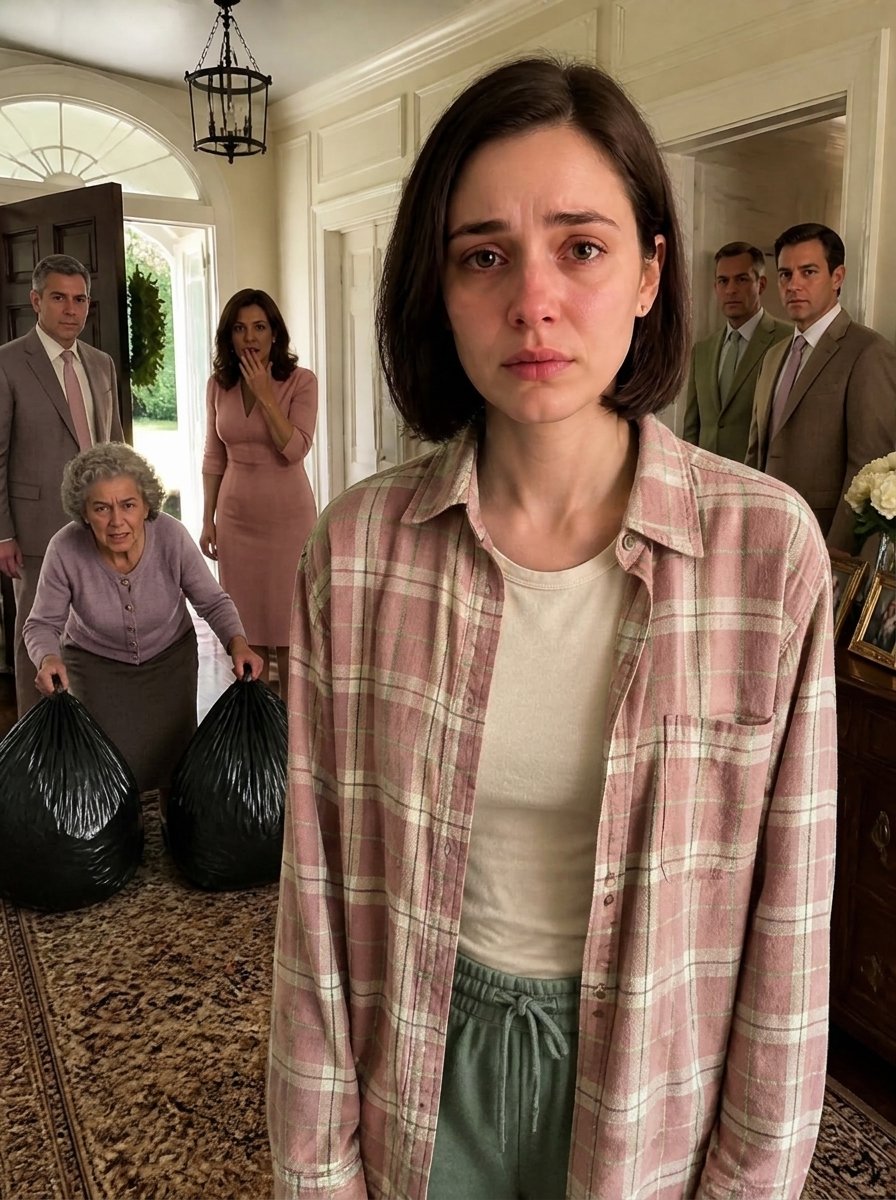
A heavy sob tore through my chest, and I collapsed against the hallway wall as tears streamed down my face.
Wyatt set his cane down against the console table, wrapped his strong arms around me, and pulled me tight against his chest.
“I thought making the right choice would make me feel victorious, but it just hurts so much,” I wept into his shirt.
“Setting healthy boundaries does not erase the grief of what should have been, Lauren,” he whispered softly.
“I just wanted them to show up because they missed their daughter, not because they saw dollar signs attached to our names,” I admitted.
“I know, my love, I know,” Wyatt said, gently stroking my hair as we stood together in the quiet entryway.
That evening, we prepared a simple meal in our kitchen, sitting across from each other in the peaceful sanctuary we had built with our own hands.
There was no grand celebration or lingering regret, just the quiet certainty that we had protected our marriage from being exploited.
A week later, a thick manila envelope arrived in our mailbox containing three handwritten pages from my father.
He shared that they had secured a small, furnished garden apartment on the south side of town and were working closely with a credit specialist to liquidate their remaining nonessential assets.
Yet his financial progress was not the core of the message, as his pen revealed a heart that was finally waking up to the truth.
“Lauren, I spent fourteen miserable years telling myself that keeping the peace with your mother was the honorable thing to do, but I now see that my silence was nothing more than pure cowardice,” he wrote.
Tears blurred my vision as I read his honest words.
“I watched your mother insult the honorable man you chose to love, and I sat like a stone because I was terrified of an argument at home,” the letter continued.
The final paragraph pierced straight through my heart.
“I failed you not because I was blind to the right path, but because I lacked the moral courage to stand up and walk it, and if God granted me the chance to relive one single day, I would proudly walk you down that aisle to marry Wyatt,” he concluded.
My father was not begging for a handout or asking for a room, choosing instead to shoulder the full weight of his past failures.
I called his mobile phone two days later, inviting him to join me at a quiet diner for breakfast.
The conversation felt slightly clumsy at the start, but for the first time in my adult life, he did not inquire about profit margins or commercial real estate.
Instead, he asked me to tell him everything about the years he had missed, listening with undivided attention as I recounted our early struggles, Wyatt’s persistence, and the loyal friends who carried us through our darkest hours.
When I finished speaking, my father wiped a tear from his cheek and smiled softly.
“You and Wyatt built a magnificent life together, Lauren, and it breaks my heart that I missed witnessing almost all of it,” he said.
“Yes, Dad, you missed a great deal of it,” I replied, refusing to sugarcoat the truth.
“I only hope you will let me be present for whatever chapters we have left,” he asked with genuine humility.
I did not promise instant trust, but I agreed to leave the door open for an honest connection.
Over the following months, my father and I met regularly for coffee, and true to his word, he never asked for a penny of financial assistance.
He lived frugally within his pension, paid his debt obligations on time, and completely abandoned the superficial pretenses that had defined his earlier life.
Eventually, he met privately with Wyatt, offering a heartfelt, tearful apology that my husband accepted with gracious warmth.
Rebuilding a bridge with my mother took a much longer road.
For months, she complained to distant relatives that her wealthy daughter had cast her aside in a tiny apartment, trying to paint herself as a victim of our cruelty.
Yet without high society parties to distract her, the reality of her isolated life slowly began to sink into her conscience.
They sold their second vehicle, canceled their luxury memberships, and watched their fair weather friends vanish the moment the expensive dinner invitations dried up.
One brisk afternoon in mid October, a delicate lavender envelope arrived in our mailbox, addressed in my mother’s unmistakable cursive handwriting.
“Lauren, for over a decade, I convinced myself that my harshness was driven by a mother’s desire to protect your future,” the letter began.
I braced myself for another round of excuses, but the very next line took my breath away.
“I was completely wrong, my sweet girl,” she wrote.
My mother went on to confess that she had judged Wyatt solely by his disability and military pension because she was terrified of what her country club acquaintances would whisper behind her back.
Then came the sentence I had yearned to hear since I was a little girl.
“I conditioned my maternal love on your absolute obedience to my vanity, which is a terrible sin for any mother to commit against her child, and I beg for your forgiveness,” she stated.
I wept openly on my porch, knowing that while an apology could not undo fourteen years of silence, it proved that the woman who raised me had finally seen the truth.
We arranged to meet at a quiet tea shop downtown, where she looked Wyatt directly in the eyes and offered a sincere, unprompted apology for every cruel word she had ever uttered about his service and his health.
Wyatt accepted her words with his trademark grace, though we both made it clear that rebuilding true family intimacy would require patience and consistency over time.
When Christmas arrived that December, we extended an invitation for my parents to join us for holiday dinner in our home.
Mrs. Mabel joined us at the head of the table, bringing her famous homemade lemon meringue pie to celebrate the season.
My mother walked through our front door carrying a steaming casserole dish she had prepared entirely by herself, while my father presented a simple bouquet of fresh winter flowers.
There were still awkward pauses and moments of quiet tension as we navigated our new reality, but a small moment occurred in the dining room that forever shifted our family dynamic.
Wyatt was carefully balancing a heavy roast platter with one hand while steadying his cane with the other.
My mother stepped forward immediately, offering a gentle smile as she reached out.
“Please let me carry that to the table for you, Wyatt,” she offered softly.
“I would really appreciate that, Constance, thank you,” Wyatt replied, handing over the platter.
It was a tiny, everyday gesture, yet it carried the weight of a miracle for a woman who had once branded him a useless burden.
After we finished dessert, my mother found me standing alone in the kitchen, washing the crystal glasses by the sink.
“Lauren, I spent so many years thinking I was guarding your happiness, but I was really just guarding my own foolish pride, and it cost me fourteen precious years with you,” she whispered, her eyes shining with tears.
“We can never get those fourteen years back, Mom,” I said softly, looking at her weathered face.
“I know that, darling,” she answered with a heavy nod.
I reached out and gently covered her trembling hand with mine.
“All that matters now is the kind of mother you choose to be moving forward,” I told her.
She squeezed my fingers tightly, whispering, “I promise to spend the rest of my days learning how to love you properly.”
When the evening came to a close, my parents walked to their car with smiles on their faces, without leaving any luggage behind, asking for checks, or demanding favors.
They simply hugged us tight and promised to call us on New Year’s Day.
Wyatt stood beside me on the front porch, watching their car drive away into the cool winter night.
“Do you think they will truly be all right, Lauren?” he asked, wrapping an arm around my waist.
“Yes, Wyatt, I really think they will,” I answered, leaning into his side.
He turned to look down at me with those steady, loving eyes that had captured my heart years ago.
“And what about us, my love?” he asked softly.
I looked at the silver strands gracing his temples, the sturdy cane resting near his hand, and the gentle smile of the brave man I had chosen when the entire world told me to walk away.
“We are better than we have ever been,” I told him, resting my head against his shoulder.
Fourteen years ago, my parents looked at a wounded soldier and saw an unacceptable flaw, while my heart recognized a man worthy of endless love and respect.
Time and perseverance proved that true love always outlasts superficial pride.
Our greatest achievement was never the balance in our corporate accounts, our thriving business, or our beautiful five bedroom house.
Our greatest victory was finding the courage to stand firm in our dignity when our own family tried to tear us down, refusing to measure a person’s worth by their physical limitations or their bank account.
I learned that offering true forgiveness does not mean handing toxic people a license to mistreat you again, and that authentic healing only begins when someone takes honest ownership of their harm without expecting an immediate reward.
It required fourteen painful years for my mother to abandon her superficial vanity, and my father had to lose his financial security before finding the strength to speak the truth.
Most importantly, I had to shut the door on their demands so that we could one day welcome them back into our lives with genuine peace and mutual respect.
A real family is never defined by what it demands to take, but by the loyalty, honor, and unconditional love it is willing to give.
If you were ever forced to choose between pleasing a demanding family or standing beside the loyal partner who carried you through your darkest valleys, which path would you take?
THE END.