PART 2
The door swung open into a narrow hallway I barely recognized, having spent so many months seeing it only through the crack beneath the attic door. My legs shook with every step, weeks of malnourishment and whatever they’d been forcing into my system making even standing upright feel like an accomplishment.
I could still hear them arguing somewhere on the lower floor, their voices sharp enough to cover the sound of my footsteps if I moved carefully. I didn’t look for a phone to call for help. I didn’t trust myself to find one fast enough, or to explain everything clearly enough, not yet, not while I was still inside that house.
I went for the back door instead.
The night air hit me like something physical, cold and clean in a way I’d forgotten existed after months of stale attic heat. I didn’t run, not at first, my body simply couldn’t. I moved as fast as it would let me, keeping close to the tree line at the edge of the property, putting distance between myself and the house before either of them realized the attic was empty.
Three streets away, a gas station sign glowed against the dark, and I stumbled toward it like it was the only solid thing left in the world.
The clerk behind the counter, a young man who couldn’t have been older than twenty, looked up and immediately went still.
“Ma’am, are you okay? Do you need me to call someone?”
“Police,” I managed. “Please. And an ambulance. I’m pregnant, and I need help.”
He didn’t hesitate, already reaching for the phone behind the counter while pulling a chair out for me to sit down. “Stay with me, okay? Help’s coming.”
I sat there clutching the smuggled phone against my chest like it was the only thing keeping me tethered to the moment, months of careful, silent documentation finally about to matter to someone other than myself.
The paramedics arrived first, and the moment they saw the state of me, malnourished, bruised, clearly showing signs of prolonged neglect and something worse they couldn’t yet name, their calm professional demeanor shifted into something more urgent. They got me onto oxygen, started monitoring the baby immediately, and one of them stayed close, asking gentle, careful questions while the others worked.
“Can you tell me your name?”
“Renata,” I said. “Renata Solis.”
“Renata, we’re going to take good care of you and the baby. Is there anyone hurting you that we need to know about right now, tonight?”
I thought about the attic, the routine footsteps, the camera that never lowered even as I vomited blood onto a towel someone would later launder without comment.
“My husband,” I said. “And his mother. I have proof. It’s all on this phone. Please, don’t let them know I’m gone yet. Please.”
The paramedic exchanged a look with the police officer who’d arrived alongside them, and within minutes, my hospital transport was already moving while a second set of officers headed toward the address I’d given them, quiet, careful, moving fast enough to catch them before the arguing pair upstairs even realized their captive had found a door left unlocked.
At the hospital, once I was stable enough to speak clearly, a detective named Officer Delgado sat with me, gentle but thorough, while a SANE nurse conducted the necessary examination alongside the OB team monitoring my baby’s condition.
“The recordings,” I said, handing over the phone with hands that still wouldn’t stop shaking. “Every session. Dates, times, their voices. It’s all there.”
Delgado’s expression shifted as she reviewed even a few seconds of the footage, her professional composure tightening into something colder, more focused.
“Renata,” she said quietly, “this is going to matter. A lot. I need you to know that.”
For the first time in seven months, I let myself believe her.
PART 3
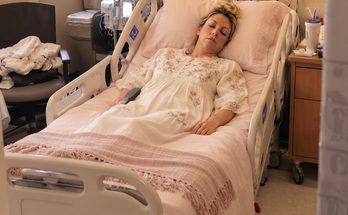
The arrests happened just after 2 a.m., less than three hours after I’d stumbled into that gas station. Officer Delgado came to update me personally once I was moved into a stable recovery room, my baby’s heartbeat still strong and steady on the monitor beside me despite everything.
“We took them into custody without incident,” she said. “Your husband tried to delete files off a laptop when officers arrived, but we’d already secured the property before he got the chance. Between what’s on his laptop and what’s on your phone, we have more than enough to move forward.”
“What was on the laptop?” I asked, though some part of me already dreaded the answer.
Delgado hesitated, choosing her words carefully. “A private streaming channel. Subscription-based. It appears your husband had been monetizing the recordings, Renata. There’s a paying audience that’s been watching this happen to you for months.”
I felt something in my chest go cold and still, colder than anything I’d felt in that attic, because somehow the idea of strangers paying to watch, week after week, felt like a violation layered on top of every other violation I’d already survived.
“How many people?” I whispered.
“We’re still working through the subscriber list,” she said. “It’s part of a larger investigation now, not just what happened to you personally, but the network of people who funded and consumed it. That’s going to take time, but I promise you, it’s being taken seriously at every level.”
Over the following days, as I recovered under close medical supervision, the full scope of the investigation began to surface. My husband, Marcus, and his mother, Diane, were charged with an extensive list of offenses, aggravated assault, unlawful imprisonment, administering a controlled substance without consent, and child endangerment given my pregnancy, with additional charges tied to the distribution of the recordings pending further review by federal investigators once the monetization scheme came to light.
A forensic toxicologist confirmed what I’d suspected but never had proof of during those long attic nights: they’d been administering a cocktail of substances, some prescription, some not, carefully calibrated, according to notes recovered from Diane’s phone, to keep me compliant without triggering a medical crisis severe enough to require outside intervention. The doctor reviewing my case called it, quietly, one of the more calculated and sustained cases of medical endangerment she’d encountered in her career.
My baby, remarkably, showed no signs of lasting harm from the ordeal, something the OB team monitored closely over the following weeks, careful, thorough check-ins that left me holding my breath every single time until they confirmed, again and again, that she was healthy and growing exactly as she should be.
I gave a full statement to Delgado once I was strong enough, walking through the recordings chronologically, filling in context the footage alone couldn’t capture, the isolation, the manipulation, the slow, deliberate escalation that had turned “taking care of me during my pregnancy” into seven months of filmed torment.
“Why didn’t you try to leave sooner?” Delgado asked gently, not as an accusation, but because she needed the full picture for the case.
“I didn’t have anywhere to go,” I said. “My family lives out of state, and Marcus made sure I lost contact with most of them early on. I didn’t have money, a working phone until I found the one I hid, or any proof anyone would believe over theirs. I needed enough evidence that no one could call it my word against theirs. That took time to build.”
“You built an extraordinary case,” Delgado said. “Most survivors don’t get the chance, or don’t survive long enough, to document something this thoroughly. What you did took remarkable courage.”
I didn’t feel courageous in that hospital bed, only exhausted, and hollowed out in ways I suspected would take years to fully understand. But something in her words settled quietly beside the exhaustion, a small, steady acknowledgment that everything I’d endured hadn’t been for nothing.
The trial took just over a year to reach its conclusion, delayed partly by the scope of the federal investigation into the streaming network that had grown around what happened to me in that attic. By the time it went to court, prosecutors weren’t just building a case about Marcus and Diane, they were part of a larger operation targeting the platform itself and dozens of paying subscribers who had funded months of documented abuse.
I testified twice, once during the state proceedings against Marcus and Diane directly, and once as part of the federal case connected to the distribution charges. Both times, I brought the same steadiness with me that had gotten me through seven months of quiet, careful documentation, because by then I understood that my calm, clear account mattered as much as the recordings themselves.
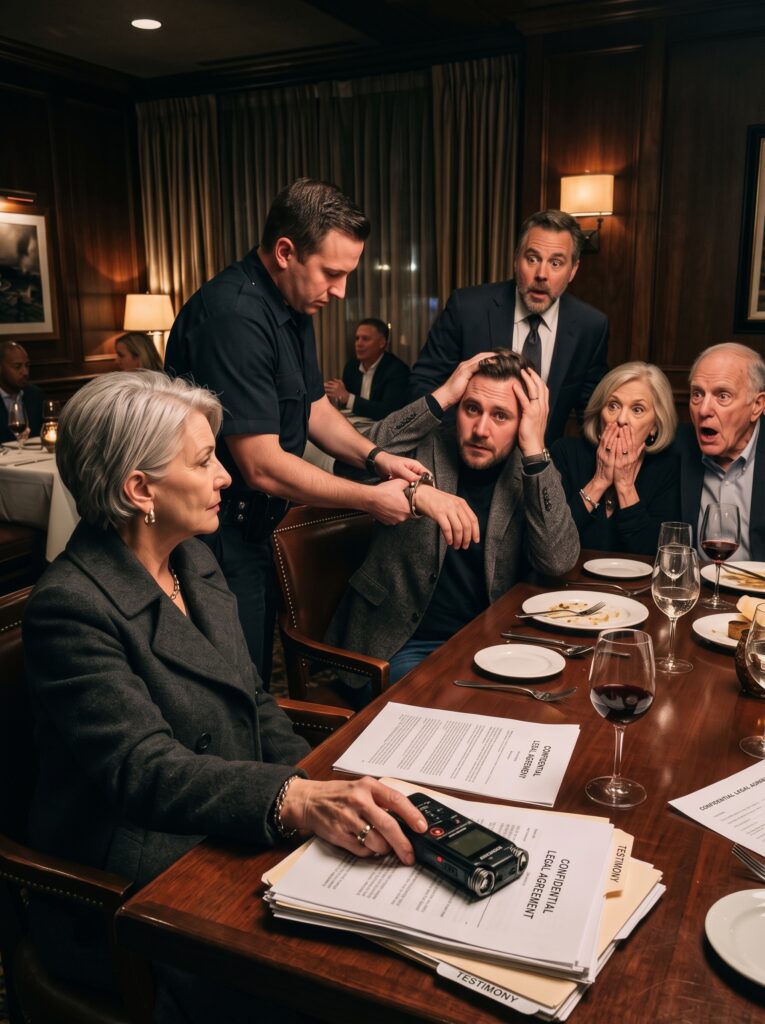
Marcus’s defense tried, predictably, to frame the recordings as consensual “content creation” that had simply “gotten out of hand,” an argument that fell apart entirely once the toxicology reports, the forced administration notes, and my own testimony about the isolation and control painted a picture no jury could reasonably interpret as consent. Diane’s attorney attempted a similar deflection, painting her as merely “assisting” her son rather than an active participant, an argument undermined by her own voice, captured clearly across dozens of recordings, directing the substances and the staging herself.
Both were convicted on nearly every count. Marcus received a sentence of twenty-eight years, accounting for the aggravated assault, unlawful imprisonment, and distribution charges tied to the monetized recordings. Diane received twenty-two years for her role in the sustained abuse and administration of controlled substances. The platform hosting the content was shut down entirely following the federal case, and several subscribers identified through the investigation faced their own separate charges for knowingly funding and consuming documented abuse.
I gave birth to my daughter three weeks before the state trial concluded, a healthy girl I named Wren, for the small, resilient birds that used to nest just outside the one small attic window I’d stared at for months, imagining a version of freedom I wasn’t sure I’d ever actually reach.
I moved to a small town two states away once the trials concluded, close enough to family who had reconnected with me the moment they learned what had actually happened, far enough that nothing about the new life Wren and I were building carried any physical reminder of the one I’d survived.
Recovery wasn’t linear. There were nights I woke certain I still heard footsteps on old floorboards, months of therapy working through trauma that didn’t resolve simply because the people responsible for it were now behind bars. But there were also mornings, more and more of them as time went on, where I woke to Wren’s laughter instead of dread, where the attic and everything in it felt less like a wound and more like a chapter I had, against every likelihood, actually survived to close.
A victim’s advocate I met during the trial process helped connect me with a small network of other survivors, women who understood, in a way most people couldn’t, the particular isolation of having been hurt by people the world assumed loved you. Slowly, carefully, that network became something like a second family, one built on honesty instead of performance, on genuine care instead of cruelty disguised as concern.
Two years after that night at the gas station, I sat on the porch of my new home, watching Wren toddle across the grass chasing a moth in the late afternoon light, and thought about the version of myself who had spent seven months learning the sound of footsteps well enough to know which kind of night was coming.
That version of me hadn’t survived by hoping someone would save her.
She’d survived by deciding, quietly and completely on her own, that she would be the one to save herself, and that whatever came after, her daughter would grow up knowing only the safety her mother had fought so hard, and so carefully, to finally secure for both of them.
THE AND.