Part 2
I expected the silence to feel like victory. Instead, it felt like the moment after you set down something heavy and your arms don’t yet know they’re free.
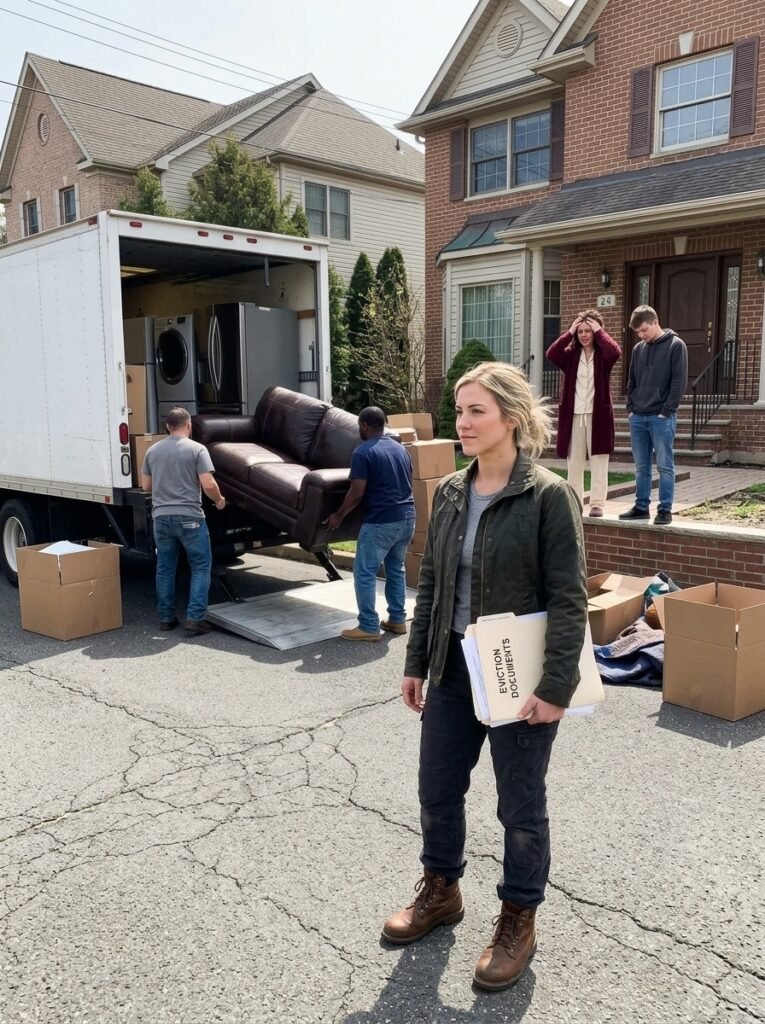
We drove the trucks straight to a storage facility off the 101, where my uncle Robert had rented two climate-controlled units under my name. The movers logged every item against my inventory sheet, and I signed each page. Then I stood in the fluorescent hallway, looking at a wall of wrapped furniture that had once been my future, and felt nothing but tired.
“You okay, sweetheart?” my father asked.
“Ask me tomorrow.”
My phone had been buzzing in my jacket pocket for hours. I finally looked. Forty-one missed calls from Daniel, nine from an unknown Santa Barbara number, and one text from Margaret:
You will be hearing from the police. Thief.
I laughed out loud, right there in the storage hallway. Then I forwarded the message to my attorney, Dana Whitfield, who had been at her desk by seven that morning after I called her at 6:10.
Her reply came in under a minute: Perfect. Don’t respond. Don’t delete anything.
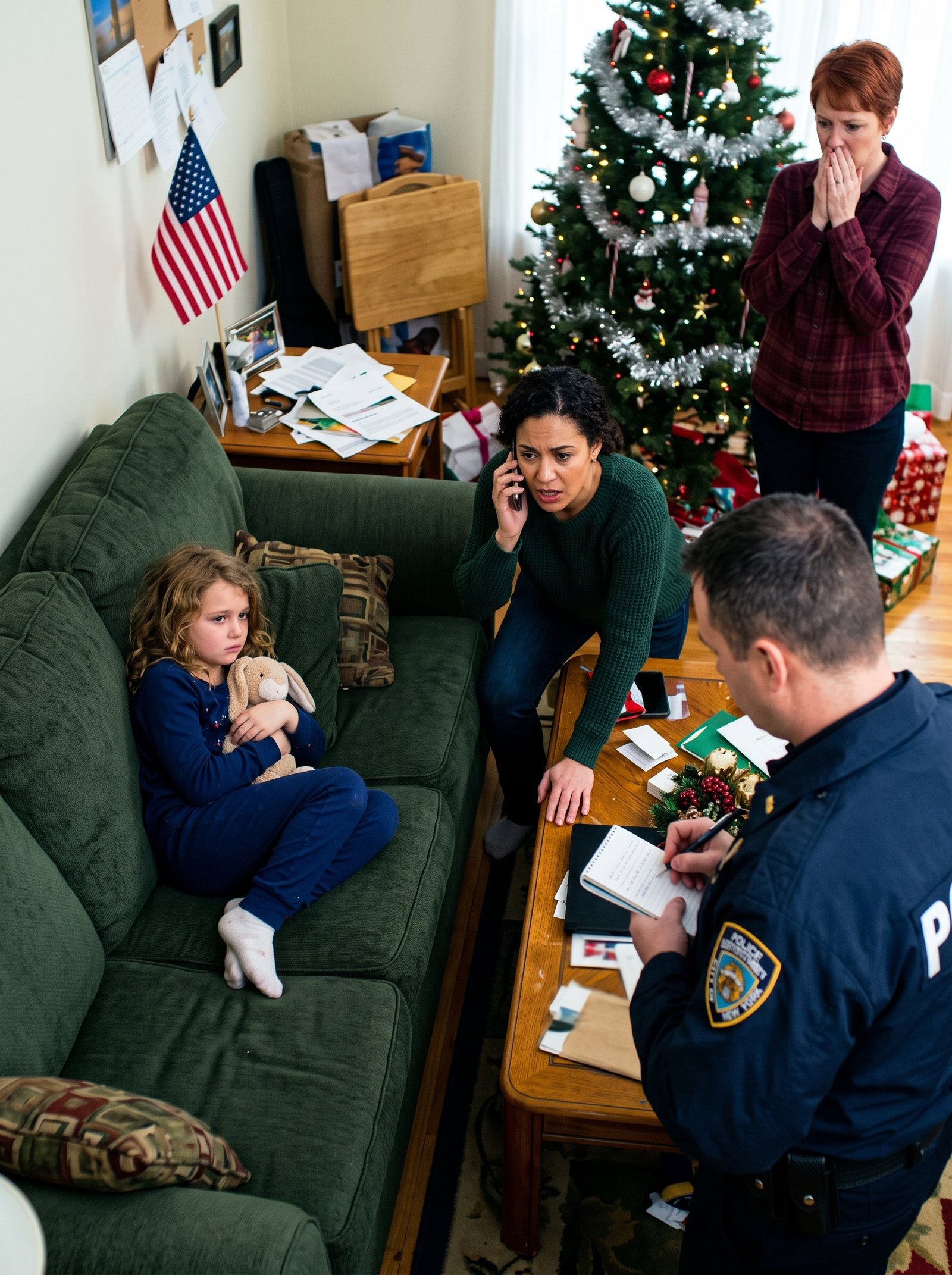
The police did come. Two officers arrived at my parents’ house that evening, polite and a little uncomfortable, holding Margaret’s complaint.
My father invited them in. I laid the accordion folder on the kitchen table and opened it to the first tab.
Officer Reyes read for a long time. Bank transfers to the roofing contractor. Card receipts from the flooring showroom. The appliance store’s delivery confirmations with my signature. The warranty registrations, every one under my email address. Fourteen months of it, tabbed and cross-referenced.
“Ma’am, did Mr. Hale or his mother ever contribute to any of these purchases?”
“Not one peso. Daniel told me his mother couldn’t afford repairs. That’s why I paid.”
Reyes closed the folder gently. “This is a civil matter, and honestly, you’ve documented it better than most people’s lawyers do.” He hesitated. “For what it’s worth, my sister got married last year. I can’t imagine locking a gate on her.”
“Neither can I,” I said.
After the officers left, my phone rang again. It was Daniel. This time I answered, put him on speaker, and pressed record.
“Emily, thank God.” His voice was raw. “Listen, my mom got carried away. She’s devastated. The police, the neighbors, the whole street watching…”
“Daniel,” I said, “why did you tell me to obey her?”
Silence.
“You could have said anything. You could have opened the gate yourself. You told me to put up with it. Why?”
“Because… because if I fought her, she’d have…” He exhaled hard. “You don’t understand what she’s like. You just let her have her way and it blows over.”
“So the plan was for me to be the one who blew over.”
“That’s not fair.”
“Here’s what isn’t fair. I spent fourteen months rebuilding your mother’s house, and she told me to stand in the street. And your first instinct was to protect her comfort instead of my dignity.”
His voice dropped. “There’s something else.”
I waited.
“After you left, Mom was already talking about the reception money. Your parents’ deposit, the venue. She said if you’d just calmed down and accepted the… the lesson, the wedding could go ahead, and afterward you’d, well, you’d help with the mortgage. She’s behind on it.”
My father set down his coffee very slowly.
“She’s behind on the mortgage,” I repeated. “On the house I renovated.”
“Yes. Since last spring. She didn’t want you to know until after we were married.” His voice broke. “Emily, I’m sorry. I should have told you.”
“Thank you for finally being honest,” I said. “Goodbye, Daniel.”
I ended the call. My father and I looked at each other across the table.
“That,” he said, “is the most useful thing that boy has ever done.”
Dana Whitfield read the transcript the next morning and smiled the way surgeons smile at a clean incision.
“Two things,” she said. “First, you’re clear on the property. Second, that recording is useful if this ever becomes a fraud matter, because they were concealing a financial hardship while accepting your money on the premise of a marriage. But I doubt you want to spend two years in court over it.”
“I don’t.”
“Then let’s do this cleanly. A written notice: your property has been retrieved, all future contact goes through counsel, and any harassment gets documented.”
“And the wedding costs?”
She flipped a page. “Your parents’ deposits are partly refundable. The rest, you send Daniel an itemized invoice. His family invited the guests to a ceremony they sabotaged. Whether they pay is a separate question, but it makes a point.”
I signed everything before lunch.
The rest arrived without any help from me.
One of the neighbors had filmed the entire morning from her porch: the moving trucks, the empty driveway, Margaret shrieking at the movers, Daniel’s mug shattering on the steps. By evening it had been shared across three local community groups, and by the weekend, someone had matched it to a second video, shot by one of my cousins, of the chained gate on the wedding day. The audio was crystal clear. “You’ll stay outside for three hours to learn some humility.”
I didn’t post either clip. I didn’t have to.
Daniel’s office called him in on Tuesday. I heard about it from a mutual friend, who said no one had accused him of anything. His supervisor had simply mentioned, mildly, that the county valued “judgment and composure in public-facing employees,” and that perhaps he should take some personal time. He took three weeks. When he returned, people had stopped saying good morning.
Margaret stopped answering her door. The tarot reader she’d cited turned out to be her neighbor’s cousin, who, when reached by a local reporter, said she had “never once met an Emily.”
Three weeks after the wedding that wasn’t, a letter arrived at my parents’ house in Margaret’s handwriting. Four pages. I read the first paragraph and put it back in the envelope.
You have ruined this family.
I didn’t need to read the rest.
Instead, I drove to the storage facility. Sunlight came through the loading door as I stood between the two units and did the math. The furniture’s resale value would be significant, but I felt no urge to sell it. I didn’t want a leather sectional in my apartment that had watched me being turned away.
So I made a few phone calls. A women’s transitional housing program in Van Nuys needed everything: beds, tables, appliances, a working refrigerator. The coordinator, a tired, warm woman named Ms. Okafor, cried a little when I told her the list.
“Are you sure?” she asked. “This is a lot of money.”
“It’s worth more here,” I said.
The movers came back for a third time. This time, the refrigerator went into a kitchen where a mother of three would open it that night and find, for the first time in weeks, that it was hers. The leather sectional went into a common room, where somebody’s daughter would eventually fall asleep on it after homework.
I kept two things: the receipts folder, and the small envelope holding the ring I’d never worn.
That evening, my mother found me on the back patio, watching the sun drop behind the neighbors’ palms.
“Do you regret it?” she asked. “Any of it?”
I thought about it honestly. About Daniel’s face on the porch, about the promises I’d taken seriously and he’d taken lightly, about the girl who used to confuse generosity with obligation.
“I regret how long it took me to see who he was,” I said. “But I don’t regret the gate. If she hadn’t locked it, I’d have walked through.”
My mother squeezed my hand.
“Then that gate did you a favor.”
I looked down at the ring one last time, then slid it back into its envelope. In the morning I would send it to Dana’s office to be returned to his family, another item on an inventory I was finally finished with.
The air on that patio was cool, and nobody was standing on the other side of it telling me how long I had to wait.
It was completely free.
Part 3
Eight months later, I got an email with the subject line “A Request from Ms. Okafor.”
I almost didn’t open it. My inbox had become a quiet place, and I’d grown protective of that. But Ms. Okafor never wrote without a reason.
Emily, the program is expanding. The city finally approved funding for a second house in Pasadena. We have the building but not the budget for the kitchen. I hate to ask. But I remembered how you talked about “the refrigerator that finally belonged to someone.” Would you consider coming to speak at our benefit dinner? Not for money. Just your story.
I read it three times. Then I called her.
“I’m not a speaker,” I said. “I’m a finance person. I make spreadsheets.”
“Good,” she said. “Our donors like spreadsheets.”
The benefit was held in a converted warehouse in downtown Los Angeles, string lights overhead, two hundred guests at round tables. I stood backstage with note cards I’d rewritten eleven times, watching a woman in a yellow cardigan tell the crowd about sleeping in her car with two kids for seven weeks.
When it was my turn, I didn’t use the cards.
“Two years ago,” I began, “I was locked outside a gate on my wedding day.”
A ripple went through the room. A few people had seen the video. I could tell by the way they leaned in.
“I want to tell you what I learned standing there. It wasn’t that my fiancé’s mother was cruel. Cruel people are easy to identify. What I learned is that I had spent years confusing being useful with being loved. I paid for a roof, floors, a kitchen, and I called it devotion. But devotion isn’t a transaction, and neither is worth. The moment I stopped needing to earn my place at someone’s door, I found out how many other doors were open.”
I paused and looked at the yellow cardigan in the front row.
“Some of you built your lives around people who told you to wait outside. I’m not going to tell you it’s easy to leave. I’m going to tell you that the furniture I took out of that house is now in a home where women are starting over. And it is the best thing that furniture has ever done.”
The applause went on longer than I expected. In the back, my father was wiping his eyes and pretending he wasn’t.
By the end of the night, the Pasadena kitchen was fully funded. Ms. Okafor hugged me so hard my earrings tangled in her hair.
I was gathering my coat near the coat check when a man approached, holding a glass of water and looking uncertain.
“Ms. Vance? I’m Marcus Chen. I run the housing nonprofit’s audit committee.” He smiled sheepishly. “That’s a fancy way of saying I volunteer to check their math. I have to tell you, your speech was the first time I’ve enjoyed a benefit dinner.”
“Low bar,” I said.
“Rock bottom, honestly.” He laughed. “I was actually hoping to ask a professional question. The organization’s books are in decent shape, but they don’t have anyone who really understands forecasting. Would you ever consider a few hours a month, on the board’s finance committee?”
I studied him. No performance, no angle. Just a slightly rumpled tie and the earnest expression of a man who genuinely cared about reconciling accounts.
“I’d need to see the books first,” I said.
“Of course.”
“All of them.”
“I wouldn’t dream of hiding any.” He grinned. “That’s sort of the job.”
I almost said no out of reflex. Then I remembered the reflex had a history, and I said yes instead.
The finance committee met on the second Thursday of every month in a cramped room above the Van Nuys office. There was a whiteboard, a broken heater, and a plate of grocery-store cookies that Marcus faithfully replenished.
Over the following months, I discovered that Marcus had a habit I found almost alarming: he told the truth in small things. When he was late, he said he’d overslept. When he disagreed with me in a meeting, he said so, then asked what I thought. When I caught an error in his spreadsheet, he thanked me instead of getting defensive.
One evening in the spring, we were the last two in the room, reconciling a grant report.
“Can I ask you something personal?” he said.
“You can ask.”
“Why do you keep a folder of receipts in your bag? I’ve seen you check it twice.”
I laughed, because I hadn’t realized anyone noticed. I pulled out the worn accordion folder, the color-coded tabs faded now.
“It’s my reminder,” I said. “Of what I gave and to whom. Not because I regret giving. Because I never want to give without seeing clearly again.”
He nodded slowly. “That’s not paranoia. That’s just paying attention.”
“You’d be surprised how many people can’t tell the difference.”
“I think,” he said carefully, “that you can be careful and still be open. Those aren’t opposites.”
I looked at the folder in my hands. For the first time, it felt less like armor and more like a tool.
“Maybe,” I said. “I’m working on it.”
The last I heard of Daniel came in the form of a mutual friend’s offhand comment at a birthday party.
Margaret had lost the house. Not to spite or scandal, just arithmetic. The mortgage she’d hidden, the renovations that had raised her property taxes, and the bank’s patience running out. She’d moved into a small rental with a cousin. Daniel was living in a studio apartment, still at his county job, still quiet. He’d started seeing a therapist, someone said, though nobody could confirm it.
“Do you want to know more?” my friend asked.
I considered it. For a moment, I felt the old pull, the urge to check, to measure whether he had grown, to find out if the story had an ending that vindicated me.
“No,” I said, and found that it was true. “I think I’m done reading that one.”
On the second anniversary of the wedding that wasn’t, I didn’t mark the date. I was at the Pasadena house, kneeling on a new kitchen floor, helping a volunteer crew hang cabinets. Marcus held the level. Ms. Okafor supervised from a folding chair, issuing instructions nobody dared ignore.
“Higher,” she said. “Left. No, your left.”
“I’m holding it exactly where the plans say,” Marcus protested.
“The plans are not standing in the kitchen, Marcus. I am.”
I laughed so hard I nearly dropped the drill.
When the last cabinet was mounted, Ms. Okafor stood, walked over, and opened the first door. It swung smoothly and closed with a soft, satisfying click.
“That,” she said, “is a good door.”
I looked at the empty shelves, waiting for dishes, for groceries, for a family who didn’t yet know this kitchen was theirs. Through the front window, I could see the gate, a plain wooden one, propped open with a brick, the way it would stay.
Marcus came to stand beside me, wiping sawdust from his hands.
“Ready to go?” he asked. “I promised Ms. Okafor I’d buy everyone tacos.”
“In a minute.”
I stepped out onto the porch and stood in the evening air. A little girl from the program was drawing on the walkway with chalk, a lopsided house with an enormous sun.
She looked up at me and grinned. “Do you live here?”
“No,” I said. “But I helped build the kitchen.”
“Can I show you my house?”
“I’d love that.”
She took my hand and led me down the path, past the open gate, toward a drawing that was still unfinished.
And nobody made me wait.
Part 4: The Open Gate
The letter from Daniel arrived in the spring, three months after the cabinet day. It was a single page in an envelope with no return address, forwarded through Dana Whitfield’s office, because that was how I’d told everyone contact would work.
Dana called before sending it over. “It isn’t a demand. It isn’t a legal threat. I read it for that. I think you should decide for yourself whether to open it.”
I carried it around for four days. On the fifth, I sat on the back patio where my mother had asked me if I regretted anything, and I read it.
Emily,
I’m not writing to ask for anything. I’m writing because a therapist told me that an apology is only real if it doesn’t need a response, so I’m trying to make this one real.
You asked me why I told you to obey. The truth is that I was never afraid of my mother’s blood pressure. I was afraid of her disappointment, and I had spent my whole life buying it off with other people’s comfort. That day, the other person was you. You weren’t the first person I sacrificed to keep her calm. You were just the first who left.
You didn’t ruin our family. You stopped propping it up. I’m learning the difference.
I hope the furniture found a good home. I hope you did too.
Daniel
I read it twice. My eyes stung, though not from heartbreak. It was the odd relief of watching someone finally describe the crime accurately.
I didn’t reply. Some things are complete because they’re left alone. But I didn’t tear it up either. I slid it into the receipts folder, in the back pocket behind the last tab. It didn’t belong with the invoices. It was closer to a closing statement.
Margaret came in June.
The Pasadena house was holding its open house, the day the city officials cut a ribbon and the neighbors were invited to see what the new “shelter on the block” actually looked like. There were lemonade tables, a local news crew, and a line of kids waiting for their turn at the chalk. Ms. Okafor was in her element, a general in a floral dress.
I was refilling a pitcher near the kitchen door when I felt someone standing too still behind me.
“Emily.”
I knew the voice before I turned around. It was smaller than I remembered, but so was everything else about her. Margaret wore a plain gray blouse instead of red. Her hair had gone white at the roots, and she held her purse with both hands like a woman waiting outside an office.
Marcus, across the room, caught my eye. I shook my head slightly. I’m fine. Stay.
“Margaret,” I said.
“I saw the article. In the paper. About the house.” She swallowed. “I didn’t come to make trouble. I promise you that. I asked the woman at the door if I could come in and she said everyone was welcome.”
“Everyone is,” I said. “That’s the point of this house.”
Something crossed her face at that, a flinch or a recognition. She looked around the kitchen at the new cabinets, the wide sunlit windows, the refrigerator humming in the corner. It wasn’t the Italian-leather-and-espresso-machine kind of beautiful. It was warmer than that.
“That’s the refrigerator,” she said quietly. “From my house.”
“No. That one’s from a hardware store. Yours went to Van Nuys.”
“Oh.” She nodded, and I could see her doing arithmetic, the same arithmetic she’d been doing for two years. “Well. It’s very nice.”
I waited. I had rehearsed this conversation so many times in the shower and in traffic that I’d worn grooves in it. In some versions I was cutting. In some I was gracious. In none of them was I this calm.
“I lost the house,” she said. “I expect you know.”
“I heard.”
“I’m living with my cousin. It’s not so bad.” A brittle pause. “Daniel comes on Sundays. He’s different. He talks to me differently. He said things I didn’t want to hear, and I told him he was ungrateful, and he said maybe, and he didn’t apologize.” She almost laughed. “I don’t know who he is anymore.”
“I think that’s called growing up.”
“It’s a terrible thing to watch.” Her eyes lifted to mine, finally. They were wet. “Emily, I didn’t lock that gate because of a tarot card. I want you to know that. I did it because I was frightened. He was my only son and I could see you were… so much more than us. So capable. I thought if I made you small first, you wouldn’t be able to leave.”
The room seemed very quiet around us.
There it was. Not an apology, exactly. But it was true, and truth had been rare in that family.
“Thank you for telling me,” I said.
“I’m not asking you to forgive me.”
“Good.”
She flinched, and I softened my voice, but I didn’t take it back.
“Margaret, I can understand why you did it without accepting that you did it. Both things can be true. You were afraid, and you humiliated someone in front of fifty people, and you planned to use her money to cover a mortgage you were hiding. I can hold all of that. But I can’t be the person who makes it okay.”
She nodded slowly, as if she’d expected exactly this.
“Then I suppose there’s nothing I can do.”
“There is one thing,” I said.
Her head came up, hopeful and guarded.
“Tell the truth the next time someone asks you a hard question. Tell Daniel the truth about the mortgage, the pride, all of it. Not to me. To him. He’s the one who’s still standing at your door.”
Her mouth trembled. She looked, for one moment, like someone who had wandered into a stranger’s kitchen and couldn’t remember why.
“That’s all?”
“That’s the hardest thing I could ask of anybody.”
She gave one short nod. Then she reached into her purse and brought out a small folded square of paper.
“It’s not money,” she said quickly. “I know better than that now. It’s the name of the tarot woman. She lives four streets from me. I never told the police she was innocent. I want you to know she’s just a lonely woman who read my palm once at a church fair. I lied about what she said. I lied about the whole thing. I wanted a reason that wasn’t me.”
I took the paper and read the name. Beatrice. Then I folded it and handed it back.
“You should go tell her that,” I said. “Not me.”
Margaret held the paper for a long moment. Then she straightened her shoulders, gave me a look I couldn’t quite read, and walked out the front door, past the open gate and down the street. She didn’t look back, and I didn’t watch her go.
Marcus appeared at my elbow a minute later, pretending to search for napkins.
“Are you all right?”
“Yes,” I said, and then paused, because I was checking. “Yes. Actually, yes.”
“Do you want me to hold the pitcher, or hold you?”
I laughed, wet and startled. “The pitcher’s fine. Ask me about the other thing later.”
“I have all the time in the world,” he said.
He asked me that evening, on the porch steps after the last guest left. Ms. Okafor had gone home. The chalk drawings were fading in the dusk.
“Emily, I want to say something, and I want to say it plainly, because I know you like plain.”
“Plain is my favorite.”
“I’ve been in love with you since the second Thursday in October, when you found a four-thousand-dollar error in the housing grant and didn’t tell me right away. You waited until I found it myself, so I wouldn’t be embarrassed. Nobody had ever done that for me.” He rubbed his neck. “I didn’t say anything because I thought you needed to finish being on your own first. I still think that’s true. But I also think you finished a while ago.”
I looked at the chalk sun on the walkway. The little girl had given it eleven rays.
“I’m not going to pretend it isn’t frightening,” I said.
“I know.”
“I gave someone my whole life once. I built his mother a house.”
“I know.”
“I don’t know how to be with someone without keeping score.”
He was quiet for a moment. Then he said, “Then keep score. Show me the folder. I’d rather be loved by someone who can see clearly than by someone who trusts blindly.”
I stared at him.
Then I opened my bag and took out the worn accordion folder. I flipped to the last tab, the empty one at the back, and slid out a blank index card.
“Pen?” I said.
He handed me one. I wrote a single word on the tab: Marcus. Then, underneath: Nothing owed. Nothing hidden.
“That’s the account,” I said. “It’s the only one I’ve ever opened that doesn’t have a balance.”
He read it, and his face did something complicated and lovely.
“I think I might cry.”
“Please don’t. Ms. Okafor will find out and make you cater the next benefit.”
He laughed and kissed me, and it was nothing like the gate. It was open from the very first second.
We were married three years after the wedding that wasn’t.
It was small. I insisted. Forty guests, in my parents’ backyard, under the same palms I’d stared at while my mother asked if I regretted anything. Uncle Robert grilled. My cousin Isabel, the one whose coat I’d borrowed on the worst day of my life, was my maid of honor and made me swear that this time I’d keep the outer skirt.
“I’m wearing a jumpsuit,” I told her.
“Perfect. Zero chance of dramatic disrobing.”
“Zero,” I agreed, and she cackled.
Ms. Okafor gave a toast that was mostly instructions to Marcus. Dana Whitfield, who had come as a friend rather than a lawyer, cried through the vows and denied it afterward. Little Amara, the girl with the chalk drawings, now nine years old, was our flower girl. She took the job with the gravity of a customs official.
And at the far end of the yard, where the fence met the driveway, there was a gate. It was an ordinary wooden one. My father had propped it open that morning with a garden brick.
I stood at the top of the aisle, my father’s arm steady beneath my hand.
“Ready, sweetheart?”
“You don’t have to prove anything to anyone,” I said, quoting him back to himself.
He laughed, his voice cracking. “That’s still true. But I think you’d like to walk anyway.”
“I would.”
And I did, across the grass, past the folding chairs and the grill smoke and every face that had ever refused to let me be small. Marcus stood waiting at the end, tie slightly crooked, eyes wet before I’d even reached him.
The vows were short. I promised him honesty, including the kind that is inconvenient. He promised me the same, plus, and this was written in his own hand, “to never, under any circumstances, make you stand outside anything.”
The guests laughed. My mother sobbed. Somewhere behind me, Ms. Okafor said, quite audibly, “Good answer.”
That night, after the last of the guests had gone, I found the receipts folder in my bag. Its tabs were faded, its corners soft as cloth. It had been through storage units and police visits, benefit dinners and open houses. It had kept me steady when I didn’t trust myself to stand.
I opened it one more time. Roofing invoices. Flooring receipts. Delivery slips signed in my careful hand. Daniel’s letter in the back pocket. The tab that read Marcus.
Then I did something I hadn’t planned. I took out only the last tab, the empty ledger with the two lines written in pen. I slid the rest of the folder into a drawer in the hallway, the ordinary kind of drawer where people keep batteries and takeout menus.
“You’re retiring it?” Marcus asked from the doorway.
“Retiring, not burning.” I closed the drawer. “It taught me what I needed. I’ll keep it in case someone ever asks how I got here.”
“And the one tab?”
“That one I carry.” I held it up. “It isn’t a warning. It’s an address.”
He crossed the hall and took my hand, and we walked out onto the back patio, where the string lights were still glowing over the empty chairs. The night was cool, and the palms rustled like applause.
At the far edge of the yard, the gate was still propped open with its brick. Beyond it lay a quiet street, a few lit windows, a whole city stretching toward the ocean.
I thought about the girl in the wedding dress, thorns from her own bouquet driving into her palm, waiting for someone to open a door that was never going to open. I wished I could tell her a few things. That the door wasn’t the point. That the wait would end. That someday she’d stand on a patio, not outside anything, not inside anything, just present, and someone would ask if she was ready to go in.
“Ready?” Marcus asked, on cue, almost as if he’d read my mind.
I looked at the house behind us, warm and lit and full of people who had shown up. Then I looked at the open gate, and the street beyond it, and the sky.
“In a minute,” I said. “I want to stay out here a little longer.”
He didn’t ask why. He didn’t tell me how long I had.
He just stood beside me, and the air was cool, and the gate was open, and everything I’d once thought I had to earn had been mine all along.
It was completely free.
The End.