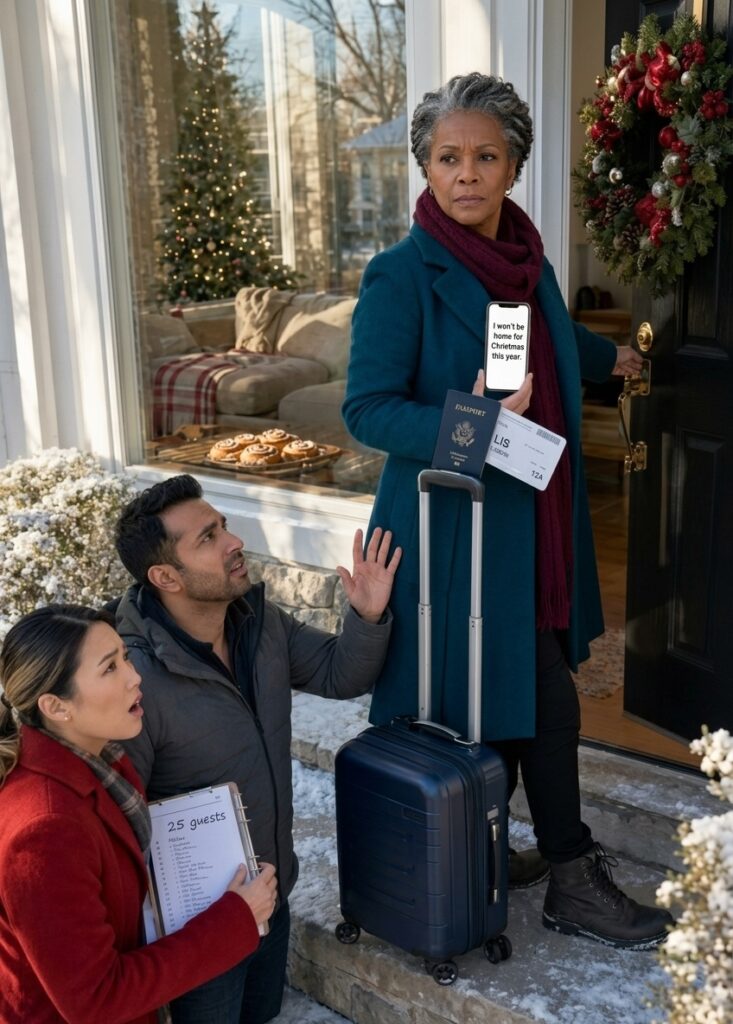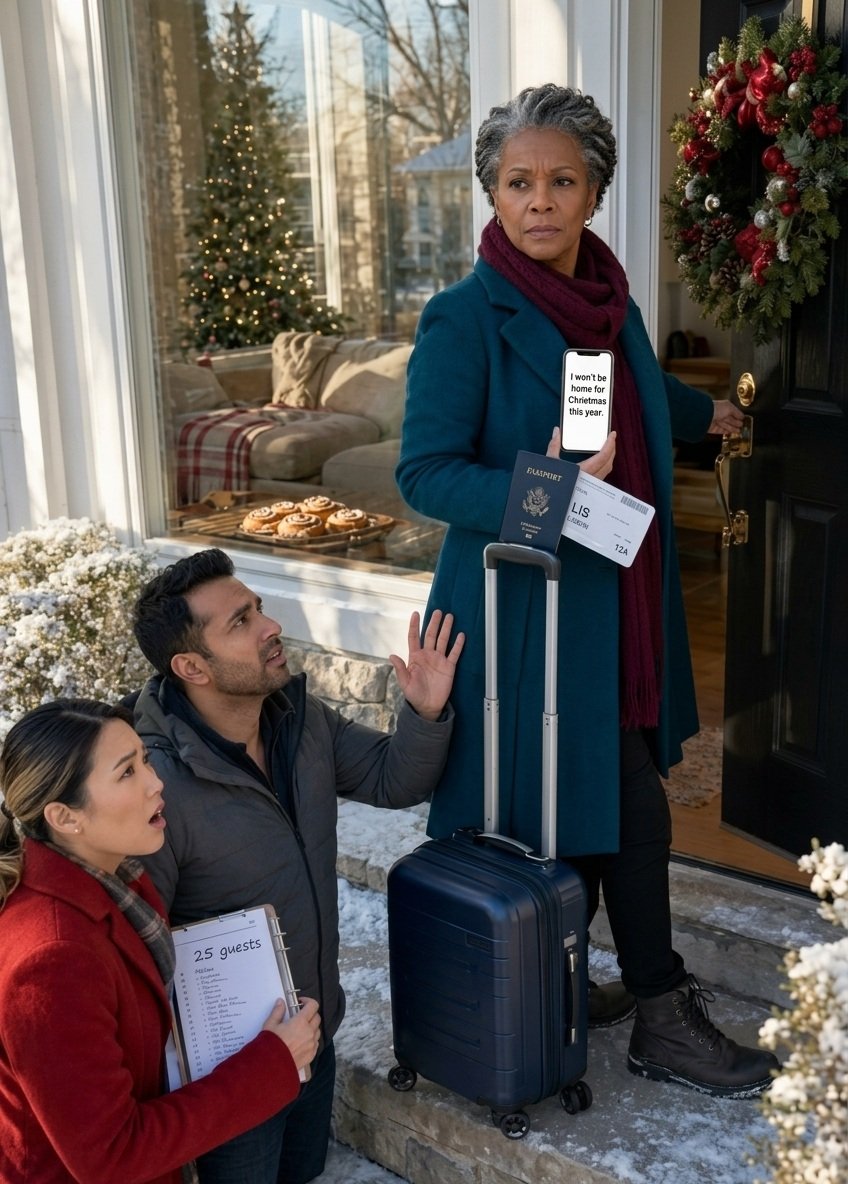
Hope that’s okay 😊.” I stared at the screen, said nothing, and quietly bought a solo ticket to Lisbon instead. Two days before Christmas, I locked my empty house and boarded the plane. On Christmas morning, my phone buzzed nonstop — and when I finally picked up, MY SON WASN’T CALLING TO WISH ME MERRY CHRISTMAS…
“Just so you know, we’ll be using your house for Christmas this year. My parents, siblings, cousins—around 25 people. Hope that’s okay 😊”
I stared at the screen long enough for it to dim and go black, then tapped it awake and read the words again, slowly this time, as if maybe I’d misread them.
We’ll be using your house.
Around 25 people.
Hope that’s okay.
Smiley face.
It wasn’t the number that bothered me most, though twenty-five strangers in my home was a stomach-clenching thought. It was that cheerful little emoji at the end. Bright. Careless. As if she were saying she’d borrowed a sweater, not my peace. As if my home were a community center she’d booked on an app.
I didn’t reply.
I didn’t argue. I didn’t defend myself. I didn’t type out the long, shaking message that rose in my throat about respect and asking and what it means to treat a home—and the person in it—as something more than a resource.
Instead, I opened my calendar app.
The date was circled already, in my mind if not on the screen. December 24th: Christmas Eve. A day that had once meant cinnamon rolls and mismatched pajamas and the hush of snowfall against the windows. Now it meant noise. Demands. The sense of being a guest in my own life.
I scrolled past it.
January. February.
Then back again, to December, and I did something I’d never done before.
I booked a ticket.
My name is Ruth Callahan, and I’m sixty-three years old. This house—the one my daughter-in-law now felt comfortable claiming in a text message—took thirty-two years to pay off. It was built with overtime shifts and skipped vacations and nights where I fell asleep at the kitchen table with bills spread out like playing cards, losing hand after losing hand.
I raised my son Daniel here after his father died when Daniel was nine. I cooked here, cried here, celebrated here, survived here. I learned to patch drywall and fix leaky faucets and negotiate with collection agencies that spoke in numbers and threats. I learned what it was to come home bone-tired, drop my purse on the counter, and still find the energy to read a bedtime story because a boy with his father’s eyes was waiting, trusting that there would be pizza and hugs and a light on in the hallway.
This house was not just a structure of wood and brick. It was proof. Proof that I’d kept us afloat when grief wanted to swallow us. Proof that I could build something solid out of days that felt like sand.
And now, apparently, it was convenient square footage.
Christmas, in the years after my husband died, became small on purpose. It shrank down to what we could manage, what we could afford. A single tree by the front window, lights threaded through its branches with almost reverent care. A faded angel at the top whose cardboard wings were soft with age. The smell of cinnamon rolls rising in the oven at dawn, sugar and spice wrapping around the house like a blanket.
Daniel, all elbows and cowlicks, would clatter down the hallway in mismatched pajamas, pretending he didn’t care about the presents. He’d walk by the tree with exaggerated indifference, then sneak little glances under the branches, just to check, you know, if Santa had maybe dropped something off. I’d pretend not to notice. We’d play that game every year, both knowing but neither saying.
Those were my traditions.
Quiet. Intimate. Hard-won.
Traditions, I would learn, don’t survive entitlement very well.
Enter the daughter-in-law.
Melissa married Daniel five years ago. He brought her over for dinner the first time with such cautious excitement that I tried extra hard to like her. I remember what she wore, oddly enough—a sleek white blouse that looked like it had never known wrinkles and a gold necklace that caught the light every time she tilted her head to laugh.
She laughed a lot. Loudly. She was efficient, organized, aggressively cheerful, the kind of woman who brings color-coded spreadsheets to a potluck. The kind who refers to herself as “just honest” right after saying something cruel. The kind who seems to believe that if she’s smiling, the words can’t possibly hurt.
From the very beginning, she treated my home like a temporary waiting room. At first, it was little things. I’d come back from the kitchen to find the throw pillows rearranged. The next time they visited, a framed photo of Daniel as a toddler would be turned slightly, as if someone had adjusted it and then not quite returned it to its place.
“Your couch would look better angled this way,” she said once, already tugging the heavy piece of furniture away from the wall before I could answer. “You’d get better flow.”
She pushed my coffee table aside with her foot, testing different positions as if the room were a puzzle she’d been invited to solve.
“I like the flow the way it is,” I replied, trying to keep my tone light.
She paused, hands on hips, then smiled. “Oh, sure. I just think it could feel more open. It’ll be nicer when we bring the kids here. They’ll have room to run.”
We. The kids. Here.
The words pricked, but I swallowed the feeling, the way I’d swallowed a lot of things in my life. The first year, I told myself it was nerves, that she was trying too hard. The second year, I told myself it was just a generational difference. By the third year, I had run out of excuses that didn’t taste like lies.
She critiqued my cooking with a laughing “just being honest” shrug. “Oh, this is good, Ruth, but Daniel likes his potatoes a little crispier. Mom always adds rosemary. You should try it.”
She referred to my guest room as “ours” whenever they visited. “We’ll put our suitcases in our room,” she’d say, already halfway up the stairs, a familiarity in her tone that had never been agreed upon, only assumed.
Daniel noticed, but he never corrected her. Not really.
“I don’t want conflict, Mom,” he’d say when I tentatively brought up the way she’d taken over the kitchen, the way she’d invited her sister to stay with them in my house without asking me first. “She means well. You know how she is. It’s just… easier if I don’t push back.”
Easier for whom went unsaid, but I knew the answer.
And slowly, without discussion, holidays stopped being mine…..