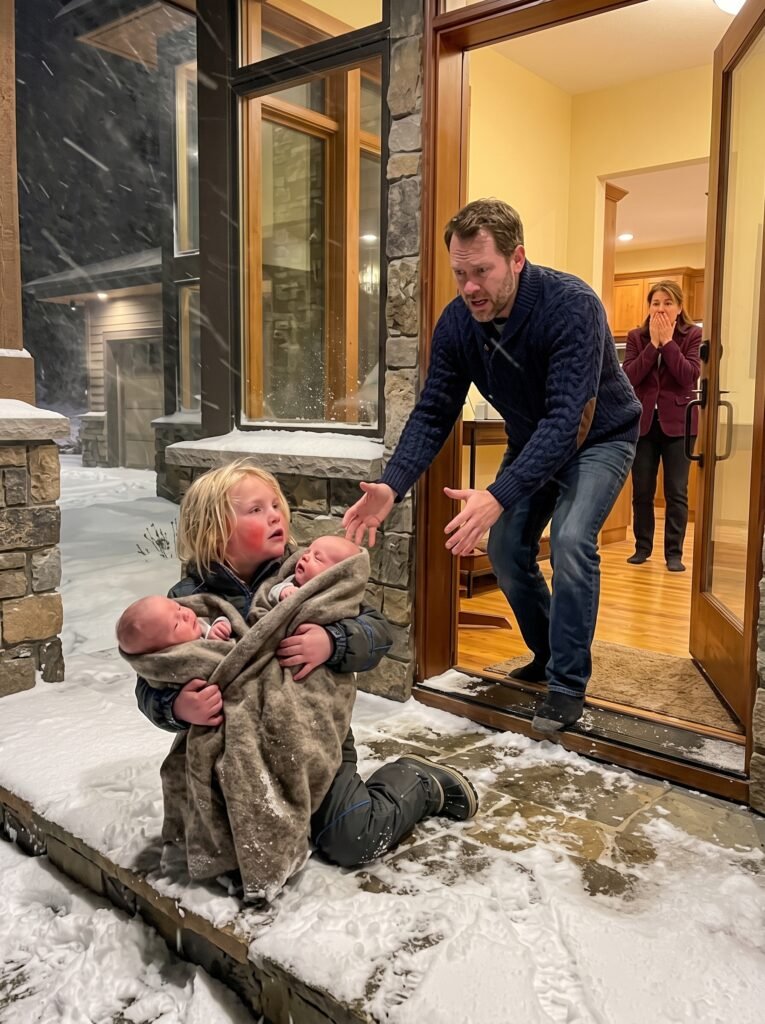
The paramedics arrived eleven minutes after Rosa’s call, though to Nathan, kneeling on the floor between three barely-breathing children, it felt like eleven hours. He’d already started warming Owen and Ethan with dry towels, monitoring their pulses the way he’d been trained to monitor patients twice their size, but nothing in thirty years of medicine had prepared him for the particular terror of doing it to his own family.
“Talk to me,” the lead paramedic said, sliding an oxygen mask gently over Lily’s face while her partner assessed the twins. “What do we know?”
“Severe hypothermia, all three,” Nathan said, his surgeon’s voice steady even as his hands shook. “The girl’s five. The infants can’t be more than six months. They were outside in the storm for at least an hour, maybe longer.”
“And you’re the uncle?”
“I’m the uncle,” Nathan said. “I need to come with them.”
The convoy to the hospital moved through the storm with practiced urgency, Nathan riding beside Lily’s stretcher, refusing to let go of her small, freezing hand even as the paramedics worked around him. Somewhere in the back of his mind, underneath the medical training running on autopilot, one thought kept surfacing, sharp and unbearable.
Sarah.
He called 911 again from the ambulance, this time reporting what Lily had managed to whisper before losing consciousness, a house, a woman on the floor, a man with a broken bottle. He gave the only address he had, the one Sarah had used seven years ago before she vanished from his life entirely, praying it was still current, praying it wasn’t already too late.
At the hospital, the trauma team took over with brisk efficiency. Lily was stabilized first, her core temperature slowly, carefully brought back to normal under close monitoring. The twins required more intensive intervention, their smaller bodies having lost heat far faster, but within two hours, all three children were listed as stable, exhausted, and, remarkably, expected to make a full recovery.
Nathan sat in the hallway outside the pediatric ICU, the silver bracelet still clutched in his fist, when Detective Maria Alvarez found him.
“Dr. Pierce? I need to speak with you about the address the child gave.”
Nathan stood so fast his chair scraped loudly against the floor. “Sarah. Is she—”
“Your sister is alive,” Alvarez said quickly, seeing the panic rising in his face. “Critical condition, but alive. Officers found her exactly where the girl described. She’s already in surgery at Cascade General.”
Nathan’s knees nearly buckled with relief, seven years of guilt and estrangement colliding all at once with the terror of almost losing her permanently.
“And Marcus?” he asked.
Alvarez’s expression hardened. “In custody. Attempted homicide, at minimum, pending your sister’s condition. Officers also found evidence suggesting this wasn’t an isolated incident. There’s an extensive history here we’re only beginning to piece together.”
Nathan closed his eyes, seven years of silence pressing down on him at once. He’d warned Sarah about Marcus. He’d been right about the man in every way that mattered. And instead of protecting her from what he knew, he’d let his own wounded pride push her directly into it, alone, unprotected, for seven long years.
“I need to see her,” he said. “And I need to see the children the moment they’re allowed visitors.”
“I can arrange both,” Alvarez said gently. “Dr. Pierce, I have to ask, when the little girl said her mother told her to find you, had you had any contact with your sister recently?”
“None,” Nathan admitted, the guilt in his voice unmistakable. “Not in seven years. Not since I told her not to come back if she married him.”
Alvarez studied him for a moment, not unkindly. “She clearly still trusted you enough to send her children into a blizzard, believing you’d be waiting on the other side of it.”
Nathan looked down at the bracelet in his palm, Property of Sarah Carter, 2018, engraved in a hand he recognized from a lifetime of birthday cards and childhood secrets, and felt something in his chest crack open entirely.
“Then I have seven years to make up for,” he said. “Starting tonight.”
Sarah’s surgery lasted just over four hours, a subdural hematoma requiring careful intervention to relieve pressure on her brain, along with repair to a fractured orbital bone and several deep lacerations. Nathan stood outside the OR the entire time, still in the same clothes he’d been wearing when Lily collapsed on his porch, refusing every offer from hospital staff to go home and rest.
When the surgeon finally emerged, weary but reassuring, Nathan felt his legs nearly give out for the second time that night.
“She’s stable,” the surgeon said. “The next forty-eight hours will tell us more, but her vitals are strong, and the surgery went as well as we could have hoped. She’s a fighter.”
“She always has been,” Nathan said quietly.
He was allowed into the recovery room an hour later, and the sight of his sister, bruised, bandaged, tubes running from her arm, took the last of his composure with it. He pulled a chair beside her bed and simply sat, holding her hand the way he’d once held it walking her to her first day of kindergarten, decades of estrangement collapsing into the raw, uncomplicated love he’d never actually stopped feeling, even during the years of stubborn silence.
Sarah didn’t wake until the following afternoon. When her eyes finally opened, unfocused and confused, Nathan leaned forward immediately.
“Sarah. It’s Nathan. You’re safe. The kids are safe.”
Her lips moved, cracked and dry, forming his name before any real sound came out. Then, more urgently, her eyes widening with sudden panic.
“Lily. The babies—”
“They’re here,” Nathan said quickly. “In the pediatric wing, stable, recovering. Sarah, she made it. She got all three of them to me.”
Sarah’s eyes filled with tears, relief and exhaustion and seven years of unspoken grief all crashing through her at once. “She’s five,” she whispered. “I sent my five-year-old into a blizzard.”
“You saved all three of their lives,” Nathan said. “Sarah, I need you to know, I am so sorry. I should never have said what I said to you seven years ago. I should have kept trying, kept calling, kept showing up whether you wanted me there or not. I let my pride convince me that giving up on you was the same as respecting your choices. It wasn’t. It was cowardice.”
Sarah squeezed his hand weakly. “I sent her to you,” she said. “Even after everything. Because some part of me always knew you’d still be there if it mattered enough.”
Over the following days, as Sarah’s condition stabilized and Lily and the twins continued their own steady recovery in the pediatric wing, the full picture of the last seven years slowly emerged, pieced together through Sarah’s careful, painful account and Detective Alvarez’s expanding investigation.
Marcus’s control over Sarah had been gradual and calculated, isolating her from friends, monitoring her communications, cutting off what little contact she’d maintained with people who might have recognized the danger she was in. The debts and criminal history Nathan had uncovered seven years earlier hadn’t disappeared, they’d simply gone deeper underground, financed increasingly through coercion and, investigators discovered, threats against Sarah herself whenever she’d considered leaving.
“I tried to leave twice before,” Sarah admitted quietly, during one of Nathan’s daily visits. “He always found me. The second time, he told me if I ever tried again, he’d make sure I never saw the kids afterward. I believed him.”
“Why didn’t you call me?” Nathan asked, though he already suspected the answer.
“Because you told me not to come back,” Sarah said. “And some broken part of me believed that meant you meant it, permanently. It wasn’t until things got bad enough with the twins, until I was genuinely afraid we wouldn’t survive the night, that I let myself believe you might still help, even after everything.”
Nathan sat with that admission for a long moment, understanding now the full weight of what his seven years of silence had actually cost, not just the relationship between siblings, but nearly the lives of three children who’d had nowhere else to turn.
“You’ll never have to wonder that again,” he said. “Whatever happens next, with Marcus, with the recovery, with all of it, you and the kids have a home with me. Permanently. No conditions.”
Sarah’s eyes filled with tears again, but this time, they carried something steadier beneath the grief.
“Lily kept saying, the whole way here, ‘Mommy was right,'” she said. “I think some part of her never stopped believing you’d still be the uncle who used to carry her on his shoulders, no matter how long it had been.”Sarah’s surgery lasted just over four hours, a subdural hematoma requiring careful intervention to relieve pressure on her brain, along with repair to a fractured orbital bone and several deep lacerations. Nathan stood outside the OR the entire time, still in the same clothes he’d been wearing when Lily collapsed on his porch, refusing every offer from hospital staff to go home and rest.
When the surgeon finally emerged, weary but reassuring, Nathan felt his legs nearly give out for the second time that night.
“She’s stable,” the surgeon said. “The next forty-eight hours will tell us more, but her vitals are strong, and the surgery went as well as we could have hoped. She’s a fighter.”
“She always has been,” Nathan said quietly.
He was allowed into the recovery room an hour later, and the sight of his sister, bruised, bandaged, tubes running from her arm, took the last of his composure with it. He pulled a chair beside her bed and simply sat, holding her hand the way he’d once held it walking her to her first day of kindergarten, decades of estrangement collapsing into the raw, uncomplicated love he’d never actually stopped feeling, even during the years of stubborn silence.
Sarah didn’t wake until the following afternoon. When her eyes finally opened, unfocused and confused, Nathan leaned forward immediately.
“Sarah. It’s Nathan. You’re safe. The kids are safe.”
Her lips moved, cracked and dry, forming his name before any real sound came out. Then, more urgently, her eyes widening with sudden panic.
“Lily. The babies—”
“They’re here,” Nathan said quickly. “In the pediatric wing, stable, recovering. Sarah, she made it. She got all three of them to me.”
Sarah’s eyes filled with tears, relief and exhaustion and seven years of unspoken grief all crashing through her at once. “She’s five,” she whispered. “I sent my five-year-old into a blizzard.”
“You saved all three of their lives,” Nathan said. “Sarah, I need you to know, I am so sorry. I should never have said what I said to you seven years ago. I should have kept trying, kept calling, kept showing up whether you wanted me there or not. I let my pride convince me that giving up on you was the same as respecting your choices. It wasn’t. It was cowardice.”
Sarah squeezed his hand weakly. “I sent her to you,” she said. “Even after everything. Because some part of me always knew you’d still be there if it mattered enough.”
Over the following days, as Sarah’s condition stabilized and Lily and the twins continued their own steady recovery in the pediatric wing, the full picture of the last seven years slowly emerged, pieced together through Sarah’s careful, painful account and Detective Alvarez’s expanding investigation.
Marcus’s control over Sarah had been gradual and calculated, isolating her from friends, monitoring her communications, cutting off what little contact she’d maintained with people who might have recognized the danger she was in. The debts and criminal history Nathan had uncovered seven years earlier hadn’t disappeared, they’d simply gone deeper underground, financed increasingly through coercion and, investigators discovered, threats against Sarah herself whenever she’d considered leaving.
“I tried to leave twice before,” Sarah admitted quietly, during one of Nathan’s daily visits. “He always found me. The second time, he told me if I ever tried again, he’d make sure I never saw the kids afterward. I believed him.”
“Why didn’t you call me?” Nathan asked, though he already suspected the answer.
“Because you told me not to come back,” Sarah said. “And some broken part of me believed that meant you meant it, permanently. It wasn’t until things got bad enough with the twins, until I was genuinely afraid we wouldn’t survive the night, that I let myself believe you might still help, even after everything.”
Nathan sat with that admission for a long moment, understanding now the full weight of what his seven years of silence had actually cost, not just the relationship between siblings, but nearly the lives of three children who’d had nowhere else to turn.
“You’ll never have to wonder that again,” he said. “Whatever happens next, with Marcus, with the recovery, with all of it, you and the kids have a home with me. Permanently. No conditions.”
Sarah’s eyes filled with tears again, but this time, they carried something steadier beneath the grief.
“Lily kept saying, the whole way here, ‘Mommy was right,'” she said. “I think some part of her never stopped believing you’d still be the uncle who used to carry her on his shoulders, no matter how long it had been.”
Marcus Kane’s trial began eight months later, once Sarah’s recovery was complete and Lily, Owen, and Ethan had settled into a rhythm of safety none of them had known before that blizzard night. The case built against him extended far beyond the assault that nearly killed Sarah, investigators uncovering years of documented threats, financial coercion, and a pattern of control that painted a picture far darker than even Sarah had initially revealed.
Sarah testified for two full days, her voice steady despite the visible effort it took, describing seven years of isolation and fear with a clarity that left little room for Marcus’s defense to argue anything resembling a “domestic dispute” rather than sustained, calculated abuse. Nathan sat in the courtroom every single day, present in the way he’d failed to be for seven long years, making up, in whatever small way he could, for the silence that had once nearly cost his sister everything.
The jury convicted Marcus on all major counts: attempted murder, aggravated assault, and multiple charges tied to the pattern of coercive control investigators had documented. He was sentenced to twenty-five years, the judge noting explicitly during sentencing the calculated, sustained nature of the abuse and the fact that three young children had nearly died as a direct result of his actions.
Outside the courthouse, reporters who’d picked up the story, “Blizzard Baby Rescue,” as local news had taken to calling it, crowded around Sarah and Nathan, eager for a comment. Sarah declined every interview request but one, a brief, careful statement released through her attorney.
My daughter saved her brothers’ lives by walking through a blizzard because she believed her uncle would help us. She was right. I hope every parent and child in a dangerous situation knows that reaching out, even after years of silence, even when you’re afraid it’s too late, can still save everything.
Nathan’s estate on Cascade Ridge transformed over the following year from a quiet, echoing house of glass and steel into something that finally felt lived in. Sarah and the children moved in permanently, Nathan converting three of the unused guest rooms into bedrooms decorated by Lily herself, who insisted on painting her own room the exact shade of gold she remembered seeing through the storm that night, “so it always looks like the lights that saved us.”
Lily, remarkably resilient despite everything she’d survived, worked with a child trauma therapist twice a week, slowly processing what she’d carried alone during that walk through the snow. She rarely spoke about the blizzard itself, but she talked often, and proudly, about her brothers, fiercely protective in a way that made Nathan’s chest ache every time he watched her check on them, unprompted, the same instinct that had once carried two infants through a storm still quietly present in how she loved them now.
“You know,” Sarah told Nathan one evening, watching Lily read a bedtime story to Owen and Ethan from the doorway of their shared nursery, “she still keeps that bracelet under her pillow. The one I gave her that night.”
“She knows what it means?” Nathan asked.
“She knows it means home,” Sarah said. “Whatever that word looks like now.”
Nathan had the bracelet properly repaired and cleaned, the engraving restored, and gifted it back to Lily formally on her sixth birthday, along with a smaller matching one for her to wear, explaining gently that some things were worth carrying forward rather than keeping hidden under a pillow out of fear.
“This one’s yours now,” he told her. “Not just your mom’s. Yours too. Because you’re the reason all three of you made it here.”
Lily studied the bracelet for a long moment, her green eyes, so like her mother’s, so like the eyes that had haunted Nathan for seven guilty years, finally settling into something steady and unafraid.
“Mommy said you’d help,” she said simply. “I knew she was right.”
Nathan knelt down and pulled her into a hug, thinking about the seven years of silence he could never fully make up for, and the lifetime of presence he now intended to spend trying anyway.
“She was right about a lot of things,” he said. “I’m just glad I finally got the chance to prove it.”
Outside, the Cascade Mountains stretched quiet and white under a gentler winter than the one that had nearly taken everything from them, the same glass house that had once stood as a monument to isolation now glowing, every night, with lights bright enough to be seen from the road.
Exactly the way Sarah had once promised her daughter they would be.