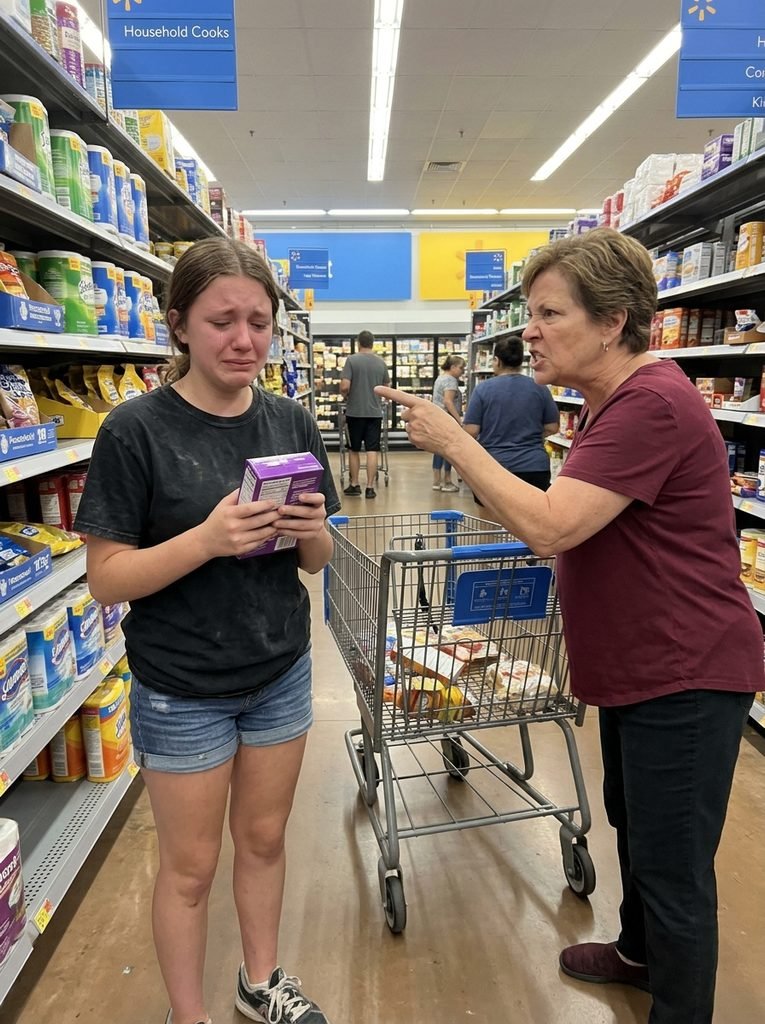
My fourteen-year-old daughter stood at the supermarket checkout clutching a pack of pads like she’d been caught stealing.
An older woman was pointing at her.
“Have some shame!” the woman said. “There are men here!”
And my daughter?
She was apologizing.
“I’m sorry,” Lyra whispered. “I’m sorry. I didn’t…”
I was standing at the end of the dairy aisle with a gallon of milk in my hand. I’d been gone for two minutes.
Two minutes.
The night before, Lyra had come into my bedroom at ten-thirty and stood by the door in her pajamas. She was twisting the hem of her T-shirt around her finger.
“Mom?”
I put my book down. “What’s up, bug?”
“Can boys tell?”
“Tell what?”
She looked at the floor.
“That I’m on my period.”
I sat up a little. “No, sweetheart. They can’t tell.”
“Like, at all? Not even if they’re close to you?”
“Not at all.”
She nodded and went back to her room.
Five minutes later, she was back in the doorway.
“What if it leaks?”
“Then you tie a sweatshirt around your waist, you go to the nurse, and you call me. That’s it. It happens to everybody. But boys can’t tell just by looking at you.”
She nodded again and left.
At eleven-fifteen, I heard her feet in the hallway. She didn’t come in this time. She just stood outside my door.
“Mom?” she said through the crack. “You’re sure?”
“I’m sure, Lyra.”
“Okay.”
I listened to her walk back to her room. I lay there in the dark for a long time afterward, thinking about how new all of this still felt to her. She’d asked me the same question three times in one night. She’d heard the answer and believed it a little less each time.
And now a stranger was making her worst fear look true.
My name is Maren. I’m forty-one. I work three days a week doing payroll for a dental practice. My husband, Jonah, is a project manager for a construction company, and that week he was in Phoenix, standing in a parking lot in a hard hat, arguing with someone about concrete.
Lyra is our only child.
She was a quiet baby and a quiet little girl. She reads constantly. She likes old movies and rescue cats and a band I’ve never heard of that she swears is “about to be huge.” She has her father’s long legs and my unfortunate habit of blushing all the way down to her collarbone.
She’d been waiting for her period for two years.
Most of her friends had gotten theirs at eleven or twelve. Lyra kept a little calendar in her desk drawer. I found it once while I was looking for scissors. She had a tiny question mark in the corner of every month. She’d started drawing them when she was twelve and just kept going.
I put the calendar back and never told her I’d seen it.
Her first period had started the previous week.
It was a Wednesday morning. I was in the kitchen making coffee. I heard the bathroom door slam upstairs, then a sound I couldn’t place at first. It was a thin, high, panicked noise.
Then I realized she was crying.
I took the stairs two at a time.
“Lyra? Honey?”
“Don’t come in!”
“Are you hurt?”
“I don’t know!” Her voice cracked. “There’s… there’s a lot of… Mom, there’s so much blood.”
I opened the door.
She was sitting on the edge of the bathtub in her pajama shorts with a wad of toilet paper in her hands. Her face was white. She was shaking so hard her teeth were clicking.
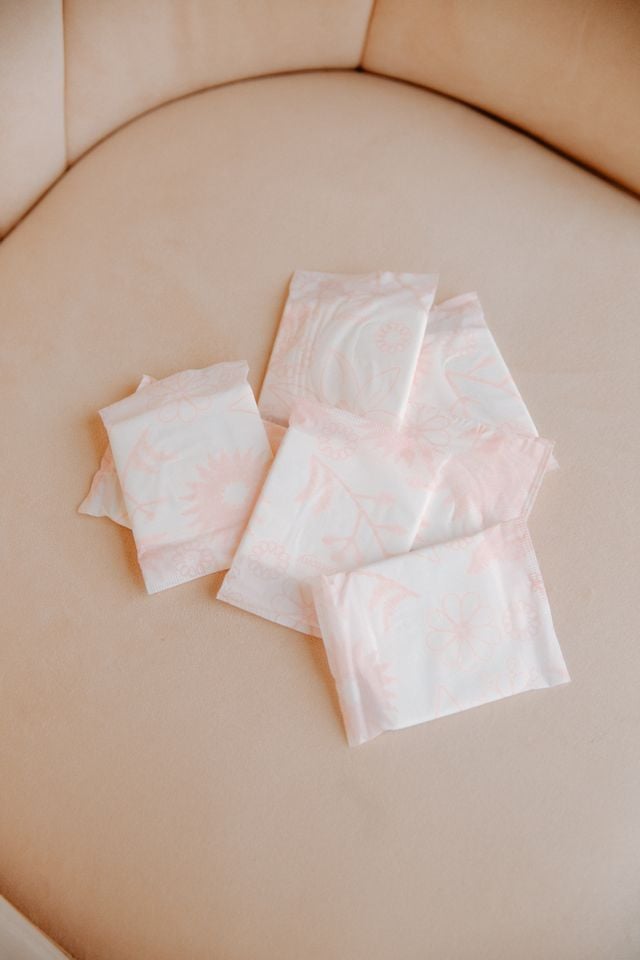
We’d talked about this. We’d talked about it so many times. When she was nine, I’d bought her one of those books with cartoon drawings and a friendly pink cover. When she was eleven, we’d gone through it again. I’d shown her where I kept the pads under the sink. I’d shown her how they worked, unwrapping one at the kitchen table like a science demonstration while she groaned and covered her face. I’d thought she was ready.
But knowing about something and seeing it are two very different things.
“It’s okay,” I said. “Hey. Hey. Look at me. It’s okay. This is normal. This is exactly what we talked about.”
“It doesn’t feel normal.” She was crying harder now. “It feels like something’s wrong. It hurts. It feels like I’m dying.”
I sat down beside her on the edge of the tub and put my arms around her. She was fourteen and almost as tall as me, all elbows and knees, and she curled into me like she was five.
I held her until she stopped shaking.
It took a long time. Long enough that my coffee went cold downstairs. Long enough that she missed the bus.
“I’ll drive you,” I said, when she’d finally calmed down. “Or you can stay home today. Whatever you want.”
She wiped her face with the back of her hand.
“Can I stay home?”
“Yes.”
“Is that babyish?”
“No. It’s your first day of something big. You can take a day.”
She nodded slowly.
Then she looked at the cabinet under the sink.
“Those are your pads,” she said. “Under there.”
“Yes. You can use them today.”
“They’re huge.”
I laughed. I couldn’t help it. “They’re the overnight ones. I’ll get you some smaller ones.”
“Can I pick them?”
“Of course you can.”
“Like, actually pick. Not just you buying whatever.”
I smoothed her hair off her damp forehead.
“We’ll go together,” I promised. “This weekend. You can choose whatever makes you comfortable. Whatever brand, whatever kind. Together.”
She leaned her head on my shoulder.
“Okay,” she said.
That week was hard.
She had cramps the first two days, real ones, the kind that made her curl up on the couch with a heating pad and a bad movie. On Thursday she went back to school wearing two pairs of leggings and the biggest sweatshirt she owned. She texted me from the bathroom at lunch.
Is it supposed to smell like this?
I texted back from my desk at work. Like what?
Like metal.
Yes. That’s normal. Nobody else can smell it.
Are you sure?
I’m sure, bug.
Friday afternoon she came home and went straight to her room and didn’t come out for dinner. When I knocked, she said she was fine. Later, I found out a boy in her math class had asked to borrow her calculator, and she’d panicked and said no so he wouldn’t get close to her backpack.
“Why does it matter if he’s near your backpack?” I asked her.
She looked at me like I was crazy.
“Because the pads are in there,” she said. “In the front pocket. What if he saw them?”
“So what if he did?”
She didn’t answer. She just turned red all the way down to her collarbone.
I thought about that for a long time afterward. I wondered where she’d learned that. Not from me, I thought.
I wasn’t sure that was true.
On Saturday morning, she spent twenty minutes deciding whether she even wanted to come shopping.
I was standing by the front door with my keys in my hand. She was sitting on the bottom stair with one shoe on.
“We could just order them online,” she said.
“We could.”
“Then nobody would see.”
“That’s true.”
She pulled the shoelace tight, then loosened it again.
“But then I wouldn’t get to pick,” she said. “Like, actually look at them.”
“Also true.”
She sat there for a long time. Then she took the shoe off.
“Maybe next week,” she said.
“Okay,” I said. “That’s fine.”
I put my keys back in the bowl by the door. I went into the kitchen and started making grilled cheese.
Ten minutes later, she appeared in the kitchen doorway, wearing both shoes and her denim jacket.
“Okay,” she said. “I’m coming.”
“Are you sure?”
“I’m sure.” She pulled her hair forward over her shoulders like a curtain. “But we’re going to the big one. On Ridge Road. Not the one by school.”
“Why not the one by school?”
“Because what if somebody from school is there?”
“Fair enough,” I said, and I turned off the stove.
At the supermarket, she walked down the aisle like she was crossing a frozen lake.
The feminine care section was at the back of the store, next to the pharmacy, between the toothpaste and the diapers. It was two full shelves, top to bottom, in pink and purple and teal.
Lyra stood in front of it with her hands in her jacket pockets.
“There are so many,” she said.
“There are.”
“Why are there so many?”
“Because everybody’s different.”
She took one hand out of her pocket. She picked up a pack. Thin, unscented, with wings. She turned it over and read the back very carefully, like it was the instructions for a bomb.
She put it down.
She picked up another one. Ultra-thin, with a picture of a flower on the front. She read the back of that one too.
She put it down.
She picked up a third. Regular thickness, unscented, in a plain blue package with no flowers or butterflies or smiling women in white pants.
She held it for a while.
“Is this okay?” she asked.
“Of course,” I said. “Is it okay for you?”
She turned it over in her hands.
“I like that it’s not pink,” she said. “Everything’s always pink. Like they’re trying to make it cute.” She frowned. “It’s not cute. It’s blood.”
I laughed. “That’s very true.”
She looked at me sideways. Then she smiled.
It was a small, real smile, the first one I’d seen on her all week.
We got in line at Checkout 4.
It was Saturday afternoon, so every lane was backed up. There were five people ahead of us. A young guy in his twenties was working the register. He had curly hair and a name tag that said ELI.
Lyra stood beside me holding her blue pack of pads in both hands, down low against her stomach.
We’d been standing there for a minute when I remembered the milk.
“Oh, shoot,” I said. “We’re out of milk. Your dad’s back Tuesday, and he’ll want cereal.”
“Dad’s always cereal.”
“Your dad’s always cereal.” I glanced back toward the dairy section. It was three aisles over. “Get in line, sweetheart. Hold our spot. I’ll be right back.”
She looked at the line. At the people around us. Something flickered across her face.
“Two minutes,” I said. “Promise.”
“Okay,” she said.
I left.
When I came back, that smile was gone.
The line hadn’t moved. Lyra was still standing in the same spot. But behind her now was an older woman, maybe seventy. She was small and straight-backed, with a helmet of short silver hair and a navy cardigan buttoned all the way up. She had a cart with a few groceries in it. Prune juice. Saltines. A box of tea.
She was leaning toward my daughter.
“Honestly,” the woman snapped. “Your mother clearly hasn’t taught you any manners!”
Lyra tried to hide the pads behind her back. She actually put her hands behind her, like a kid caught with a cookie.
“I’m sorry,” she whispered again.
Her face was red all the way down to her collarbone. Her eyes were very bright.
I started toward her.
But the woman spotted me first.
She’d seen me walking up with my gallon of milk. I was a woman about the right age. I must have looked to her like the most reasonable person in the line.
“Can you believe this?” she demanded, turning to me. “Would you let your daughter behave like that?”
She didn’t know.
She had no idea I was Lyra’s mother.
Lyra looked straight at me.
I’ll never forget that look. Her eyes were huge and wet. Her mouth was trembling. She was waiting for me to defend her.
And I had an idea.
It came all at once, the way bad ideas sometimes do. It even felt like a good one.
This woman didn’t know who I was. If I just stepped in and said that’s my daughter, leave her alone, she’d dismiss me. She’d assume I was just another lax modern mother defending her own kid. She’d walk away thinking she’d been right all along.
But if I let her think I was a stranger… If I let her think I was on her side for just a minute…
I could make her hear it.
I gave Lyra a tiny shake of my head. Just a small one.
Wait, I meant. Trust me. Just wait.
Then I turned to the woman.
“Actually,” I said, “I think you’re right about one thing.”
The woman smiled.
It was a relieved, satisfied smile. She looked like she’d been waiting her whole life for someone to finally say that to her.
“Finally!” she said. “Someone with common sense!”
I glanced at Lyra.
She had gone very still.
Her hands were still behind her back. She was looking at me like she’d never seen me before.
But I was already turning back to the woman. I was already thinking about my next sentence. I was already halfway through the conversation in my head.
“Do you have daughters?” I asked.
“Two.” The woman lifted her chin. “Both grown. Neither one would ever have embarrassed me like that.”
“Like what, exactly?”
“Like that.” She waved a hand toward Lyra without looking at her. “Standing in a public line, holding those things out where everyone can see them. In front of men.”
I looked around.
There were two men in our line. The young cashier, Eli. And behind the older woman, a man in his forties in a gray fleece jacket. He had a basket over his arm with a box of cereal, a bag of apples, and a birthday card.
Neither of them had been looking at Lyra until the woman started shouting.
Both of them were looking now.
There was a small display rack beside the register. Gum, mints, batteries, lip balm. And on the bottom shelf, a few small packs of pads, the travel kind, for emergencies.
I reached down and picked one up.
I held it up between us. Not high. Just at chest level, where she couldn’t ignore it.
“Tell me,” I said, “what’s so shameful about this.”
The woman frowned. She glanced at the pack in my hand and then quickly away, like it was something dirty.
“That’s a private matter!”
“Then why,” I said, “are you making this girl’s private business everyone’s business?”
Her face tightened.
“Because someone needs to teach her some decency!” Her voice went up. People two lanes over turned to look. “There are men standing here!”
The man in the gray fleece cleared his throat.
“Ma’am,” he said. “I’m one of those men.”
The woman turned around. She looked almost relieved. Like she’d found her ally.
“Then you understand!”
“No,” he said. “I don’t.”
She blinked at him.
He glanced at Lyra. It wasn’t a long look. Just a quick, kind one. Then he looked back at the older woman.
“I have a twelve-year-old daughter,” he said. “That card’s for her birthday.” He nodded at his basket. “If someone spoke to her the way you’ve just spoken to this girl, I’d hope another adult would step in.”
The woman stiffened.
“Young people need to learn modesty.”
“They also need to feel safe buying things they need,” the man said.
His voice stayed calm. He didn’t raise it at all. Somehow that made it louder.
“Nothing about those pads embarrassed me,” he said. “Watching you make a child cry did.”
Behind the register, Eli the cashier nodded.
He didn’t say anything. He just nodded, slowly, looking right at the older woman.
A woman farther back in line nodded too. She was in her thirties, with a toddler asleep in the front of her cart. Then a teenage girl in the next lane over, wearing a soccer uniform, crossed her arms and stared at the older woman.
But Lyra stayed frozen.
She hadn’t moved at all. Her hands were still behind her back, clutching the pack of pads. Her eyes were still on me.
I didn’t see that. Not really. Not then.
I was too busy winning.
For the first time, the older woman had no immediate answer.
She looked from the man in the fleece to the cashier to the woman with the toddler. Everybody was looking at her.
Then she folded her arms over her navy cardigan.
“Well,” she said, “apparently nobody teaches decency anymore.”
“I did,” I said. “I taught my daughter that there’s nothing shameful about having a period.”
The woman frowned.
“Your daughter?”
I looked at Lyra.
“Yes,” I said. “The girl you’ve been shouting at.”
The woman’s mouth opened.
Then closed.
She looked at Lyra. Really looked at her, for the first time. Then back at me. I could see her putting it together. My face and Lyra’s face. The same nose. The same hair. The same red blush creeping up our necks.
“You tricked me!” she said.
“I asked you a simple question,” I said. “Why should my daughter feel ashamed of buying something she needs?”
“Because some things should be kept private!”
“And you think humiliating a child teaches her that?”
“That’s how I was raised!”
Her voice rose again. It had a new edge in it. It sounded almost desperate.
“My mother wouldn’t even allow us to mention these things in front of my father,” she said. “Not once. Not ever. We had a word for it. A code word. We’d say we had a visitor. And we’d wash everything ourselves, in the basement, so nobody would see.” She was breathing hard. “I raised my girls the same way. And they turned out just fine.”
“Did they ever come to you when they needed help?” I asked.
“Of course they did!”
“Even about things like this?”
“I taught them to handle such matters privately,” the woman said. “There’s no need for everyone to know your business.”
“But did they know they could come to you?”
The woman frowned.
“What kind of question is that?”
“Maybe,” I said, “they weren’t as comfortable asking for help as you think.”
“They turned out perfectly fine!”
“Or maybe they learned not to ask.”
I didn’t plan to say that part.
It came out of me before I could stop it. And as soon as I heard it, I knew I wasn’t only talking about her daughters.
I was talking about me.
The woman’s expression tightened. Something moved behind her eyes. Something old and sore.
“You don’t know anything about my daughters!” she said.
“No,” I said. “I don’t.”
I took a breath.
“But I’ve seen what you’ve just done to mine.”
Then I glanced at Lyra.
And finally, finally, I actually saw her.
Her fingers were digging into the pack of pads so hard the plastic had crumpled. Her face wasn’t red anymore. It was white. Her lips were pressed together. She was staring at a spot on the floor somewhere near my feet.
She looked exactly the way she’d looked a week before, sitting on the edge of the bathtub.
“Lyra?” I said.
She didn’t answer.
“Sweetheart. Look at me.”
Her eyes lifted. They were wet.
“Can we just pay?” she whispered.
“Yes. Of course. Of course we can.”
I reached for her hand.
She pulled it away.
That hurt more than I expected.
It wasn’t a big movement. She just pulled her hand back toward her body, quickly, like I’d touched a stove. But I felt it all the way down in my stomach.
The line was very quiet now. The woman with the toddler was looking down into her cart. The man in the fleece was studying the gum display. Eli had stopped scanning the groceries of the person in front of us.
“Did you mean it?” Lyra asked.
Her voice was small. But in that quiet, everybody heard it.
“Mean what?”
“When you said she was right.”
The checkout seemed to go completely silent.
“I thought you agreed with her,” Lyra said.
“No, honey,” I said. “No. Of course not.”
“You shook your head at me.”
“I was asking you to wait. I wanted to show her how wrong she was. Before I told her I was your mother. I wanted her to really hear it.”
Lyra swallowed.
“But I didn’t know that,” she said.
Five words.
But I didn’t know that.
They were enough to make me ashamed of myself.
I stood there at Checkout 4, holding a gallon of milk and a travel pack of pads, and I realized what I’d done.
I’d been so busy planning the perfect response that I’d forgotten the person who needed me most.
For two whole minutes, my fourteen-year-old daughter had stood in a crowded supermarket while a stranger called her shameless. She’d looked at her mother for help. And her mother had shaken her head at her and said, I think you’re right about one thing.
She didn’t know what I was doing. How could she? She was fourteen. She’d had her period for exactly ten days. She’d asked me three times the night before whether boys could tell. And then her worst fear had come true, out loud, in public. And the one person who was supposed to be on her side, no matter what, had turned to the stranger and smiled.
I wanted to tell her that I had been clever.
I wanted to tell her that I’d been defending her the whole time. That it was a strategy. That I’d made the woman look foolish. That I’d won.
But looking at her face, I realized neither explanation mattered.
She hadn’t needed a performance.
She’d needed her mother.
“I’m sorry,” I said.
Not to the woman.
To my daughter.
“I’m so sorry, Lyra. I should have come straight to you. I should have walked over and stood right next to you and said, right away, that you did nothing wrong.”
Lyra blinked hard.
“Even with everyone looking?” she said.
“Especially then.”
The older woman made a sharp sound. It was half a laugh and half a scoff.
“Well,” she said, “I won’t apologize for teaching girls to have standards.”
The man in the gray fleece looked at her.
“Nobody’s asking you to raise her,” he said.
The woman’s face went red, a deep, blotchy red that crept up from her buttoned collar.
“Unbelievable,” she said.
She grabbed the handle of her cart. She turned it around and pushed it into the next lane over, Checkout 5. She was muttering under her breath. I caught words like disrespect and in my day and animals.
But that line wasn’t moving either.
She stood there with her prune juice and her saltines. She was four feet away, staring straight ahead, with her back as straight as a broom handle.
I turned to Lyra.
I didn’t reach for her hand again. I didn’t touch her. I just held out the small travel pack I was still holding from the display.
I held it out flat on my palm, like I was offering her something.
She looked at it.
She looked at it for a long time.
Then she took it from me.
One pack in each hand. Her blue pack and the little travel one.
The person ahead of us finished paying. Eli looked at Lyra. He didn’t say anything. He just waited.
Lyra stepped forward.
She placed both packs on the conveyor belt herself.
She didn’t hide them or press them against her chest. She laid them right in the middle of the black rubber belt, side by side, label up.
Her shoulders straightened. Her chin lifted.
Across the aisle in Checkout 5, the older woman was watching.
Lyra turned her head and met her eyes.
She didn’t say anything. She didn’t glare. She didn’t smile. She just looked at the woman, steadily, for about two seconds.
The woman looked away first.
Then Lyra turned back to the cashier.
Eli scanned the pads without looking surprised.
Beep.
Beep.
He slid them down toward the bagging area the same way he’d slid the last customer’s frozen peas.
“Anything else?” he asked.
“Just milk,” Lyra said.
Her voice was steady.
I set the gallon of milk on the belt. He scanned it.
Beep.
I paid with my card. My hands were shaking. It took me two tries to get the chip to read.
Lyra packed the bag herself. She put the milk in first, at the bottom, then the two packs of pads on top. She didn’t tuck them under anything.
Then she looked at Eli.
She gave him a small nod.
He smiled back at her.
“Have a good one,” he said.
“You too,” Lyra said.
As we walked away, I caught the eye of the man in the gray fleece.
I gave him a grateful nod.
He smiled and lifted his basket a little, the one with the birthday card in it.
“She’s a good kid,” he said quietly as we passed.
“She is,” I said.
Outside, the parking lot was bright and cold. October. The wind blew dry leaves across the asphalt.
I offered to carry the bag.
Lyra shook her head.
“I’ve got it, Mom.”
And my daughter walked into the afternoon holding the bag where anyone could see it.
For the first time that day, she wasn’t trying to disappear.
But I knew it wasn’t over.
The car ride home was quiet.
Lyra sat in the passenger seat with the grocery bag on her lap, looking out the window. I drove with both hands on the wheel. At the first red light, I glanced at her. She didn’t look back.
At the second red light, I said, “Lyra.”
“Can we not?” she said. “Right now?”
“Okay.”
We drove the rest of the way in silence. The radio wasn’t on. I could hear the turn signal clicking.
When we pulled into the driveway, she got out before I’d even turned off the engine. She carried the bag into the house. I heard her go upstairs. I heard the bathroom cabinet open and close. Then I heard her bedroom door shut.
Not slam. Just shut.
I sat in the car in the driveway for a long time with the keys in my hand.
I called Jonah.
He picked up on the fourth ring. I could hear wind and a beeping truck behind him.
“Hey, babe. Can you hear me? I’m on site.”
“I messed up,” I said.
“What? Hang on.” The noise faded. A door closed. “Okay. I’m in the trailer. What happened?”
I told him everything. The woman. The pointing. Have some shame. My stupid, clever plan. I think you’re right about one thing. Lyra pulling her hand away.
When I finished, he was quiet for a moment.
“Okay,” he said slowly. “So you did stand up for her.”
“Eventually.”
“Mar. You stood up for her. In front of a whole line of people. The woman left.”
“She didn’t know that’s what I was doing, Jonah. For two minutes, she thought I was on that woman’s side. She thought her own mother agreed that she should be ashamed.” My voice cracked. “I wanted to win. I wanted to make that woman feel stupid. And I forgot that Lyra was standing right there, feeling like she was the one who’d done something wrong.”
Jonah didn’t say anything for a while.
“Do you want me to talk to her?” he asked.
“No,” I said. “I think I need to.”
“Okay.” He paused. “For what it’s worth, I think you’re going to be fine. Both of you. She’s tough. She’s like you.”
“That’s what I’m worried about,” I said.
I gave her an hour.
Then I made two mugs of hot chocolate, the real kind, with milk on the stove and the good cocoa powder. I carried them upstairs and knocked on her door.
“Yeah?”
“Can I come in?”
There was a pause.
“Okay.”
She was lying on her bed with her headphones around her neck and a book face-down on her chest. She wasn’t reading it. Her eyes were puffy.
I handed her a mug. She sat up and took it.
I sat down at the very end of the bed, near her feet, not too close.
“I want to say something,” I said. “And then you can say whatever you want. Or nothing. Okay?”
She shrugged.
“What I did today was wrong,” I said. “Not standing up to her. That part I’d do again. But the way I did it was wrong. I made you wait. I made you stand there by yourself. And I told that woman she was right, even if I didn’t mean it. You didn’t know I didn’t mean it. You had no way of knowing.”
Lyra looked down into her hot chocolate.
“I was trying to be clever,” I said. “I wanted to beat her. I wanted her to feel as small as she’d made you feel. And somewhere in there, I stopped thinking about you and started thinking about her.” I took a breath. “That’s the part I’m really sorry for.”
Lyra was quiet for a long time.
“It was like…” She stopped. She tried again. “It was like the worst thing I was scared of just happened. All of it. At once. Like, I’d been scared all week that somebody would notice. That somebody would say something. And then somebody did. Really loud. In front of everyone.” She pressed her lips together. “And then I looked at you. And you shook your head.”
“I know.”
“And I thought, she’s embarrassed of me too.”
I closed my eyes.
“I’m not,” I said. “I’m not embarrassed of you. I have never been embarrassed of you. Not once in fourteen years.”
“I know that now,” she said. “But I didn’t know it then.”
“I know, bug.”
She sipped her hot chocolate.
“When you said you were my mom,” she said, “her face was kind of funny.”
I laughed, a little wet. “It was kind of funny.”
“Like a fish.”
“Exactly like a fish.”
She almost smiled. Then she didn’t.
“Why did she care so much?” she asked. “Like, why does it matter to her? She doesn’t even know me.”
I thought about that.
I thought about the woman in her navy cardigan, buttoned all the way to the top. We had a code word. We’d say we had a visitor. And we’d wash everything ourselves, in the basement, so nobody would see.
“I think,” I said slowly, “somebody made her feel that way when she was your age. And she never stopped feeling it. And then she taught her own girls to feel it. And when she saw you, standing there not hiding, I think it scared her.”
“Why would it scare her?”
“Because if you don’t have to be ashamed,” I said, “then maybe she never had to be either. And maybe her whole life, she was carrying something she didn’t need to carry.”
Lyra thought about that.
“That’s kind of sad,” she said.
“It is kind of sad.”
“I’m still mad at her.”
“You’re allowed to be mad at her. You’re allowed to be mad at me too.”
Lyra looked at me over the top of her mug.
“I’m a little mad at you,” she said.
“That’s fair.”
“But not, like, a lot.”
“That’s very generous.”
She stretched out one foot and poked me in the knee with her toe.
It was the first time she’d touched me since the checkout.
That night, after Lyra went to bed, I couldn’t stop thinking about what I’d said at the register.
Or maybe they learned not to ask.
I knew where that sentence had come from. I’d known as soon as I said it.
I got my first period when I was twelve, at a Sunday church picnic.
I was wearing white shorts. My mother had bought them for me the week before. I was so proud of them.
I didn’t notice until I stood up from the picnic blanket. My cousin Rachel looked at me and gasped and said, loud enough for half the picnic to hear, “Maren, you’re bleeding!”
My mother grabbed my arm. She didn’t say a word. She walked me to the car so fast my feet barely touched the grass. She put a beach towel on the seat before she let me sit down.
She drove me home without speaking. I sat on the towel, crying.
When we got home, she handed me a box of pads from under her bathroom sink and a pair of her old underwear. She showed me how to use the pad, quickly, without looking at me. Then she took my white shorts and went down to the basement.
I heard the washing machine start.
She never mentioned it again.
That was it. That was all the explanation I ever got. She never asked if I was okay. She never asked if it hurt. She never asked if I was scared.
For the next six years, I stole pads from under her sink one at a time and hid them in my sock drawer. When I ran out, I used toilet paper. When I had cramps so bad I threw up in the school bathroom, I told the nurse I had food poisoning. I never once asked my mother for anything.
She never once asked me if I needed anything.
I don’t think she was a cruel woman. I think she was raised by someone who washed things in the basement too.
But I learned not to ask.
I’d promised myself, when I found out I was having a girl, that Lyra would never have to learn that.
And then, at Checkout 4, I’d made her stand alone for two minutes while I tried to be clever.
I called my mother the next day.
She lives in Ohio now, in a retirement community with a golf course she never uses. We talk on the phone every other Sunday, mostly about the weather and her neighbors and her blood pressure.
“Lyra started her period,” I said.
“Oh,” my mother said. There was a pause. “Well. Good. Is she all right?”
“She’s all right.”
“Good.”
The silence stretched out. I could hear her TV in the background, some game show.
“Mom,” I said. “Do you remember mine? At the church picnic?”
The game show audience laughed. My mother didn’t say anything.
“I was wearing white shorts,” I said. “And Rachel yelled it in front of everybody. And you took me home and you didn’t say anything. You just washed the shorts.”
There was a long, long silence.
“I remember,” my mother said finally.
“Why didn’t you ever talk to me about it?”
She didn’t answer right away. When she did, her voice was different. It sounded older. Smaller.
“My mother never talked to me about it,” she said. “I didn’t know how. I thought, if I didn’t make a fuss, it would be easier for you. Less embarrassing.”
“It wasn’t easier,” I said. “I was terrified. For years. I stole pads from under your sink because I was too scared to ask you for them.”
The game show audience laughed again.
“I didn’t know that,” my mother said quietly.
“I know you didn’t.”
“I wish you’d told me.”
“I didn’t know I could,” I said.
She was quiet for a long time.
“I’m sorry, Maren,” she said finally. “I didn’t know any better.”
“I know, Mom.”
“I should have. I should have known better.”
I didn’t say anything. I didn’t know what to say.
“Is Lyra really all right?” my mother asked.
“She’s really all right,” I said. “She’s braver than I was.”
“Good,” my mother said. Her voice wobbled. “Good. Tell her… tell her Grandma says she’s proud of her. Can you tell her that?”
“I’ll tell her.”
After we hung up, I sat at the kitchen table for a long time. I thought about the woman in the navy cardigan, her mother, and my mother, and her mother. All of those women, generation after generation, washing things in the basement so nobody would see.
I thought about how easy it would be for me to keep doing it, too, without ever meaning to.
The week after the supermarket, Lyra went back to school.
Her period was over by then. She’d made it through the whole thing. Six days. She was proud of herself in a quiet way. She told me she’d marked it on the calendar in her desk drawer, the one with the question marks.
“I drew a star,” she said. “On the first day. Instead of a question mark.”
“That’s a good idea.”
“It’s for tracking,” she said quickly. “Not because it’s, like, special.”
“Of course.”
“It’s a little special,” she admitted.
On Thursday afternoon, she came home from school and dropped her backpack by the door. Then she stood in the kitchen doorway, the same way she’d stood in my bedroom doorway the night before the supermarket.
“Mom?”
I was chopping onions. “What’s up?”
“So, in gym today,” she said, “there’s this girl, Chloe Banks. She’s in seventh grade. She’s really small. And she was crying in the locker room bathroom.”
I put the knife down.
“She got hers,” Lyra said. “Her first one. Like, in the middle of gym. And she didn’t have anything. And she was too scared to go to the nurse, because the nurse’s office is right by the boys’ locker room, and she thought they’d see her walk in and know.”
“Oh, honey.”
“So I gave her one,” Lyra said. “From my backpack. I had two in the front pocket. The little travel ones.” She hesitated. “The ones from the store. The one you gave me.”
I didn’t say anything. I couldn’t.
“And I showed her how to use it,” Lyra said. “Through the stall door. Like you showed me at the kitchen table that time. And I told her it was normal, and that nobody could tell, and that if it leaked she could tie a sweatshirt around her waist.” She shrugged, like it was nothing. “And I lent her my sweatshirt. Just in case.”
“Lyra.”
“She said she’d give it back tomorrow.”
“Lyra, that was a really kind thing to do.”
She shrugged again. But she was turning red, all the way down to her collarbone.
“She kept saying sorry,” Lyra said quietly. “Like, over and over. Sorry, sorry, sorry. Like she’d done something wrong.” She looked at me. “That’s what I did. At the store. I kept saying sorry.”
“I know, bug.”
“I told her she didn’t have to,” Lyra said. “I told her she didn’t do anything wrong.” She paused. “I said it right away. I didn’t make her wait.”
I came around the kitchen island and hugged her.
She let me. She even hugged me back. She was getting taller every month. Her chin fit right on top of my shoulder now.
“I’m proud of you,” I said into her hair. “I’m so proud of you. And Grandma’s proud of you too. She asked me to tell you.”
Lyra pulled back and looked at me, surprised.
“Grandma?”
“I talked to her on Sunday.”
“About… this?”
“About this,” I said. “About a lot of things.”
Lyra looked at me for a long moment. Then she nodded slowly, like she understood more than I’d said.
“Okay,” she said. “Cool.”
Then she went to the fridge and got out the milk and poured herself a bowl of her father’s cereal.
Jonah came home Tuesday night.
He walked in the door at nine o’clock, sunburned, dusty, smelling like airplane. He dropped his duffel bag in the hallway and hugged me. Then he went straight upstairs and knocked on Lyra’s door.
I heard them talking for a while. I couldn’t make out the words. I heard Lyra laugh once.
When he came back downstairs, he went to the pantry and pulled out a box of pads. The big overnight ones from under our bathroom sink. I’d moved them to the pantry that week to make room for Lyra’s blue packs.
He set the box on the kitchen counter.
“What are you doing?” I asked.
“Making a grocery list,” he said. He grabbed a pen and the notepad we keep by the fridge. “What kind does she like? The blue ones? I’ll pick them up Saturday.”
I stared at him.
“You’re going to buy them?”
“Why not?” He shrugged. “I’m the one who’s always buying cereal. I’ll just add it to the list.” He wrote it down in his terrible handwriting. Cereal. Milk. Lyra’s pads (blue). “She told me about the lady at the store. I told her if anybody ever says that to her when I’m around, I’ll buy every pack in the store and carry them out on my head.”
“What did she say?”
“She said, ‘Dad, please never do that.’” He grinned. “And then she laughed. So I think we’re good.”
He did buy them that Saturday.
He went to the supermarket on Ridge Road by himself. He came home with cereal and milk and a family-size pack of Lyra’s blue pads and a bag of the little travel ones too.
“For your backpack,” he told her, handing her the travel ones. “In case you run into any more seventh graders.”
She took them and rolled her eyes.
“Thanks, Dad.”
But she put them in the front pocket of her backpack. And she didn’t zip it all the way.
A month later, Lyra and I went back to the supermarket on Ridge Road.
It was a Saturday afternoon again. Busy again. We were just there for groceries. Chicken, rice, apples. We weren’t there for pads.
But when we passed the back of the store, Lyra stopped in front of the feminine care aisle.
“I’m almost out,” she said. “I should get some.”
“Do you want me to come with you?”
She thought about it.
“No,” she said. “I’ve got it. I’ll meet you at the checkout.”
I watched her walk down the aisle by herself. She didn’t hesitate. She went straight to the blue pack. She picked it up and tucked it under her arm and walked back toward the front of the store.
She wasn’t hiding it.
We got in line at Checkout 4 again.
Eli was working the register. He looked up when we got to the front. He recognized Lyra. I saw it in his face. But he didn’t say anything about last time. He just smiled.
“Hey,” he said.
“Hey,” Lyra said.
She put the pads on the belt herself, right next to the chicken.
Beep.
That’s when I saw her.
The older woman with the short silver hair and the navy cardigan. She was two lanes over, at Checkout 6. She had a cart with prune juice and saltines and a box of tea.
She saw us.
I felt Lyra see her too. Lyra went still beside me, the way she had that first day.
I didn’t shake my head this time. I didn’t say anything clever. I just moved half a step closer to my daughter, close enough that our shoulders were touching.
Lyra glanced at me.
I didn’t look away from her. I wanted her to see it on my face. I’m right here. I’m not going anywhere. You didn’t do anything wrong.
She looked back at the woman.
The woman was looking at the conveyor belt at Checkout 4, at the blue pack of pads sitting right there next to the chicken.
Something passed across her face. I couldn’t read it. It wasn’t anger, exactly. It might have been something sadder than that. Something old and tired.
Then she did something I didn’t expect.
She nodded.
It was a very small nod, barely a movement at all. If I’d blinked, I would have missed it. She didn’t smile. She didn’t apologize. She just nodded once, at Lyra, and then turned back to her own checkout and started putting her saltines on the belt.
I don’t know what that nod meant.
I’ve thought about it a lot. Maybe she was sorry. Maybe she’d gone home after that first day and thought about what I said. Or maybe they learned not to ask. Maybe she’d called one of her grown daughters. Maybe she’d asked them a question she’d never asked before.
Or maybe it meant nothing at all. Maybe she just didn’t want to make another scene.
I’ll never know.
But Lyra saw it.
She stood there at the checkout for a second, very still. Then she lifted her hand in a small wave. It wasn’t friendly and it wasn’t unfriendly. It was just a wave.
Then she turned back to Eli.
“That’s everything,” she said.
I paid. Lyra packed the bag. She put the chicken in the bottom, then the rice, then the apples. Then she put the blue pack of pads right on top.
Out in the parking lot, the wind had picked up. It was November now, almost winter. The sky was the color of dishwater.
I didn’t offer to carry the bag this time. I didn’t need to.
Halfway to the car, Lyra stopped.
“Mom?”
“Yeah, bug?”
“When I have a kid,” she said, “if I have a daughter, I’m going to make her hot chocolate. The first time. Like you did. The real kind, on the stove.”
I stood there in the cold parking lot and couldn’t say anything for a second.
“That sounds really nice,” I finally said.
“And I’m going to go to the store with her,” Lyra said. “And let her pick whatever she wants. Even if it’s pink.”
“Even if it’s pink?”
“Even if it’s pink,” she said seriously. “That’s her choice.”
Then she shifted the grocery bag to her other hip. She walked the rest of the way to the car with the pads sitting right on top, where anybody could see them.
I walked beside her the whole way.