Part 1: The Suitcase Outside My Own Inn
Four days after heart surgery, I came home to find my suitcase on the sidewalk and strangers drinking champagne inside the inn I owned.
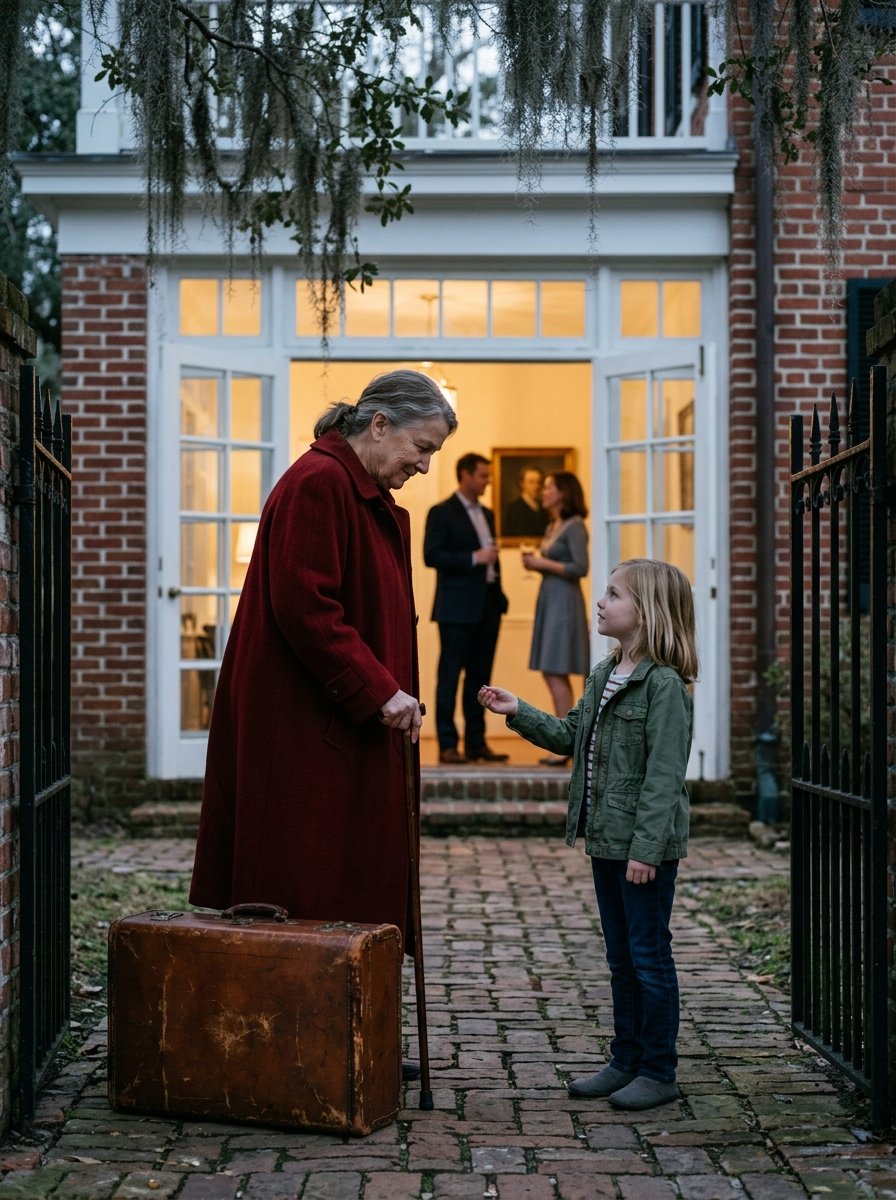
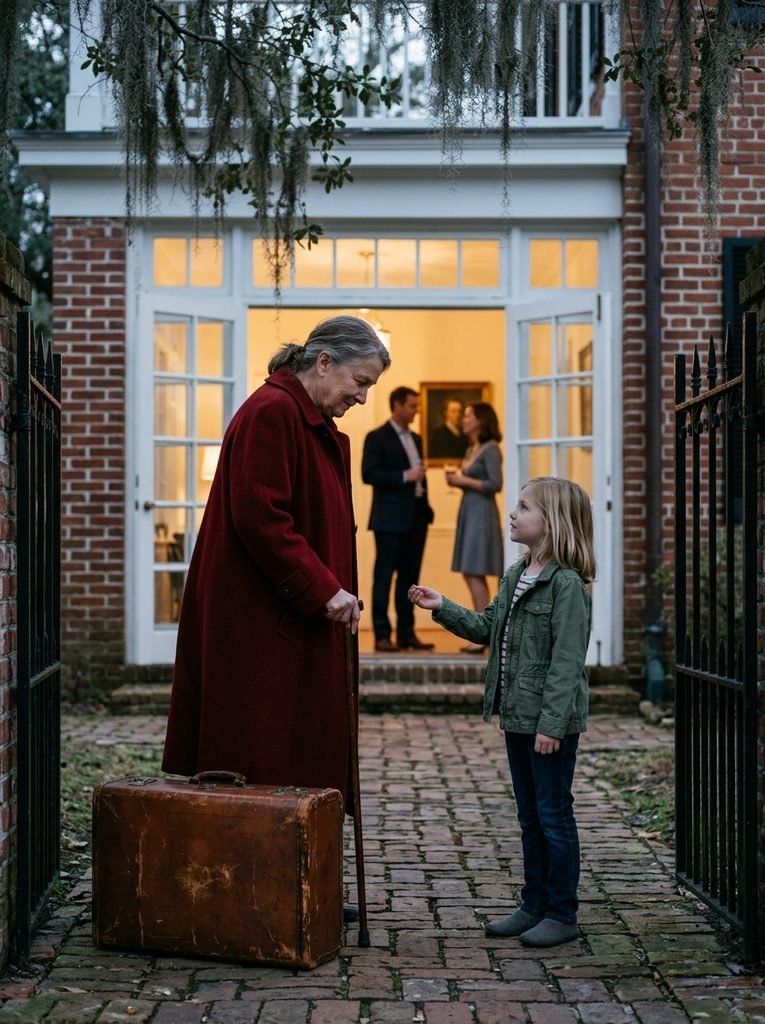
I stood outside Magnolia House in a red coat, my hospital bracelet still circling my wrist. Through the parlor windows, my son Ryan and his wife, Chelsea, were raising glasses with three representatives from a national hotel company.
For twenty-eight years, my late husband, Thomas, and I had restored that Savannah mansion room by room. We repaired its balconies, refinished its heart-pine floors, and turned twelve neglected bedrooms into a thriving historic inn.
Now my key would not fit the lock.
Ryan stepped outside before I could knock. He looked at my suitcase, then at the cane my doctor had insisted I use.
“You weren’t supposed to come here.”
“This is my home.”
He sighed as though I were being difficult.
“Your surgery proved you can’t keep running this place. Chelsea and I found an assisted-living community near Hilton Head. They’re expecting you Monday.”
Behind him, Chelsea closed the parlor curtains.
“Who authorized you to change the locks?” I asked.
“You did when you signed the management papers.”
Before surgery, I had given Ryan temporary authority to oversee reservations for six weeks. That allowed him to handle room assignments, refunds, and vendor schedules while I recovered.
It did not give him ownership.
It certainly did not give him permission to remove me from my home.
“Open the door,” I said.
Ryan lowered his voice.
“Don’t do this in front of the buyers. We’re finally getting a serious offer, and you’re in no condition to make decisions.”
That was when I understood the champagne.
I took out my phone and called Mara Fields, the attorney who had represented Magnolia House since Thomas died.
She answered immediately.
“Caroline? Aren’t you supposed to be resting?”
I kept my eyes on Ryan.
“Close every room.”
There was a brief silence.
“Are you certain?”
“Suspend new reservations, freeze disbursements, and remove Ryan’s administrative access. Current guests are to be protected, but no new money moves without my approval.”
Ryan’s face changed.
“Mom, what are you doing?”
“Managing my property.”
Mara promised to contact the booking platform, merchant processor, and bank. Ryan reached for my phone, but I stepped back.
“Touch me,” I said quietly, “and this conversation changes.”
He stopped.
A few minutes later, his phone began vibrating. Then Chelsea appeared in the doorway, pale and furious.
“The reservation dashboard locked us out.”
One of the hotel representatives asked what was happening. Ryan forced a smile and told them it was a temporary technical problem.
Then the side gate creaked open.
My nine-year-old granddaughter, Lucy, slipped through carrying her school backpack. She ran into my arms, careful of the incision beneath my coat.
“Grandma, I knew you’d come home.”
Ryan’s expression hardened.
“Lucy, go inside.”
Instead, she reached into her pocket and placed an old brass key in my palm.
I recognized the magnolia blossom engraved on its bow. Thomas had once kept it near the library, although I had never known what it opened.
“Dad told me you weren’t coming home,” Lucy whispered. “He made me hide this.”
Ryan moved toward us.
“She doesn’t understand what she’s saying.”
I closed my fingers around the key.
“She understands enough.”
My phone rang before he could answer. The caller identified herself as a closing coordinator with Lowcountry Title and Escrow.
I nearly dismissed it as a scam, but she recited Magnolia House’s LLC number and the scheduled closing date.
“Mrs. Mercer, we need to confirm your authorization before tomorrow’s closing.”
“Authorization for what?”
Her response made the pain in my chest feel insignificant.
“The sale of Magnolia House for $4.8 million.”
I looked through the window at the champagne, the buyers, and the woman already measuring my home with her eyes.
“I never agreed to sell Magnolia House.”
The coordinator went silent.
Then she said, “Mrs. Mercer, we have a durable power of attorney bearing your signature.”
Part 2: The Authority I Never Gave
I did not discuss the alleged sale with Ryan.
Instead, I called Lowcountry Title using the number listed on its official website. The same coordinator answered, and this time Mara joined the call.
The closing file claimed I had authorized Ryan to transfer Magnolia House to Atlantic Crown Hospitality for $4.8 million. Attached was a durable power of attorney granting him control over my property, business interests, and financial accounts.
The signature looked exactly like mine.
Because it was mine.
It had been copied from the temporary management authorization I signed before surgery.
Mara compared both documents in her office that afternoon. The genuine form was six pages long and limited Ryan’s authority to reservations and ordinary vendor payments for six weeks.
The supposed power of attorney contained fourteen pages. Its final page was the signature page from my legitimate form.
“He didn’t forge the handwriting,” Mara said. “He moved your real signature onto a document you never saw.”
The fabricated document also claimed I had suffered cognitive decline and could no longer manage complex decisions.
My cardiologist responded within an hour. His written statement confirmed that I had undergone a successful cardiac procedure, remained mentally competent, and had never been advised to enter assisted living.
Lowcountry Title froze the closing immediately.
Then Mara reviewed Magnolia House’s ownership records.
The inn was held by Mercer Heritage Holdings LLC. I was not merely its majority owner—I was its sole voting member. Ryan had no ownership interest and no authority to approve a sale.
Even a valid personal power of attorney would not automatically give him control of the LLC.
There was another safeguard. Thomas had placed the company interest in a trust requiring written approval from the bank serving as co-trustee before Magnolia House could ever be sold.
No one had contacted the bank.
By evening, the attempted sale was collapsing. But Mara warned me that the false document might be only one piece of the plan.
She was right.
A review of the inn’s payment records revealed that $214,000 in deposits for weddings, reunions, and corporate retreats had been transferred to Chelsea Heritage Events.
Chelsea’s company had supposedly provided furniture, floral design, and coordination services. Yet many of the corresponding events had not taken place, and several invoices used identical descriptions.
Over fourteen months, Ryan had approved every transfer.
He had worked at Magnolia House long enough to understand its vendor system, but access to the accounts had never made the money his.
“They didn’t begin this while you were in surgery,” Mara said. “That was simply when they believed they could finish it.”
That night, Ryan posted a message in our family group chat.
Mom is confused after surgery. Chelsea and I are protecting her while we arrange appropriate care. Please don’t upset her by discussing business.
Relatives began calling to ask whether I remembered them.
I answered none of them.
The next morning, I returned to Magnolia House with Mara, a locksmith, a representative from the title company, and a sheriff’s deputy assigned to keep the entry peaceful.
Ryan opened the door before the locksmith touched it.
“You brought law enforcement to your own son?”
“I brought witnesses to my own property.”