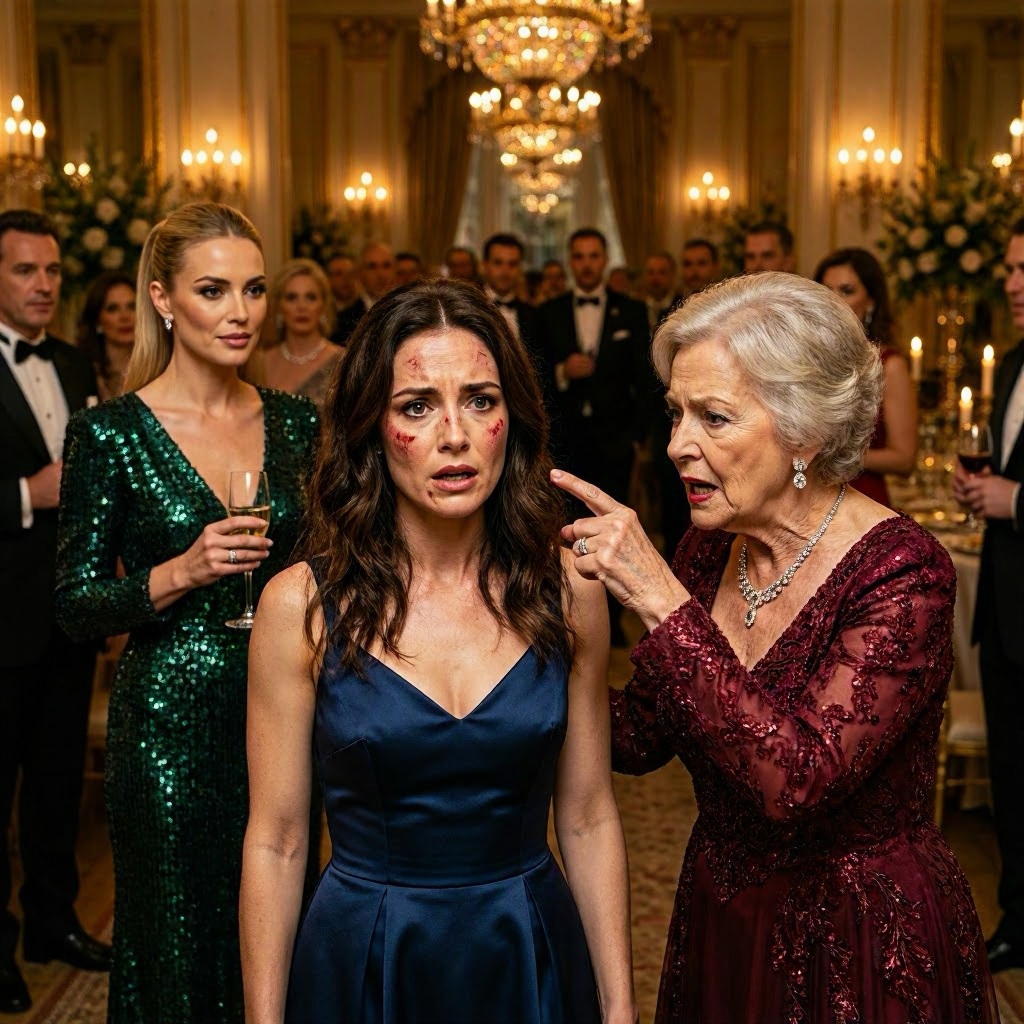
My father remarried eighty-nine days after my mother died.
I know the number because I counted it twice—once when the invitation arrived in the mail with gold lettering and a photograph of him standing beside a woman I had met exactly twice, and once again on the night he told me I should “do the mature thing” and gift my bedroom to her daughter.
Her name was Lorna. The daughter was Madison, fifteen, loud, spoiled, and already referring to my house in Cedar Rapids as “our place” before the wedding gifts had even been unwrapped. I was seventeen, still sleeping in the room my mother had painted pale blue when I was seven, still waking up some mornings expecting to hear her downstairs making coffee. Grief had not even settled into shape yet. It was still a live wire under my skin.
Dad didn’t care.
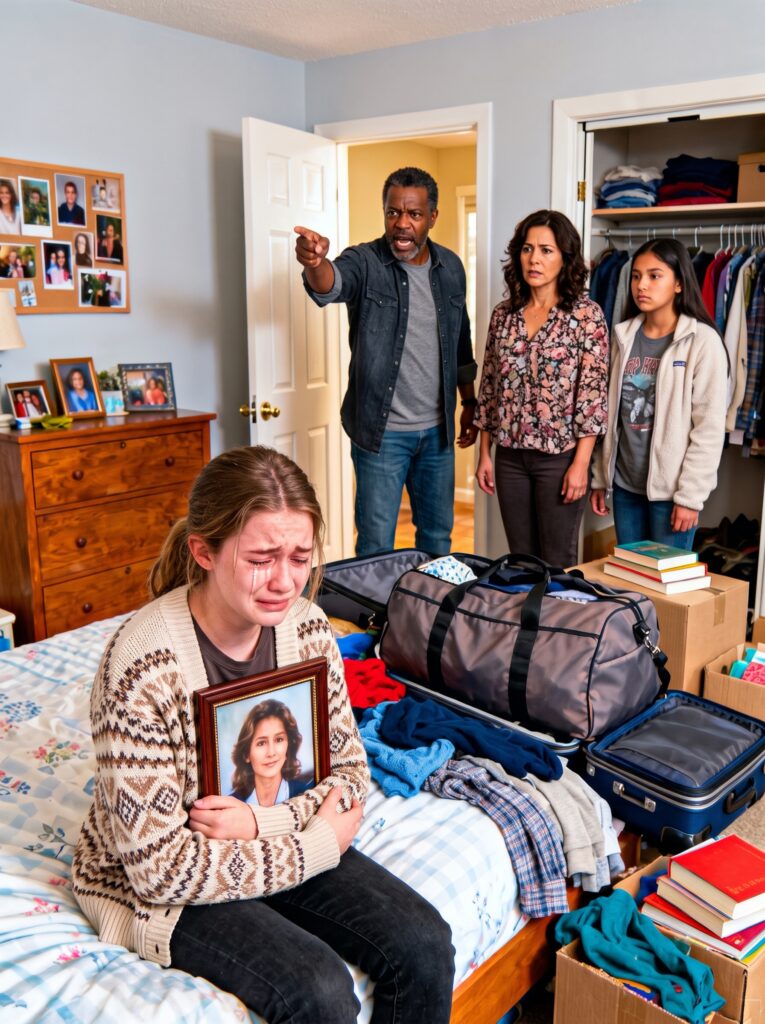
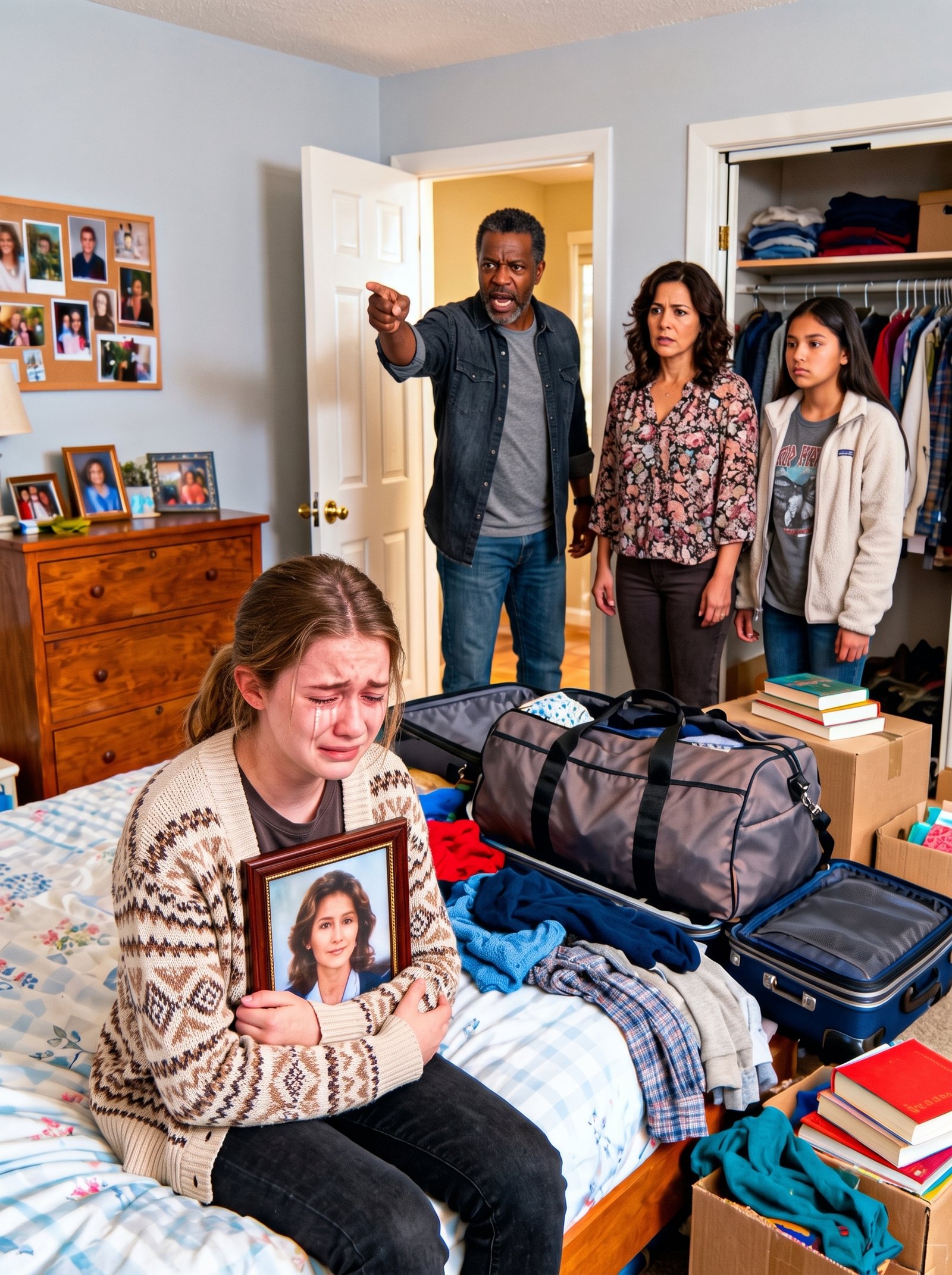
He stood in my doorway with his arms folded and said, “Madison needs stability. You’re practically an adult. You can take the den for a while.”
The den had no door. No closet. No privacy. It also happened to be the room where my father watched television until midnight and where Lorna’s relatives dropped coats and overnight bags.
I looked at him and asked, “You want me to give her Mom’s room?”
He frowned immediately. “It’s not your mother’s room. It’s a bedroom.”
But that was the whole point. To him, rooms had become furniture. Replaceable. Exchangeable. To me, every inch of that house was still full of my mother’s last year—pill bottles hidden in the pantry because she didn’t want visitors to see, the indentation her head left on the living room recliner, the scarf she forgot behind the laundry door and never came back to claim. He was moving a new life into the old one so fast I could still hear the boards creak under the weight of both.
Lorna appeared behind him, all soft concern and careful lipstick. “Sweetheart, no one is trying to erase anything. We just need everyone to make adjustments.”
Everyone.
Except, somehow, never them.
So I said okay.
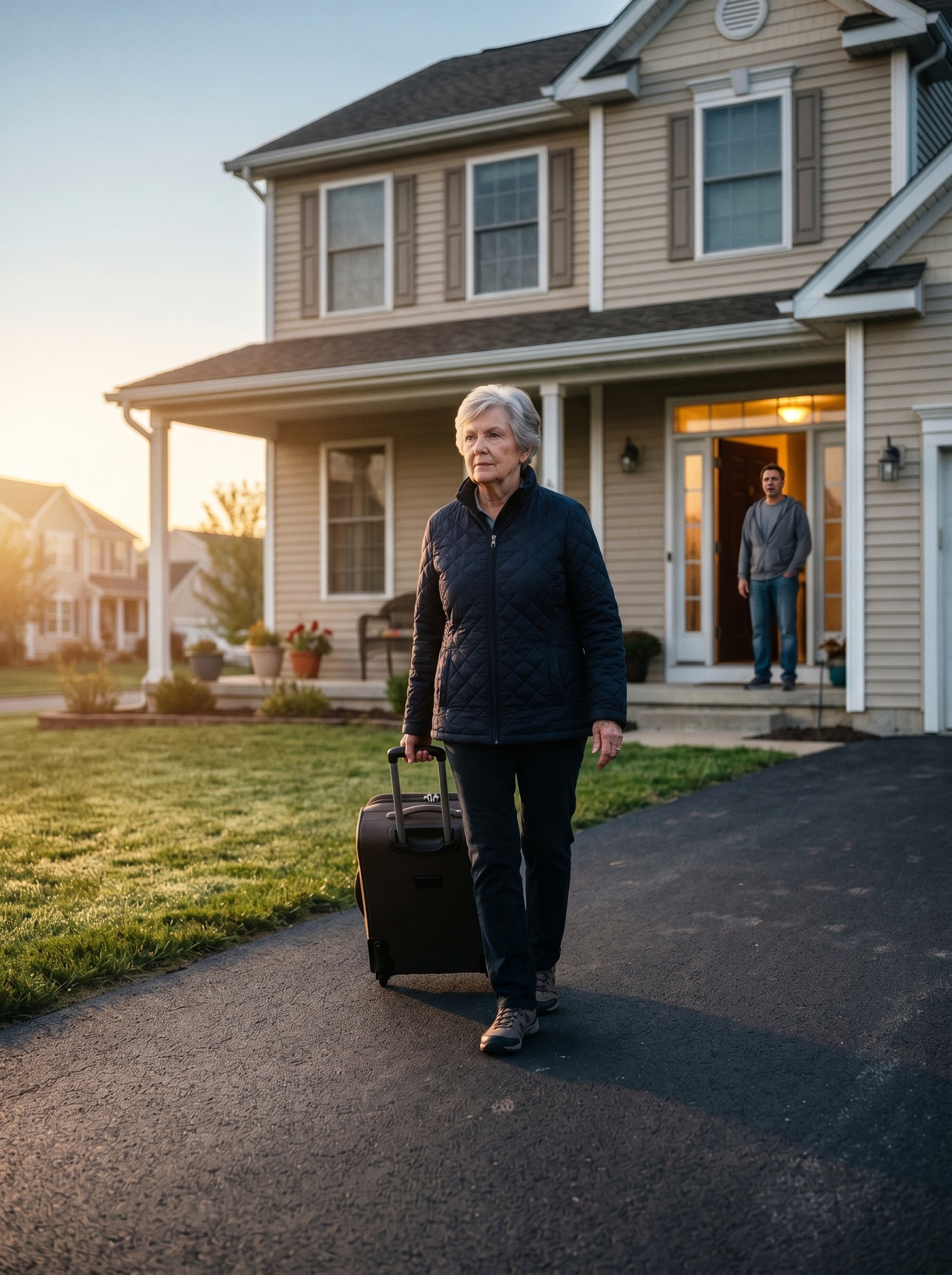
That was what startled him most. No argument. No begging. No dramatic scene. I packed two duffel bags, three boxes of books, my laptop, my mother’s framed recipe card, and the cedar jewelry box she left me.
Then I called my uncle Ray, my mother’s older brother, who lived twenty minutes away and had already told me, twice, that if things got ugly, I had a place.
Madison got my room. Lorna got her seamless little family image. Dad got a quieter house.
For eleven days, no one seemed to mind.
Then a certified envelope arrived in his mailbox.
After that, he started calling me so often it felt less like regret and more like panic.
Because what had come in that mail was not a bill, not a complaint, and not condolences.
It was my mother’s will….
The certified envelope had arrived on a Tuesday, while the air in Cedar Rapids was still holding onto the heavy, humid residue of late summer. Uncle Ray had set it on the laminate kitchen table beside a cup of black coffee and a plate of buttered toast, his face entirely unreadable.
“Your mother left instructions,” Uncle Ray had said, his voice as rough as gravel. “She didn’t trust him to do the right thing after she was gone. She knew him better than the rest of us ever wanted to admit.”
The document inside wasn’t just a standard distribution of assets; it was a comprehensive preservation of her memory, carefully constructed by an attorney who specialized in estate protection. When my father tore open that same envelope three days later, standing in the foyer of the house that was supposed to be his new beginning, his carefully orchestrated life instantly fractured.
The terms of the will were absolute. The house—the entire property, including the pale blue bedroom, the kitchen with its pill-bottle pantry, and every brick—had never belonged solely to him. It had been inherited entirely through my mother’s side of the family, tied to a generational trust that barred him from selling, remodeling, or transferring ownership to anyone outside our direct bloodline. Furthermore, the trust stipulated that if my father remarried within two years of her death, or if he brought another family into the home without my explicit, notarized consent, full stewardship of the estate immediately reverted to me, with Uncle Ray acting as trustee until my eighteenth birthday, after which the keys would be mine alone.
Within an hour of reading those pages, my phone started buzzing. It didn’t stop.
Dad: We need to talk. This is a misunderstanding. Dad: Call me right now. Dad: Your uncle is poisoning your mind. Please, come home.
I stared at the screen, sitting at the small wooden desk in Uncle Ray’s guest room. The walls here were a neutral cream, free of history, free of ghosts. But they were quiet. No one was knocking on the door to demand my space. No one was telling me to mature while tearing down the architecture of my past.
By Friday evening, my father had driven out to Uncle Ray’s place.
I watched from the upstairs window as his sedan crunched over the gravel driveway. He stepped out of the car, looking older than he had three weeks ago. His tie was loosened, his shoulders hunched inside a jacket that suddenly seemed too large for him. He looked less like a man starting a fresh chapter and more like someone who had just realized he was standing on a sheet of thin ice over deep water.
The doorbell rang, a sharp, echoing sound that made me flinch. Downstairs, I heard Uncle Ray’s heavy footsteps cross the hardwood floor.
“He’s here,” Uncle Ray called up the stairs, his voice steady. “You want me to throw him off the property, or do you want to handle it?”
I took a deep breath, feeling the cool air fill my lungs, steadying the live wire that had lived under my skin since the day the funeral flowers wilted.
“I’ll handle it,” I said.
Descending the stairs felt different this time. I wasn’t running away with two duffel bags and a box of books. I walked down with my head up, my fingers lightly touching the wooden banister that my grandfather had carved decades ago.
When I opened the front door, my father looked up, his expression desperate.
“Please,” he said, the word catching in his throat, stripped of all authority. “Lorna and Madison… they don’t know where to go. The lawyers are saying the deed transfer is completely void. They’re packing their bags right now.”
“They’re in my room?” I asked, my voice dangerously calm.
He swallowed hard, wringing his hands together in a gesture of absolute defeat. “They’re in the den. They’re going back to her sister’s apartment. I just… I didn’t think she would do this. Your mother. I didn’t think she’d lock me out of my own life.”
“It was never just your life,” I answered, looking past him toward the empty horizon where the sun was beginning to set, casting long, bruised shadows across the lawn. “She gave you a home, and you traded her memory for convenience before her body was even cold. You wanted stability for Madison? Go find it somewhere else. This house belongs to me now.”
“You can’t freeze me out like this,” he pleaded, taking a half-step forward. “I’m your father.”
“You were,” I said softly.
I closed the heavy wooden door, the click of the latch sounding final in the quiet evening. Uncle Ray was waiting in the kitchen, offering a small, knowing nod as I walked back in. For the first time in months, the weight in my chest lifted, replaced by a quiet, enduring strength. My mother hadn’t left me behind; she had left me a fortress, and I was finally safe inside it.
Epilogue
Two years passed before I walked back down the sidewalk of the house in Cedar Rapids.
The pale blue paint of my old bedroom window had been chipped by harsh winter winds, but through the glass, I could see Uncle Ray had already started overseeing the maintenance we agreed upon. The legal battles had dragged on for months—a messy, desperate scramble by my father to salvage a life built on quicksand. Lorna had left him before the first snow fell, taking Madison and whatever illusions of a seamless family they had tried to paste over our grief. My father was left alone in a house that felt too large, rattling around in rooms that no longer belonged to his ambitions.
I didn’t hate him anymore. Hatred required a tether, and the legal transfer of the estate, finalized on my eighteenth birthday, had cut the final cord. He was simply a man who had chosen convenience over memory, and the architecture of his choice had collapsed around him.
Uncle Ray walked beside me up the paved path, his hands tucked deep into his coat pockets. “You sure you want to go inside, kid?” he asked quietly, his breath forming small clouds in the crisp autumn air. “You don’t have to step foot in here if it still feels heavy.”
“It doesn’t feel heavy anymore,” I said, pulling the brass key from my pocket—the heavy, original key my mother had kept on her ring.
I turned the lock. The click was clean and resonant, echoing through a hallway that no longer smelled of stranger’s perfume or forced beginnings. It smelled faintly of old cedar, baking spice, and vanilla—the residual scent of a life that had refused to be erased.
Inside, the living room recliner sat in its exact place. The indentation of my mother’s head was gone, smoothed over by time, but the warmth of her presence lingered in the very grain of the timber. Upstairs, my pale blue bedroom awaited me, untouched and preserved, a quiet sanctuary where the live wire under my skin finally transformed into a steady, unbreakable pulse.
I walked to the kitchen, setting my mother’s framed recipe card on the counter next to the pantry where the old pill bottles had once been hidden. The house wasn’t just a structure of wood and brick anymore. It was a promise kept.
“Come on, Uncle Ray,” I said, looking back with a clear, light heart. “Let’s make some coffee.”