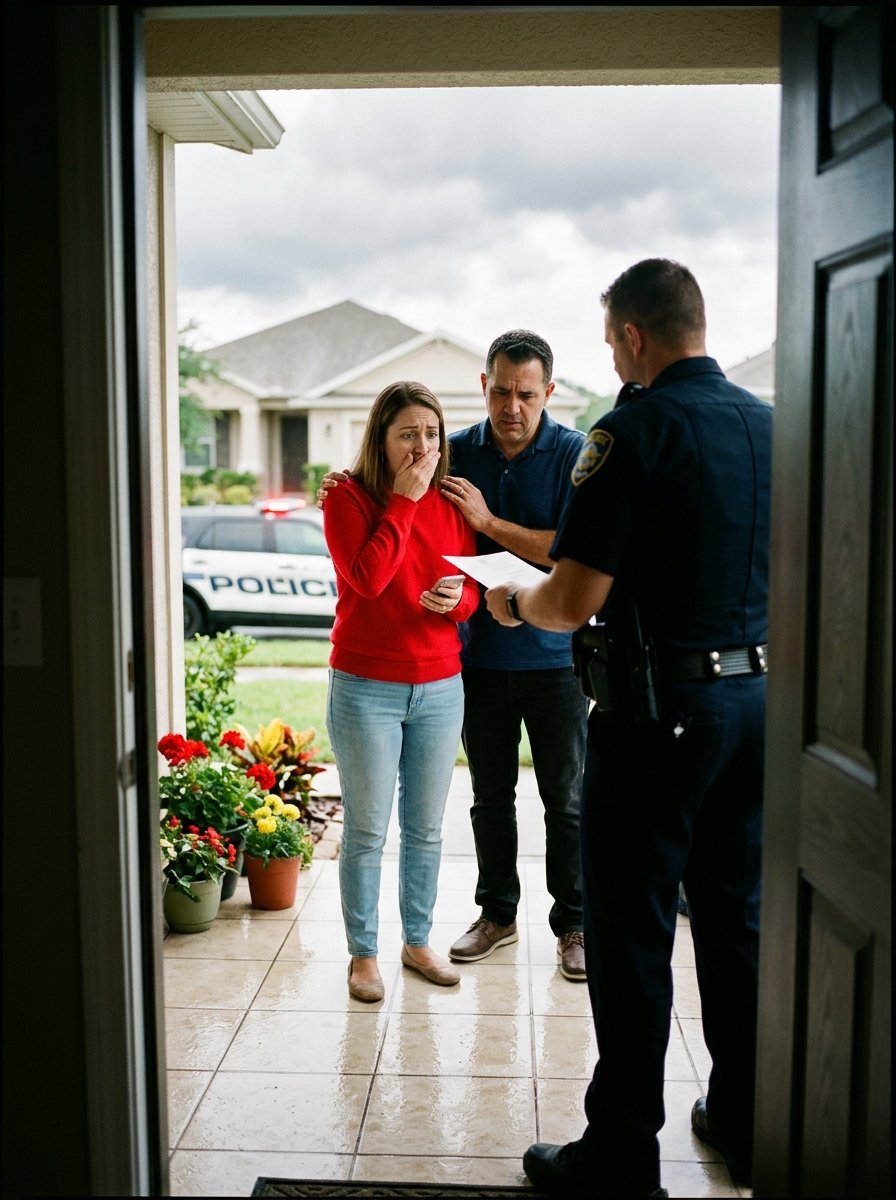
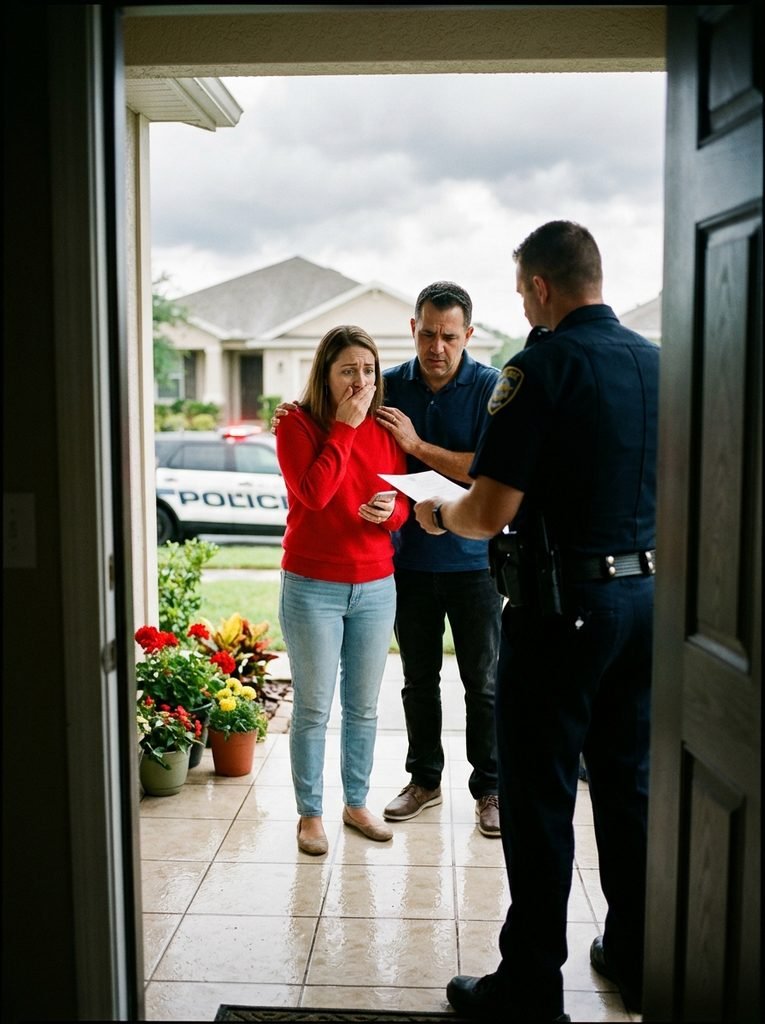
I spent weeks in the hospital fighting for my life, and not one person from my family came to see me. Not my mother, my father, or my younger sister. A month after I returned home, Dad finally contacted me, but instead of asking how I was recovering, he demanded $12,000 for Mom’s surgery. I sent him one dollar with the message, “Good luck.” That evening, two police officers appeared at my door, carrying a complaint with my father’s name on it.
My name is Mallory Hayes. I’m thirty-three years old, a senior payroll manager, and until recently, I believed that taking care of my family was simply part of being a good daughter.
I was the person everyone called when a bill was overdue, a bank account was overdrawn, or an unexpected expense threatened to ruin someone’s week. My husband, Ethan, had gently pointed out that my parents and sister rarely contacted me unless they needed something, but I’d always defended them.
“They’re my family,” I would tell him. “I can’t just abandon them.”
I never imagined how differently they would behave when I was the one who needed help.
The last thing I remembered before waking up in the hospital was standing beside the copier at work, holding several payroll reports. My coworker Jenna had called my name from the hallway, and when I turned toward her, the room suddenly seemed to tilt.
Then everything went black.
When I opened my eyes again, a heart monitor was beeping beside my bed, and my throat felt painfully dry. Ethan was sitting in an uncomfortable blue chair, his clothes wrinkled and his face exhausted.
The moment he realized I was awake, he leaned forward and gripped my hand.
“Oh, thank God, Mallory. I thought I was going to lose you.”
I tried to ask what had happened, but my voice barely worked. Ethan helped me take a small sip of water before explaining that I’d collapsed at work and had been unconscious for most of the previous nine days.
Nine days.
I looked around the hospital room, trying to understand how so much time had passed without my knowledge. There were flowers beside the sink and a paperback book on the tray table, but the two visitor chairs near the window were empty.
“Where’s Mom?” I whispered. “Did anyone tell my parents?”
Ethan’s expression changed.
Before he could answer, a nurse named Carla entered to check my condition. She was a kind woman with silver braids, and when I repeated my question, she exchanged a brief glance with my husband.
“Your family was notified,” Carla explained. “We called the emergency contacts listed in your chart.”
“Did they answer?”
“Your mother answered twice, and your father returned one call. We explained that your condition was serious.”
I waited for her to continue.
“They said they had several things going on and would visit when their schedules allowed.”
I stared at her.
“My parents live forty minutes away.”
Carla didn’t respond, but the sympathy in her expression told me she understood exactly why I was upset.
My younger sister lived even closer, only twenty-five minutes from the hospital. She had received the same notification, yet none of them had appeared.
For years, I’d paid their phone bills, helped with property taxes, and transferred money whenever they claimed to be facing an emergency. I’d even left dinners with Ethan to drive across town because Mom insisted she couldn’t handle a problem without me.
Now I was lying in a hospital bed, unable to remember nine days of my life, and they apparently couldn’t find an hour to visit.
Ethan showed me the hospital’s call log. It documented the attempts to contact my parents, while Jenna had preserved the workplace incident report and the urgent email she’d sent to all three family members after the ambulance arrived.
They hadn’t been unaware of what happened.
They’d known.
And they’d chosen not to come.
I remained hospitalized for several more weeks. Ethan stayed beside me whenever possible, sleeping in that terrible chair until his back hurt, while Jenna brought clean socks, toiletries, and books she hoped I’d eventually feel strong enough to read.
My parents and sister never visited.
Not once.
When I finally returned home, I was still weak enough that walking across the kitchen sometimes left my legs trembling. Ethan handled the groceries, meals, and appointments while I tried to regain my strength.
An entire month passed without a meaningful call from my family.
Then, one afternoon, my phone vibrated on the kitchen table.
It was Dad.
We need $12,000 for your mother’s surgery.
There was no greeting, no apology, and not a single question about my recovery.
I looked at Ethan, who quietly placed his hand over mine.
For the first time in my life, I didn’t feel obligated to rescue my parents.
I opened my banking app, transferred exactly one dollar to Dad, and sent a two-word reply.
Good luck.
His response arrived almost immediately.
You selfish little witch. Your mother is sick. You owe this family.
I saved the messages and the transfer receipt, then placed my phone facedown.
At 7:42 that evening, someone knocked on our front door.
Ethan looked through the peephole, and his expression suddenly hardened.
“Mallory, it’s the police.”
When he opened the door, two officers stood on our porch. The older officer held a printed complaint and asked whether I was Mallory Hayes.
I nodded.
Then I saw my father’s name at the top of the document.
He hadn’t simply become angry about the dollar.
He had made an accusation against me serious enough to bring the police to my home.
And as the officer began explaining what my father had reported, I realized he was trying to turn my refusal into something far more damaging.
Part 2: My Father Sent the Police to My House—But He Didn’t Know What My Husband Had Saved
The older police officer stood on our porch holding a printed complaint, while his younger colleague opened a notebook. I was still recovering from weeks in the hospital, and the effort of standing made my legs tremble, but I refused to let my father frighten me into hiding.
“Mrs. Hayes, we’ve received a complaint from your father concerning possible financial exploitation connected to your mother’s medical situation,” the officer explained.
For a moment, I couldn’t understand what he meant. My father had demanded twelve thousand dollars, I’d refused, and now he was suggesting that I had somehow committed financial wrongdoing.
“I’m sorry,” I said. “My father claims I’m exploiting my mother?”
“He’s raised concerns about money and your refusal to provide assistance. We’re here to clarify the circumstances.”
Ethan moved closer, resting a reassuring hand against my back. He knew how much my family had taken from us over the years, but even he seemed stunned that my father had involved law enforcement.
“Officer, my wife was hospitalized for weeks,” Ethan explained. “She’s still recovering, and her father contacted her today for the first time in over a month.”
The older officer glanced at me.
“Is that correct?”
“Yes. And I have the messages.”
I retrieved my phone from the kitchen table and opened the conversation. Dad’s demand appeared first, followed by the one-dollar transfer receipt and the angry messages he’d sent afterward.
You selfish little witch.
Mom is sick.
You owe this family.
The officer read each message carefully while his colleague made notes. Neither interrupted when I explained that I’d spent years helping my parents financially, but I had never agreed to pay for my mother’s surgery.
“Has your father provided any documentation showing that you owe this money?” the older officer asked.
“Not to me. He didn’t even explain what surgery Mom supposedly needed.”
Ethan stepped into the living room and returned with the folder he’d maintained throughout my hospitalization. It contained my discharge records, the hospital contact log, and copies of the workplace incident report Jenna had preserved.
He handed the documents to the officer.
“My wife’s family was notified when she was admitted. They knew she was seriously ill, but none of them visited.”
The officer examined the contact log, which showed that my mother had answered two calls and my father had returned another. An intake note confirmed that the family had been informed of the seriousness of my condition.
Then Ethan showed him Jenna’s email.
The subject line read:
MALLORY HOSPITALIZED — URGENT.
It had been addressed to my mother, father, and younger sister.
I watched the officer compare the dates with the complaint. For years, my parents had relied on my willingness to apologize and explain myself, but the documents showed what had actually happened.
Then my phone rang.
Dad.
I looked at Ethan, who glanced toward the officers.
“Would you like to answer?” the older officer asked.
I nodded and activated the speaker.
Dad began shouting before I could say hello.
“You think sending me one dollar was funny? You think you can humiliate your mother and get away with it?”
“Dad, what exactly did you tell the police?”
He gave a bitter laugh.
“You’ll find out soon enough. Maybe now you’ll understand what happens when you refuse to help your own family.”
I felt Ethan tense beside me.
My father continued without waiting for a response.
“You’ve been hiding money from us for years, Mallory. After everything we sacrificed, you think you can just turn your back on us?”
“Dad,” I interrupted, “you’re on speaker.”
“So what?”
“The police officers you sent to my house are listening.”
The line went completely silent.
For several seconds, nobody spoke. Then Dad abruptly ended the call.
The older officer looked at the complaint again before explaining that the information we’d provided did not appear to support the accusation as it had been presented. He asked whether I would be willing to submit copies of the messages and records for documentation.