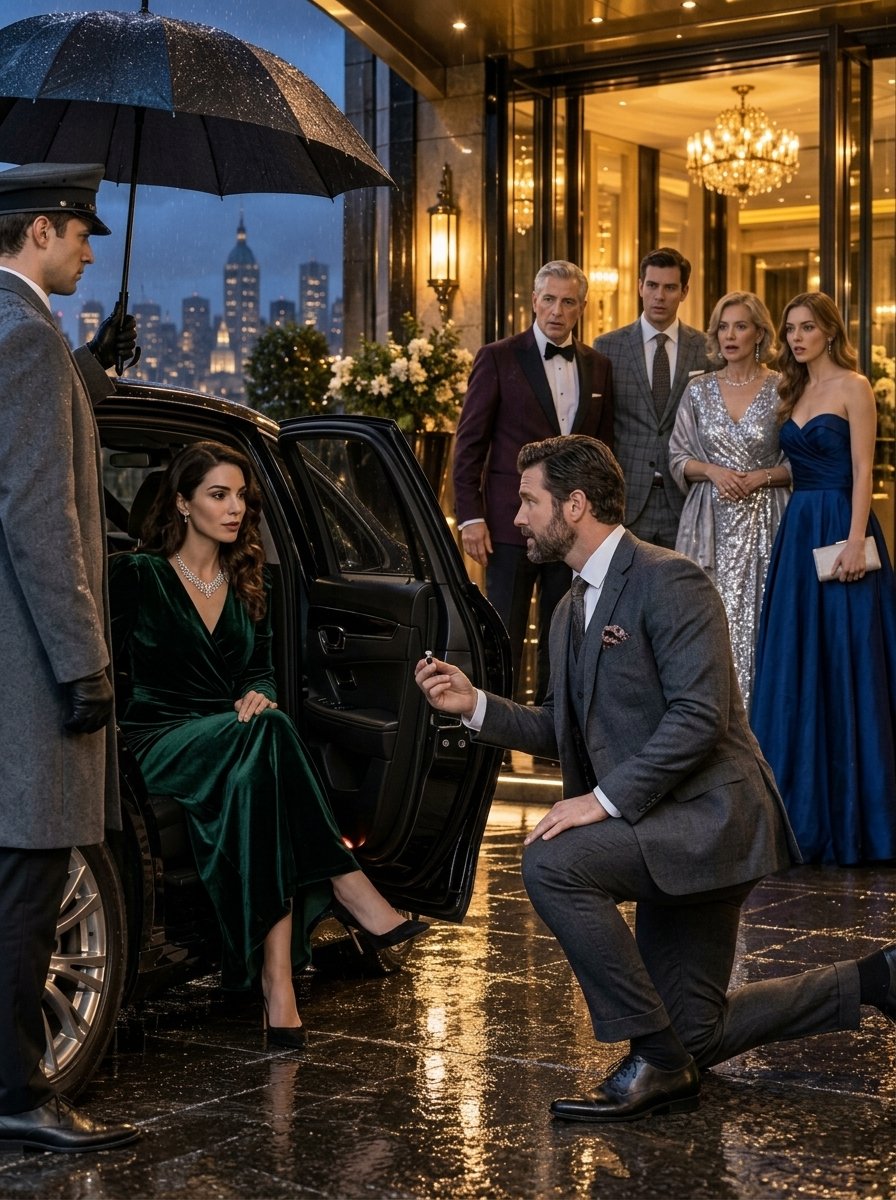
The moment my father told me to wait in the car, I knew the dinner wasn’t really about investors.
It was about shame.
His shame.
Mine, apparently.
And the version of our family he was desperate to sell to strangers.
“Wait in the car, Nora.”
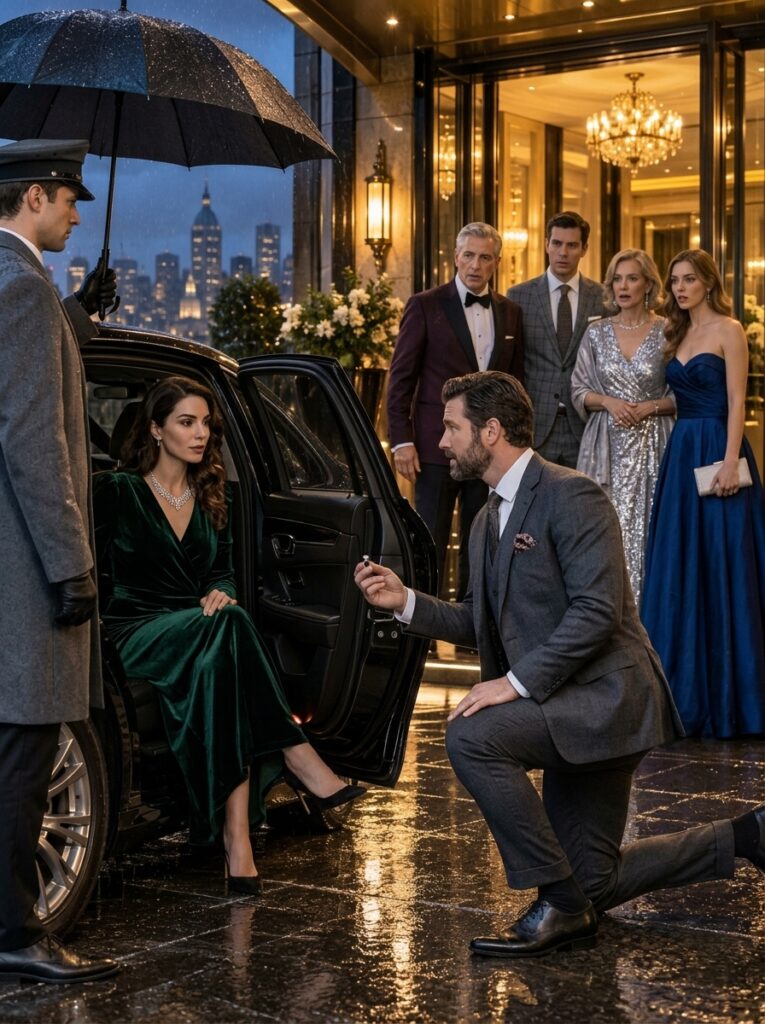
Grant Whitmore’s hand tightened around my elbow as we stood beneath the awning of Valère, one of San Francisco’s most expensive restaurants.
Rain silvered the streets of Nob Hill behind us. Valets moved beneath black umbrellas. Through the glass doors, chandeliers glowed above marble floors and white roses.
I stared at my father.
“What?”
“We cannot have another scene tonight.”
Another scene.
I almost laughed.
“What scene?”
His jaw tightened.
“The Hargroves are considering a major investment in Whitmore Capital. I need everyone focused.”
Behind him, my younger sister Paige suddenly found her bracelet fascinating.
My older brother Owen didn’t bother hiding his annoyance.
My mother, Celeste, stepped closer.
“Sweetheart, you’ve been away from the family business for years. You don’t understand how delicate these negotiations are.”
There it was.
The family business.
Their favorite phrase whenever they wanted to remind me that I’d once belonged—and then decided I didn’t.
Five years earlier, I’d been twenty-eight and working at Whitmore Capital.
I’d walked into a senior-partner meeting with a proposal for a technology-focused investment platform.
My father let me speak for seven minutes.
Then he leaned back and said, in front of six executives:
“Ideas like that belong in some college incubator, Nora. Not in a serious investment firm.”
Nobody defended me.
So I left.
According to my family, I had spent the next five years drifting.
“Consulting,” Mom told relatives.
“Playing with startups,” Paige joked.
“Burning through her inheritance,” Owen liked to say.
The curious thing was that not one of them had ever asked what I actually did.
Not once.
I looked at Dad now.
“So why invite me?”
His gaze flickered.
Mom answered.
“It’s a family dinner.”
I smiled without humor.
“A family dinner I’m not allowed to attend?”
Paige groaned.
“God, Nora. Why does everything have to become a confrontation?”
“You’re right. Wanting to attend the dinner I was invited to is incredibly confrontational.”
Owen stepped forward.
“The Hargroves are traditional. They respect continuity, stability, family leadership. Dad needs them to see that Whitmore Capital is solid.”
Solid.
The word bothered me.
Not successful.
Not expanding.
Solid.
I looked at my father.
Something moved behind his eyes.
Fear.
Then it vanished.
“Enough.”
He opened the sedan door.
“Wait here.”
So I did.
Not because he’d won.
Because there was something I hadn’t told them.
And suddenly I wanted to know how far they’d go before discovering it themselves.
Twenty minutes later, another black sedan pulled beneath the awning.
A valet hurried forward.
The rear door opened.
And I recognized the man immediately.
Richard Hargrove.
CEO of Hargrove Global.
One of the most respected institutional investors in the country.
And a man who had been trying to get fifteen minutes on my calendar for three months.
He stepped into the rain.
Then he glanced toward my car.
Stopped.
Looked again.
His expression changed.
He walked straight toward me.
A valet chased after him with an umbrella.
Richard opened my door.
“Nora?”
I smiled.
“Good evening, Richard.”
He stared at the restaurant.
Then back at me.
“What are you doing sitting out here?”
Before I could answer, the restaurant doors opened.
Dad appeared.
Owen followed.
Then Paige and Mom.
Dad’s face brightened instantly.
“Mr. Hargrove!”
Richard turned.
Dad hurried toward us.
“We’ve been expecting you.”
Richard looked at him.
Then at my family.
Then slowly back at me.
“You’re with them?”
There was something almost comical about the silence.
Dad frowned.
“You know my daughter?”
Richard straightened.
Then, right there in the rain, one of the most powerful CEOs on the West Coast lowered his head respectfully toward me.
“Madam President.”
My father’s face lost all color.
Richard looked genuinely bewildered.
“I didn’t know this was your family.”
Nobody moved.
Finally, Dad whispered, “Madam… President?”
Owen’s expression hardened.
Paige’s mouth fell open.
Mom simply stared.
Richard turned back to me.
“I’ve been trying to meet with you for three months.”
I stepped from the car.
Dad looked at me as if I’d changed species.
“Nora. President of what?”
I adjusted my jacket.
“The company Richard wants to invest with.”
Owen gave a short, disbelieving laugh.
“What company?”
I looked at him.
“Asterion Holdings.”
His laughter stopped.
Paige inhaled sharply.
Even my mother recognized the name.
Everybody in finance did.
Asterion had begun quietly five years earlier as a twelve-person investment technology startup.
Three years later, it managed more than four billion dollars.
By that spring, after acquiring two distressed-credit funds and an institutional data platform, financial press estimated its valuation at $11.8 billion.
Owen shook his head.
“No.”
Richard glanced at him.
“Yes.”
Dad stared at me.
“You work for Asterion?”
I held his gaze.
“I founded it.”
The rain suddenly seemed louder.
Dad’s lips parted.
“You…”
“I am Asterion’s founder and president.”
Mom whispered, “But you said you were consulting.”
“No, Mom. You told people I was consulting. You never asked.”
Paige’s face turned red.
Richard broke the silence.
“Perhaps we should go inside.”
Dad didn’t answer.
He was looking at me the same way he’d looked at numbers that refused to balance.
Finally, we entered Valère together.
This time nobody told me to wait outside.
The private dining room had been prepared for eight.
Crystal glasses.
White linen.
A fireplace burning beneath an abstract painting.
The Hargrove team took one side.
My family took the other.
Richard motioned toward the chair beside him.
“For President Whitmore.”
Dad stared.
That chair had clearly been intended for him.
I sat down.
Owen leaned toward Dad.
“This doesn’t change why we’re here.”
Richard heard him.
“Actually, it changes quite a lot.”
Dad straightened.
“Mr. Hargrove, perhaps we should begin with the proposed capital injection.”
Richard folded his hands.
“Grant, before discussing that, there’s something you need to understand.”
Dad’s voice became careful.
“I’m listening.”
Richard looked at me.
“Our investment committee’s interest in Whitmore Capital was contingent upon several factors.”
Owen nodded eagerly.
“Of course.”
“One of them was Asterion.”
Dad frowned.
“What does Nora’s company have to do with ours?”
Richard’s expression became almost pitying.
“Everything.”
He opened a leather folder.
“Whitmore Capital currently has approximately two hundred and sixty million dollars in outstanding structured debt.”
Mom went still.
Paige looked at Dad.
“What?”
Dad’s voice sharpened.
“That isn’t relevant.”
Richard continued.
“Of that debt, one hundred and eighty-four million matures or resets within the next eleven months.”
My mother turned pale.
Owen said, “Those figures are confidential.”
Richard nodded.
“They were.”
Dad looked at me.
Then realization began creeping across his face.
“How do you know?”
I answered quietly.
“Because Asterion owns most of it.”
Silence.
Owen shot to his feet.
“That’s impossible.”
“No,” I said. “It isn’t.”
Eighteen months earlier, several lenders had quietly begun selling Whitmore Capital’s debt at discounts.
Asterion’s distressed-credit division purchased it through subsidiaries.
No Whitmore name appeared anywhere near the transactions.
By the time the market understood what was happening, we controlled nearly seventy percent of Whitmore’s senior obligations.
Dad stared at me.
“You bought our debt?”
“I bought undervalued debt.”
“You targeted us.”
“I didn’t know it was yours when our algorithm first flagged the portfolio.”
That was true.
But when I found out, I had done something I rarely did.
I personally reviewed every document.
And what I’d seen disturbed me.
Declining assets.
Hidden leverage.
Client departures.
Short-term borrowing used to cover long-term obligations.
Whitmore Capital wasn’t merely struggling.
It was collapsing.
Dad pushed back from the table.
“Richard, you came here to invest.”
Richard’s face hardened.
“I came here to determine whether there was anything left worth saving.”
Dad froze.
“And after reviewing the records?”
Richard looked toward me.
“I wanted her opinion.”
Dad’s eyes narrowed.
“So this is some kind of ambush.”
“No,” I said.
“Then what is it?”
“A chance.”
His laugh was bitter.
“From you?”
“Yes.”
I opened my own folder.
“I prepared a restructuring proposal.”
Owen scoffed.
“You think you can walk back in after five years and take over?”
“I don’t want to take over.”
“Then what do you want?”
“To keep four hundred and twelve employees from losing their jobs because management refused to admit the truth.”
Dad slammed his palm against the table.
“Enough.”
Everyone fell silent.
His face was red now.
“You have no idea what I’ve sacrificed for that company.”
“I know exactly what you’ve sacrificed.”
I looked at Owen.
“Mostly its future.”
Owen’s chair scraped back.
“What the hell is that supposed to mean?”
Richard closed his folder.
“Perhaps we should discuss the Meridian transactions.”
Owen stopped breathing.
It was subtle.
But I saw it.
So did Dad.
“What Meridian transactions?” Paige asked.
Nobody answered.
I turned toward Owen.
“Would you like to explain?”
He glared at me.
“There’s nothing to explain.”
I slid three documents across the table.
“You borrowed sixty-three million dollars through shell entities backed by Whitmore client assets.”
Mom’s hand flew to her mouth.
Dad stared at Owen.
“Tell me she’s lying.”
Owen looked at him.
“Dad—”
“Tell me.”
“It was temporary liquidity.”
Dad’s face changed.
“You told me those facilities were backed by company real estate.”
“They were supposed to be.”
“Supposed to be?”
Owen pointed at me.
“She doesn’t understand the structure.”
I laughed once.
“Then explain it.”
He couldn’t.
The truth was uglier than simple incompetence.
Whitmore Capital had lost several major clients.
Owen had attempted to disguise the outflows by borrowing against assets the firm did not fully own.
He hadn’t stolen the money.
That would almost have been simpler.
He’d gambled it.
He believed markets would recover quickly enough that nobody would notice.
They hadn’t.
And now the company was months away from default.
Dad looked older by the second.
“How long?” he whispered.
Owen didn’t answer.
“How long have you known?”
“Six months.”
Dad slowly stood.
“You let me go into meetings telling investors we were stable.”
“I was fixing it.”
“You were lying.”
“I was protecting the firm!”
“No.”
Dad’s voice cracked.
“You were protecting yourself.”
For the first time in my life, Owen had no answer.
Then Paige spoke.
“I knew something was wrong.”
Everyone turned.
Her eyes were wet.
“Three months ago, Owen asked me to sign documents transferring voting authority over one of the family trusts.”
Owen’s face hardened.
“Paige.”
She ignored him.
“I refused.”
“Paige, stop.”
“He said Dad had approved it.”
Dad whispered, “I never approved anything.”
“I know.”
Paige reached into her handbag.
And placed a flash drive on the table.
Owen went white.
I hadn’t expected that.
“What is that?” Mom asked.
Paige looked at me.
“Everything.”
Owen lunged toward the table.
Richard’s attorney stood immediately.
Paige pulled the drive away.
“I copied his files.”
“You stupid little—”
“Sit down,” Dad said.
Owen turned on him.
“She stole confidential information!”
Paige’s voice trembled.
“And you tried to forge my signature.”
Another silence.
I looked at my sister differently.
For years, I’d dismissed Paige as shallow.
She’d returned the favor.
But sitting there, hands shaking while she stared down our brother, she suddenly looked very young.
And very brave.
Dad lowered himself into his chair.
“Richard, what happens now?”
Richard looked toward me.
“That isn’t my decision.”
Dad followed his gaze.
And for perhaps the first time in his life, my father had to ask me for help.
“Nora.”
He struggled with the word that came next.
“Please.”
I hated how much I’d once dreamed of this moment.
I had imagined satisfaction.
Vindication.
Maybe even revenge.
Instead, I felt tired.
“This is my offer.”
I pushed the restructuring proposal toward him.
“Asterion extends the maturities. Hargrove provides fresh capital. Employee pensions and client accounts are ring-fenced. Owen resigns immediately and cooperates with an independent investigation.”
Owen laughed bitterly.
“Of course.”
I continued.
“Dad steps down as CEO.”
His eyes rose to mine.
Mom whispered my name.
Dad looked strangely calm.
“And who replaces me?”
“Not me.”
That surprised everyone.
“Then who?”
I looked at the woman sitting beside my mother.
“Paige.”
Paige nearly dropped her glass.
“What?”
Owen burst out laughing.
“Paige? She organizes charity galas.”
Paige’s face burned.
I looked at Richard.
He opened another folder.
“Paige Whitmore completed an MBA at Berkeley while working full time for the foundation. She also increased its annual fundraising by eighty-two percent in three years.”
I turned toward her.
“Apparently nobody asks what you do either.”
Her eyes filled.
For the first time that evening, she smiled at me.
A real smile.
Dad stared between us.
“Paige isn’t ready.”
“Neither were you when Grandpa made you CEO.”
That landed hard.
My grandfather, Walter Whitmore, had built the company from a six-desk office.
He’d died eight years earlier.
Dad rarely mentioned him.
Their relationship had been complicated.
Richard suddenly checked his watch.
Then something strange happened.
He smiled.
Not pleasantly.
Almost knowingly.
“Actually,” he said, “that brings us to the final matter.”
I frowned.
“What final matter?”
Richard looked surprised.
“You don’t know?”
“Know what?”
For the first time all evening, I was the one without information.
Richard reached into his briefcase and removed a sealed envelope.
My name was written across the front.
NORA ELAINE WHITMORE.
I recognized the handwriting immediately.
My chest tightened.
“No.”
Dad saw it too.
His face turned gray.
“Where did you get that?”
Richard placed it in front of me.
“Your grandfather gave it to my father eight years ago.”
Nobody moved.
“My father served as trustee for one portion of Walter Whitmore’s estate,” Richard explained. “When he died last year, responsibility transferred to me.”
I looked at Dad.
“What is he talking about?”
Dad wouldn’t meet my eyes.
Richard continued.
“Your grandfather created a private succession trust.”
Owen frowned.
“We know about the family trust.”
“Not this one.”
Richard unfolded a document.
“This trust held Walter Whitmore’s Class A founder shares.”
Dad’s eyes closed.
Paige whispered, “Founder shares?”
I knew enough company history to understand immediately.
Whitmore Capital had two share classes.
Ordinary family shares controlled economics.
But the founder shares controlled voting rights.
I had always believed they’d converted when Grandpa died.
Apparently, they hadn’t.
Richard read quietly.
“Under Walter’s instructions, the shares were to remain dormant until one of two conditions occurred.”
Dad suddenly stood.
“Richard.”
Richard ignored him.
“Condition one: Whitmore Capital experienced a material solvency event.”
My heart began pounding.
“And condition two?”
Richard looked at me.
“One of Walter’s grandchildren built, without Whitmore Capital financing, an independently verified enterprise valued above five billion dollars before reaching age thirty-five.”
Owen stared.
Paige slowly turned toward me.
I couldn’t speak.
Richard continued.
“When both conditions were met, the founder shares transferred automatically.”
Dad’s voice was barely audible.
“Don’t.”
Richard placed the document in front of me.
“Both conditions were certified at 4:17 this afternoon.”
The room seemed to tilt.
I looked down.
Transfer of beneficial ownership.
Nora Elaine Whitmore.
51% voting control.
Effective immediately.
My hands went cold.
“No.”
Richard smiled faintly.
“Congratulations, Madam President.”
I looked up.
“I’m president of Asterion.”
“For the moment.”
Dad stared at the table.
Then I understood.
“No.”
Richard nodded.
“Under the trust, the controlling shareholder appoints the executive chair of Whitmore Capital.”
Paige gasped.
Owen whispered something obscene.
My voice came out thin.
“Grandpa gave me the company?”
Richard shook his head.
And that’s when he delivered the twist none of us expected.
“No, Nora. He gave it back to you.”
The room went silent.
I stared at him.
“Back?”
Dad sank into his chair.
Mom began crying.
I turned toward her.
“Mom?”
She covered her mouth.
Richard looked uncomfortable now.
“This portion wasn’t in the documents. Walter explained it in the letter.”
I tore open the envelope.
Inside was a handwritten page.
My grandfather’s handwriting trembled slightly across the paper.
Nora, if you’re reading this, you proved me right.
My throat tightened.
I kept reading.
Grant believes Whitmore Capital belongs to him because he inherited it. He is mistaken.
I looked at Dad.
He didn’t move.
The first capital that saved this company did not come from me.
It came from your grandmother Eleanor.
I frowned.
Everyone knew Grandma Eleanor had come from a modest family.
Richard spoke softly.
“Apparently, that story wasn’t true.”
The letter continued.
Before I met Eleanor, she had inherited land from an aunt in Santa Clara County. She sold it during the semiconductor boom. She gave me almost everything she had to keep Whitmore alive.
My eyes moved faster.
Years later, when your mother Celeste married Grant, Eleanor created a private trust protecting her economic interest.
I stopped.
“My mother?”
Celeste was sobbing now.
Dad whispered, “Keep reading.”
Eleanor left that interest to Celeste.
I stared at Mom.
She shook her head.
“I didn’t know until after you left Whitmore.”
The next sentence changed everything.
Celeste later assigned that interest to her firstborn daughter.
Me.
My hands shook.
“Why?”
Mom finally looked at me.
“Because of what your father did to you.”
Dad flinched.
She continued through tears.
“After that meeting—after he humiliated you—I went to the estate attorneys. I wanted to know if there was anything I could do.”
“You never said anything.”
“Your grandfather’s instructions prohibited disclosure.”
“Why?”
Richard answered.
“Because Walter didn’t want Nora to inherit leadership.”
He paused.
“He wanted her to earn the power to refuse it.”
That sentence hit harder than everything else.
Suddenly I understood.
Grandpa had known our family perfectly.
He knew Dad would mistake inheritance for ability.
He knew Owen would mistake confidence for competence.
He knew money could turn family into hierarchy.
And somehow, years before any of this happened, he had predicted that the person most capable of saving Whitmore might be the one Whitmore rejected.
I finished the letter.
If Grant has changed, stand beside him.
If he hasn’t, replace him.
If the company deserves saving, save it.
If it does not, bury my name with it and build something better.
But whatever you choose, Nora, remember this:
No one who makes you wait outside their door gets to decide whether you belong in the room.
I couldn’t breathe.
Dad pushed back his chair.
He walked toward the fireplace.
For a long moment, he stared into it.
Then he said, “I knew about the trust.”
Everyone looked at him.
I felt something inside me snap.
“You knew?”
“Not the conditions.”
“You knew Grandpa had left founder shares somewhere.”
“Yes.”
“And you never told us?”
“No.”
“Why?”
He turned around.
His face looked destroyed.
“Because I was afraid.”
I’d never heard my father admit fear.
He looked at me.
“When you were twenty-eight and presented that platform…”
My stomach tightened.
He swallowed.
“It was good.”
I stared.
“What?”
“It was better than good.”
The room disappeared around me.
Dad continued.
“I knew immediately that it was where the industry was going.”
My voice shook.
“Then why did you humiliate me?”
“Because six minutes into your presentation, I realized something.”
He looked toward Owen.
Then back at me.
“You were better than both of us.”
I had waited five years for an explanation.
I hadn’t expected the truth to hurt more.
“You threw me away because I was good?”
“No.”
His eyes filled.
“I pushed you away because I was weak.”
He sat down.
“And then every year you stayed away, admitting it became harder.”
Mom whispered, “Grant…”
He raised a hand.
“No. She deserves the truth.”
He looked at me.
“I knew Whitmore was deteriorating. I knew Owen wasn’t ready. I knew I had made a mistake.”
“Then why invite me tonight?”
His laugh was broken.
“Your mother insisted.”
Mom looked at me.
“I hoped if you came…”
“You hoped what?”
“That he’d ask for your help.”
Dad shook his head.
“But when I saw you outside the dining room, I panicked.”
I thought about his hand on my elbow.
Wait in the car.
The insult had seemed enormous twenty minutes earlier.
Now it seemed pathetic.
A frightened man’s last attempt to preserve an illusion.
Richard finally spoke.
“So.”
He looked at me.
“What happens to Whitmore Capital?”
Everyone waited.
Dad.
Mom.
Owen.
Paige.
Richard.
Five years earlier, I had walked out of Whitmore Capital believing I had failed.
Now I controlled it.
I could destroy Owen.
Fire Dad.
Take the office that had once belonged to Grandpa.
Put my name on every door.
And nobody could stop me.
That was the strange thing about revenge.
When you finally have enough power to take it, sometimes you realize you don’t want it anymore.
I stood.
“Owen resigns tonight.”
His face hardened.
“You can’t—”
“I own the voting majority.”
He stopped.
“An independent investigation begins tomorrow. If you committed crimes, I won’t protect you.”
He stared at Dad.
“Dad?”
Dad didn’t look at him.
Owen left without another word.
The door slammed.
I turned toward my father.
“You step down as CEO.”
He nodded slowly.
“And Paige becomes interim chief executive.”
Paige stared at me.
“Nora, I don’t know if I can—”
“Neither did I.”
I smiled.
“You’ll learn.”
She started crying.
Then I looked at Richard.
“Asterion restructures the debt. Hargrove joins the recapitalization.”
Richard smiled.
“Agreed.”
Dad cleared his throat.
“And you?”
I looked down at my grandfather’s letter.
“What about me?”
“You’re majority owner.”
“For now.”
He frowned.
“What does that mean?”
“It means Grandpa was right about one more thing.”
I folded the letter.
“I built something better.”
Three months later, Whitmore Capital announced a restructuring.
Paige became permanent CEO.
Employee jobs were preserved.
Client losses were absorbed by shareholder capital rather than pension accounts.
Owen faced civil charges relating to unauthorized collateral transfers. He eventually cooperated with regulators and surrendered his remaining shares.
Dad never returned to executive management.
But something unexpected happened.
He started visiting me.
Not my office.
My apartment.
At first, conversation was painful.
Then awkward.
Then occasionally normal.
One Sunday afternoon, he brought an old cardboard box.
Inside were photographs, annual reports, newspaper clippings.
At the bottom sat my original presentation from five years earlier.
Every page was covered in his handwriting.
Notes.
Questions.
Calculations.
On the final page, he’d written a sentence I’d never seen.
Nora is right. We are not ready for where she’s going.
I looked at him.
He said nothing.
He didn’t need to.
I still hadn’t forgiven him completely.
Maybe I never would.
But forgiveness, I learned, wasn’t the same thing as pretending something never happened.
Sometimes it was simply deciding that pain would not be allowed to make every future decision.
A year after that dinner, Asterion completed its largest transaction.
We merged selected Whitmore Capital businesses into a new employee-owned investment company.
Paige kept a minority stake.
I transferred most of my inherited voting shares into an employee trust.
Business reporters called it shocking.
My father called me and asked one question.
“Why give it away?”
I looked through my office windows at San Francisco glowing beneath the evening fog.
“Because Grandpa didn’t give me Whitmore so I could own it.”
Dad was silent.
“He gave it to me so I could decide what it should become.”
Before hanging up, he said something I’d never heard from him.
“I’m proud of you.”
I closed my eyes.
Five years earlier, those words would have meant everything.
Now they meant something different.
They were nice.
But I no longer needed them to know who I was.
That evening, as I left the Asterion building, my driver opened the rear door of a black sedan.
I stopped.
The sight of that back seat made me laugh.
My assistant looked confused.
“Everything okay?”
“Yeah.”
I glanced toward the city.
Then I shut the car door.
“I think I’ll walk.”
Rain had begun to fall.
Softly at first.
Exactly like that night outside Valère.
Only this time, no one was telling me where to sit.
No one was deciding whether I belonged.
And somewhere in my apartment, locked inside a drawer, was the letter my grandfather had written years before any of us understood what he was planning.
I often thought about its final line.
No one who makes you wait outside their door gets to decide whether you belong in the room.
But Grandpa had been wrong about one small thing.
I didn’t need their room anymore.
I had built my own.