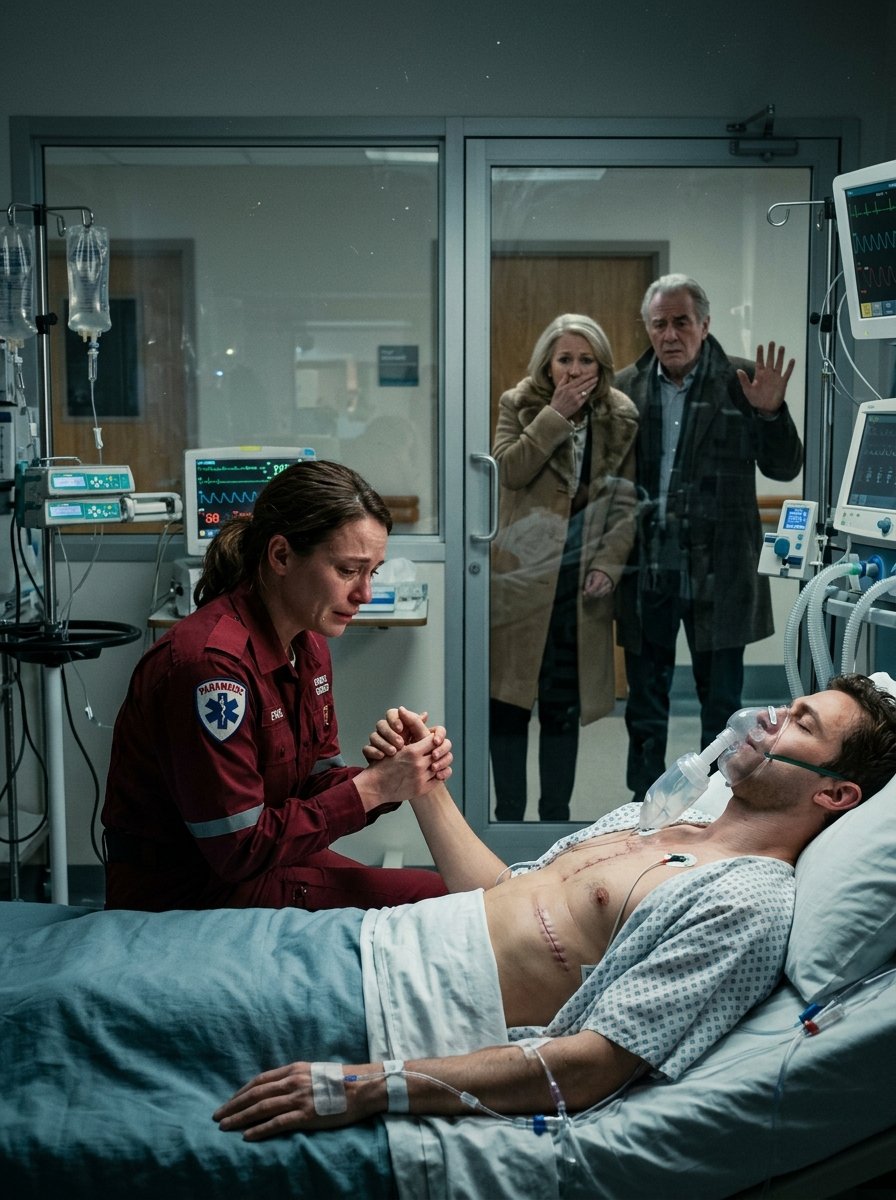
His girlfriend patted my shoulder while chewing gum. “What a shame, honey.” I sat alone beside my son and held his hand. He squeezed mine. Twice. When he was six, we made a rule. Two squeezes meant only one thing…
PART 1
My husband had signed to have our 17-year-old son taken off the ventilator, and his new girlfriend had the nerve to ask if I planned to make a scene.
I hadn’t seen Mason in nine days. Nine days he’d been unconscious in a private hospital in Phoenix while I tried to get back from an oil platform in the Gulf of Mexico, off the Louisiana coast. When they called about the accident, a storm had grounded all transport. As soon as I could leave, I took two flights and arrived in the same work clothes, smelling of salt and diesel.
I found Todd, my husband of twenty years, who I’d been separated from for four months, outside the ICU. Next to him stood Brittany, the woman he’d started seeing before he moved out of our house. She was wearing a jacket with the logo of the athletic academy where Mason trained.
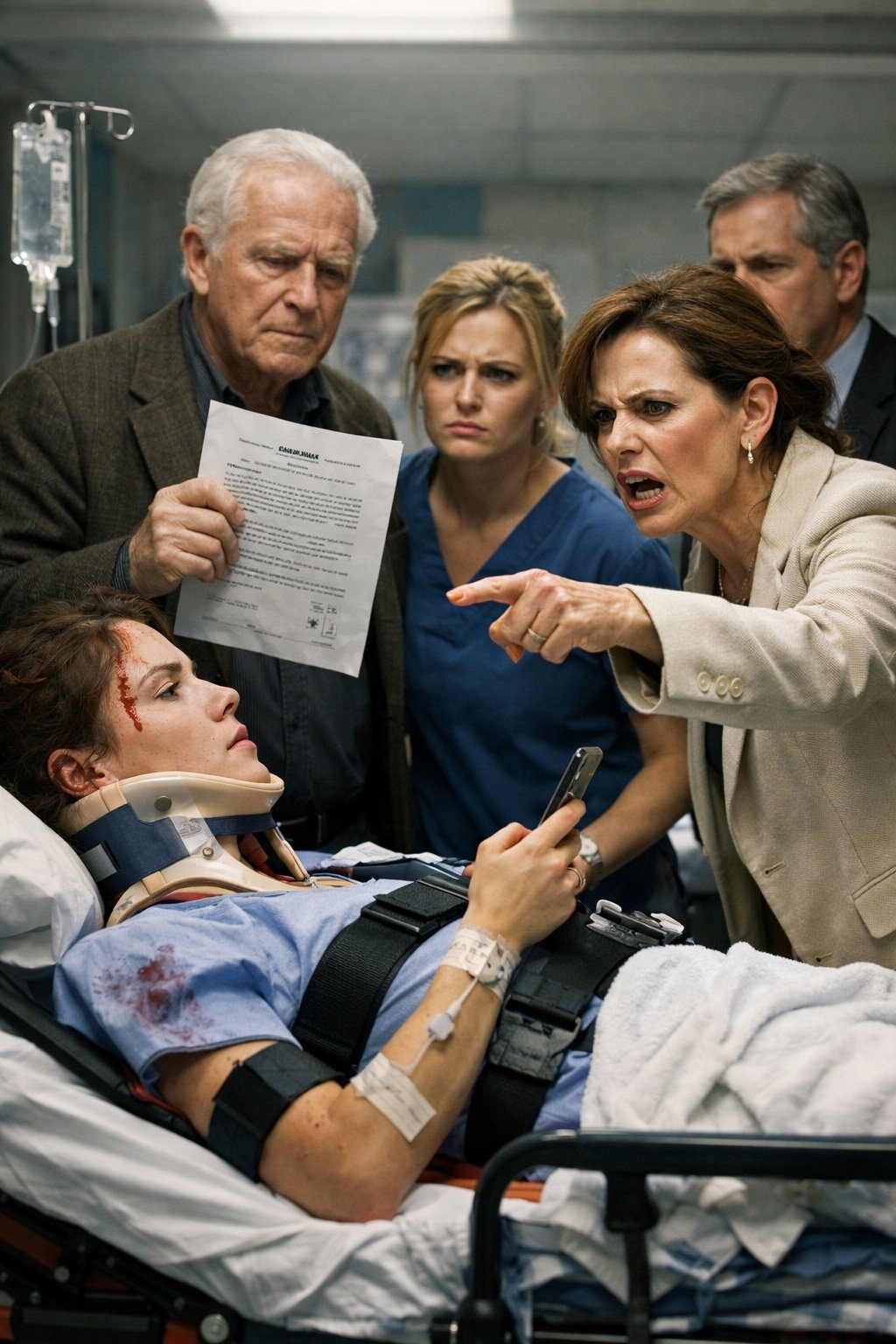
A man in a suit was flipping through a folder. He introduced himself as Walter Pruitt, a risk manager, though he didn’t say for which organization. Todd had just signed a page marked with yellow highlighter.
“The team believes he’s not going to recover,” my husband said, without hugging me. “They’re pulling support Friday. Don’t turn this into a fight.”
It was Wednesday.
“Who authorized that without talking to me?”
“I’m his father. I’ve been here all nine days. You were away.”
Brittany chewed her gum as if we were all waiting in line for movie tickets.
“Sometimes loving someone means letting them rest, Renee.”
I didn’t answer. If I opened my mouth right then, I’d say something I couldn’t take back.
Dr. Holloway came out of the ICU and explained that Mason had a severe brain injury after a fall during practice. They had reduced his sedation but hadn’t found consistent conscious responses. The prognosis was guarded. They were talking about a meeting to decide whether to continue invasive measures, not about a diagnosis of brain death.
“Then why is everyone talking like it’s already decided?” I asked.
The doctor glanced at the documents in Walter’s hands.
“There’s a request from the family. We still need to review the clinical picture.”
That small word, still, kept me on my feet.
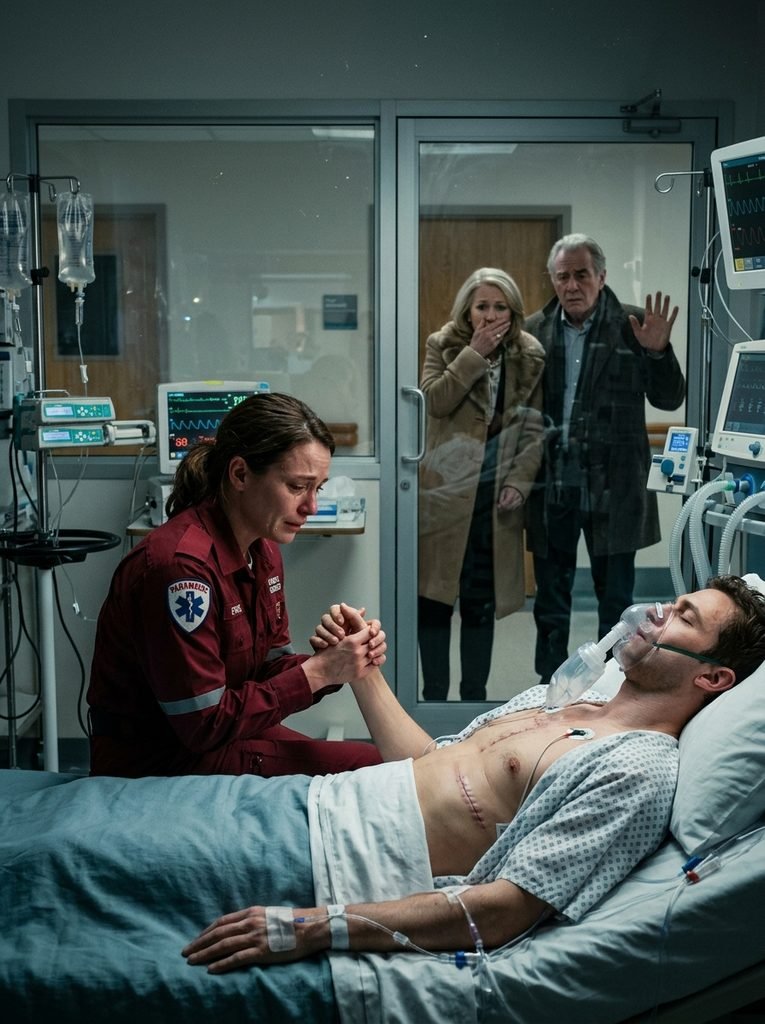
I went into Room 312 alone. My son, who just two weeks earlier had been arguing with me because he wanted to run a half marathon, looked sunk into the white sheets. He had a bandage near his temple, a tube in his mouth, and motionless eyelids. The ventilator kept a rhythm that scared me more than any storm I’d ever worked through at sea.
I took his right hand. It was warm.
“It’s Mom, baby. I’m here now.”
I knew I couldn’t ask him to wake up for me. Mason had spent years trying to meet everyone’s expectations, especially Todd’s. If his father demanded another competition, he said yes. If his coach said to train through an injury, he looked down and obeyed. The last time we talked on video, he told me he was tired. Then he changed the subject before his father could hear.
When he was six, we invented a rule at a county fair. Mason was too scared to tell the man running the Ferris wheel that he was afraid. So I taught him to answer me by squeezing my hand: once meant yes; twice meant no. It was our way of letting him say no without having to explain it to anyone.
I leaned close to his ear.
“Mase, I need to ask you something. Do you want them to take out the ventilator on Friday?”
For several seconds, nothing happened. Then his fingers closed around mine.
Once.
They relaxed.
And squeezed again.
Twice. No.
My legs nearly gave out. I didn’t know if the movement was voluntary. I’d spent too many years inspecting machinery to mistake hope for proof. But I wasn’t going to let them write him off without checking.
I called the nurse and asked her to page the neurologist. While we waited, Todd came in with Walter. When I told them what had happened, my husband rubbed his face.
“Ren, don’t cling to a reflex.”
“Then have them evaluate him in front of me.”
Walter closed the folder.
“Friday was set for administrative reasons. It’s important not to delay the process.”
“What process is more urgent than my son?”
He didn’t answer. As he tilted the folder, a copy of the request came into view. On the last line, it said both parents had been informed and waived any right to request another evaluation.
Beneath my name was a signature.
A signature dated three days earlier, when I was still cut off from the world on a platform at sea.
Someone had signed for me to keep anyone from seeking a second opinion.
PART 2
“That’s not my signature,” I said, pointing at the page.
Todd went pale. Walter tried to put the paper away, but I laid my hand flat on the folder.
“I want a copy, and I want to know who received this document.”
“You’re interfering with a delicate process,” Walter said.
“A delicate process is exactly the kind that can’t have forged signatures in it.”
I asked to speak with the charge nurse and the medical director. I didn’t yell. I gave my name, showed my ID, and requested that they put in writing that I had no knowledge of that signature and objected to any decision made on the basis of that supposed consent. I also requested a second neurological evaluation and copies of the relevant clinical records.
The nurse on duty, Janet, led me to a small family room. There she explained something Walter had left out: that form didn’t, by itself, authorize anyone to disconnect anything. It was a request added to the chart for discussion with the doctors. A decision like that required a clinical evaluation and couldn’t hinge on a man with a folder.
“Did my son have any responses before?” I asked.
Janet checked the nursing log.
“On Monday, they noted movement of the right hand and brief eye opening while sedation was being lowered. It wasn’t clear whether they were voluntary.”