Then a hospital doctor spotted the bruises on my wife’s wrists, his expression changed, and he immediately demanded that the police be called.
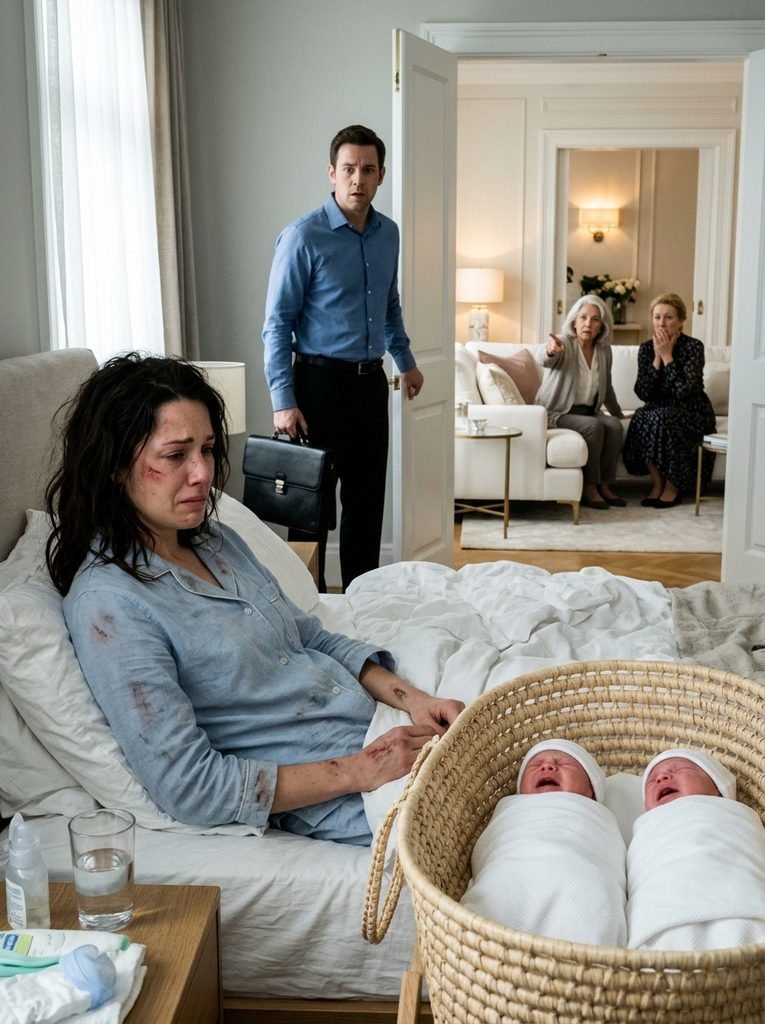
PART 1
“If taking care of a baby is so difficult for you, maybe you never should have become a mother.”
Those were the first words I heard when I stepped into our bedroom and discovered my wife barely conscious, while our newborn son cried helplessly beside her.
My name is Garrett Holloway.
I live in a suburb outside Kansas City and work as an operations manager for a regional freight company.
My wife, Melissa Holloway, had given birth to our first child, Wesley, less than a week earlier.
She was still recovering from labor, moving carefully through the house and hiding her pain behind exhausted smiles.
My mother, Sheryl Holloway, had never approved of Melissa.
According to her, Melissa was too independent, too outspoken, and nowhere near good enough for her precious son.
My younger sister, Brianna, eagerly echoed every criticism.
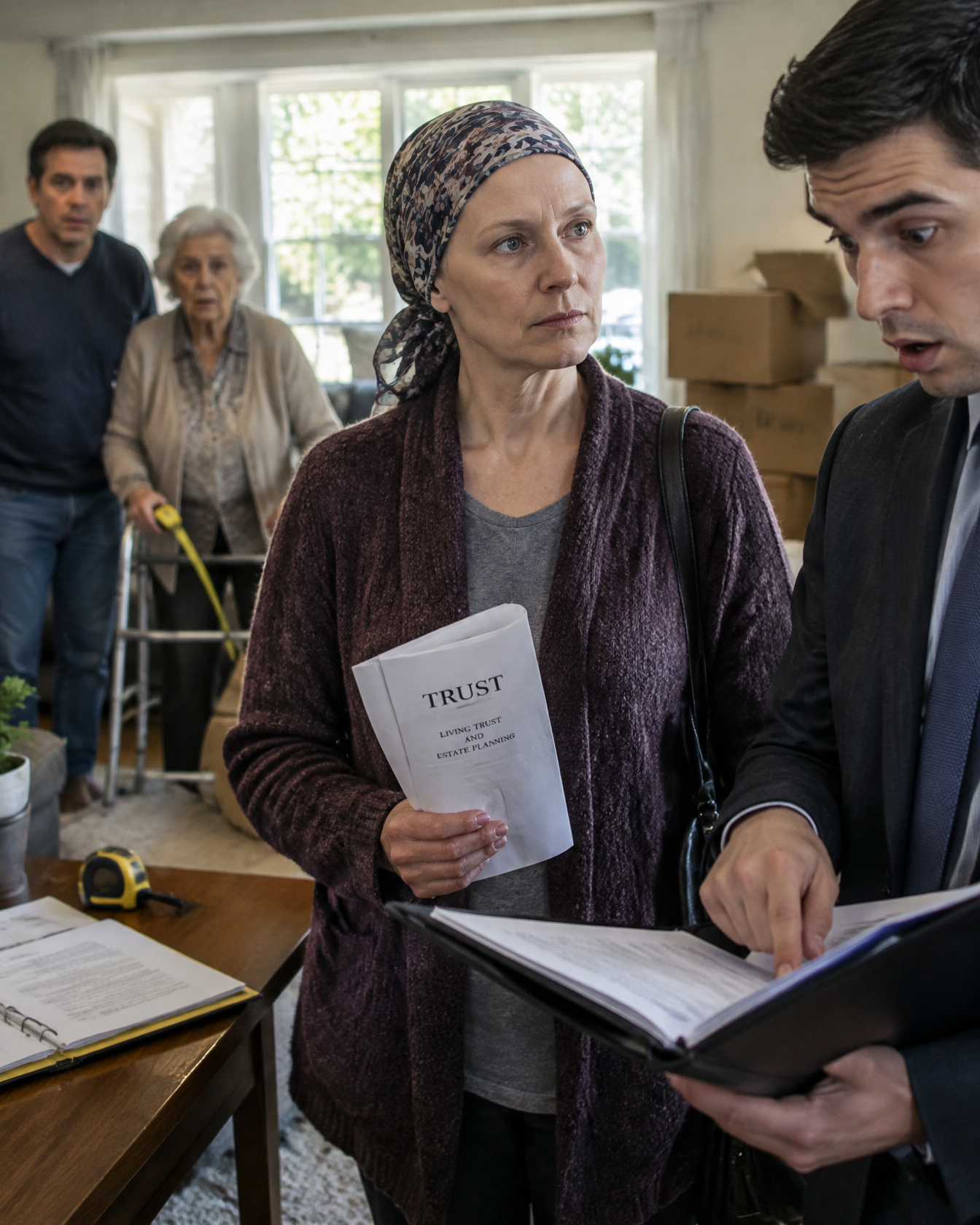
Their resentment escalated months before Wesley was born, when my mother pressured me to use my savings to purchase a house that would legally belong only to her.
“It stays in the family that way,” she insisted repeatedly.
“Wives come and go. Mothers don’t.”
Melissa refused to support the idea.
“I’m not risking our child’s future to satisfy someone who treats me like an enemy,” she told me one evening through tears.
Instead of listening, I brushed off her concerns.
I convinced myself she was overreacting.
When our son finally arrived, I naively believed becoming a grandmother would soften my mother’s attitude.
For a few days, it seemed like I was right.
Sheryl brought flowers to the hospital, kissed Wesley’s forehead, and promised she would help however she could.
Three days later, an emergency at one of our company’s facilities forced me to travel unexpectedly to another state.
The timing felt terrible.
But my mother immediately volunteered to stay with Melissa.
“Go take care of your job,” she said warmly. “I’ve raised children before. Your wife just needs guidance.”
Brianna laughed.
“We’ll survive without you for a few days. Stop acting like you’re abandoning her forever.”
Melissa stood silently beside the hospital bed.
The expression in her eyes begged me not to leave.
But I left anyway.
For the next three days I called constantly.
Every time, my mother answered.
She claimed Melissa was resting.
She said Wesley was eating well.
She insisted everything was under control.
When Melissa finally got on the phone, her voice sounded weak and frightened.
“Garrett… please come home.”
My stomach tightened.
“What’s wrong?”
Before she could answer, my mother grabbed the phone.
“Nothing is wrong,” she said with a laugh. “New mothers get emotional.”
Something felt off.
On the fourth day, I decided to return without warning.
I bought diapers, pastries from Melissa’s favorite bakery, and a small green blanket for Wesley.
When I pulled into the driveway, the front door stood slightly open.
The house smelled stale.
The television blared from the living room.
Sheryl and Brianna were sleeping on the couch beneath piles of blankets.
Dirty dishes covered every surface.
A chill ran down my spine…
WHAT I UNCOVERED NEXT MADE MY BLOOD RUN COLD.
PART 2
I rushed toward the bedroom.
Nothing could have prepared me for what I found.
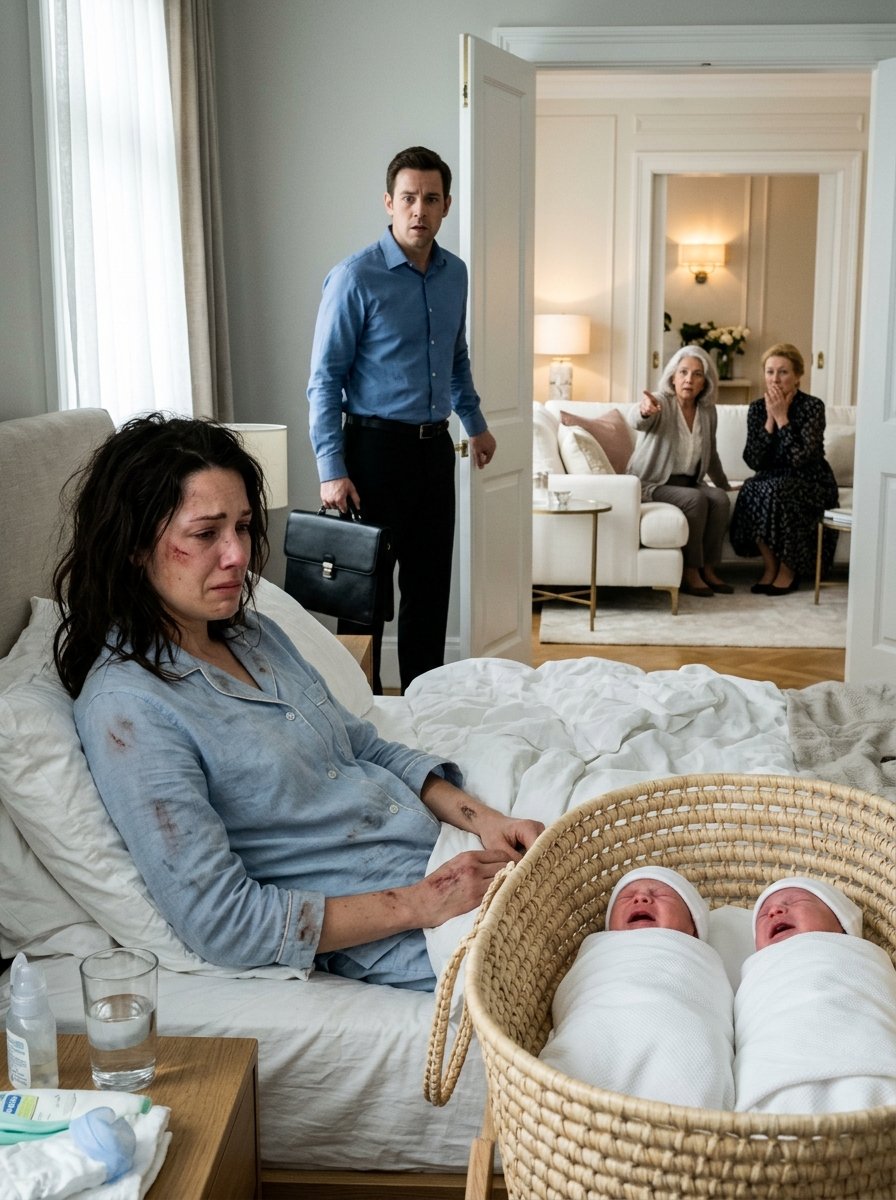
Melissa lay motionless on the bed.
Her skin looked gray.
Her lips were cracked.
She looked like someone who had been abandoned for weeks.
Beside her, Wesley’s tiny face burned red with fever.
His diaper hadn’t been changed.
His weak cries barely filled the room.
“Melissa!”
Her eyes opened slowly…
Her eyes opened slowly.
They were glassy, unfocused, and it took her a long moment to find my face.
“Garrett?”
Her voice was a thread.
“I’m here. I’m here, baby. I’ve got you.”
“Wesley,” she whispered. “Is he… is he okay?”
I lifted our son with shaking hands.
He was burning. Not warm, burning. His lips were dry and his cries had shrunk to a thin, broken sound that barely seemed to belong to a baby.
I didn’t think.
I pulled out my phone and dialed 911 with my thumb, and I was already running for the hallway when the dispatcher answered.
“911, what’s your emergency?”
“My wife and my newborn son need an ambulance. My wife just gave birth six days ago. She’s barely conscious. My son has a fever, he’s dehydrated, I think he hasn’t been fed. Please. Please hurry.”
I gave the address. I don’t remember how. The dispatcher kept her voice calm and told me to stay on the line.
Behind me, I heard the couch creak.
“Garrett?” my mother said, in a voice thick with sleep. “What on earth is all this noise?”
I turned.
She stood in the living room doorway in her robe, hair flattened on one side, annoyed. Not alarmed. Not worried. Annoyed.
“You’re home early,” she said. “You could have called.”
“What did you do?”
“Don’t take that tone with me. She’s being dramatic. She’s been in that bed for two days refusing to eat. I told her it was a phase.”
“My son has a fever of a hundred and four, Mom.”
“Babies get fevers.”
Brianna had sat up on the couch, scrolling on her phone. She didn’t even look up.
“Honestly,” she said, “she’s just milking it.”
Something inside me went completely quiet.
It’s hard to explain. I had spent thirty-six years explaining away the things my mother said. I had smoothed them over, translated them, told myself they were just her way.
In that moment, standing in a kitchen full of rotting dishes with my dying family in the next room, every excuse I had ever made simply stopped working.
“Get away from the bedroom,” I said.
“Garrett—”
“Get. Away.”
She actually took a step back.
The paramedics arrived in six minutes.
They were fast and gentle. One of them, a broad woman with kind eyes and a gray braid, knelt beside Melissa and began checking her pulse, her temperature, her blood pressure.
“How long has she been like this?” she asked me.
“I don’t know. I’ve been out of town for four days.”
She looked at the bedside table.
There was a single glass of water on it, still full, with a film of dust on the surface. No bottle of pain medication. No prenatal vitamins. No baby bottles.
The other paramedic lifted Wesley, and I watched his face change.
“He’s severely dehydrated,” he said. “Let’s move.”
As they lifted Melissa onto the stretcher, the sleeve of her nightgown slid up her forearm.
The paramedic with the braid went very still.
I saw them too.
Dark purple marks around both of Melissa’s wrists.
Not small ones. Not smudges. They were deep, patterned, ringed bruises, the kind you only get when someone holds you down.
“Sir,” the paramedic said quietly. “Do you know how she got those?”
I stared.
“No.”
I felt the blood leave my face.
I turned toward the living room.
My mother had gone completely silent.
The emergency room at St. Brendan’s was bright and cold and loud.
They took Melissa and Wesley in separate directions so fast I barely had time to kiss their foreheads. A nurse steered me into a small waiting room with a vending machine and a television playing a muted cooking show.
I sat there for what felt like years.
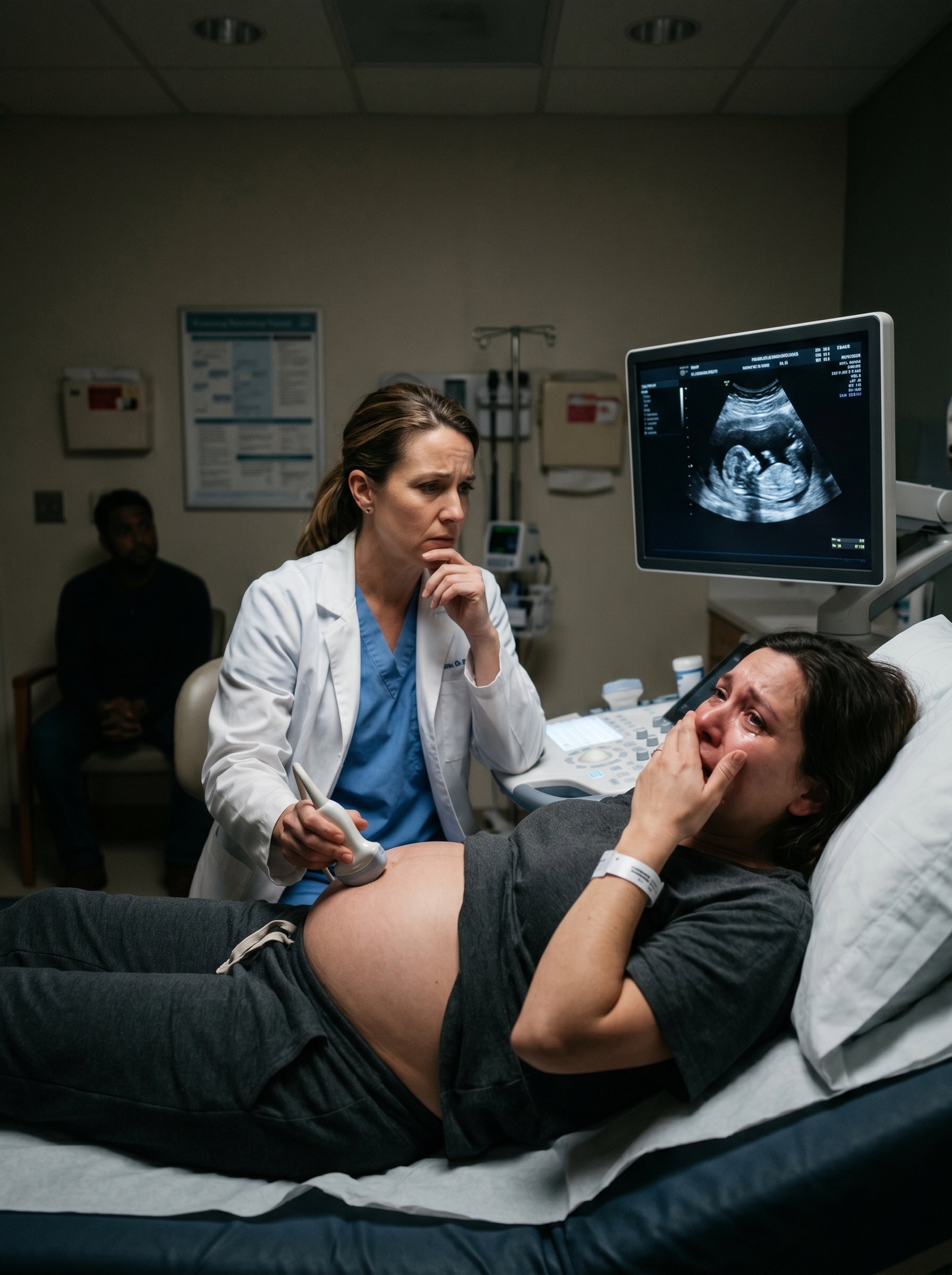
A woman in a white coat finally came to find me. She was about fifty, with short dark hair, reading glasses pushed up on her head, and a name tag that read Dr. Anjali Raman, Obstetrics.
“Mr. Holloway?”
I stood so fast the chair tipped over behind me.
“Is she okay? Is my son okay?”
“They’re both stable,” she said. “Please, sit.”
My knees nearly gave out.