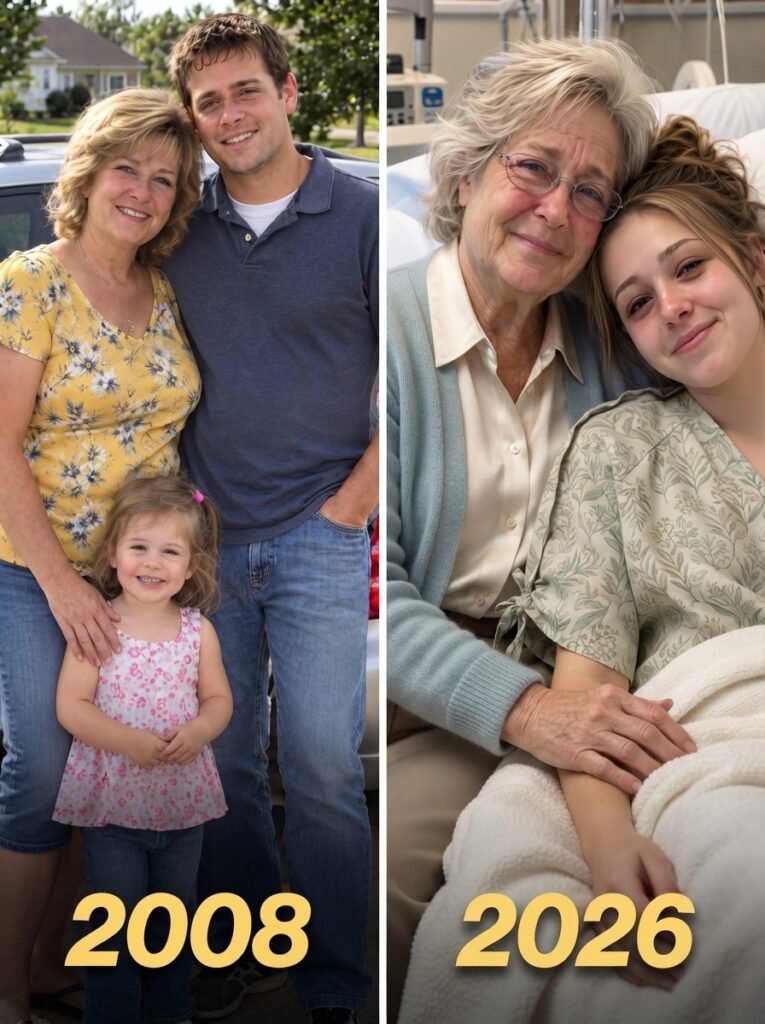
Eighteen years after losing my son, I nearly lost my granddaughter too. She survived emergency surgery, and I thought the worst was behind us. But an unexpected encounter at the hospital brought back a painful chapter of our past and revealed something that threatened to tear our family apart.
The last ordinary argument I had with my daughter-in-law was about a birthday cake.
Sophie wanted chocolate. Her mother, Rachel, had ordered vanilla because the bakery said it was their most popular flavor.
She looked tired, as though we’d had this argument a hundred times before.
“She’s nineteen,” I told Rachel. “I think she knows what cake she likes.”
Rachel stared at me over the kitchen counter.
Rachel glanced at the bakery receipt, then set it aside. She looked tired, as though we’d had this argument a hundred times before.
“You really can’t help yourself, can you?”
I thought she meant the cake.
Michael used to do the same thing.
I didn’t understand what she meant until three weeks later.
My granddaughter Sophie turned twenty in September. She was in college, worked weekends at a bookstore, and called me every Sunday, usually while doing laundry.
Michael used to do the same thing.
On those calls, I heard other students laughing in the background. Sophie always lowered her voice when she asked about him, as though remembering her father required privacy.
I rarely talked about how he died. And I never told her what I’d said in court afterward.
He was twenty-six when he died. Sophie was two.
For years, I avoided telling her much about the day we lost him. I told her about his terrible cooking, his love of baseball, and the time he drove six hours because Rachel had mentioned wanting peaches from a roadside stand.
I told her he was kind.
I rarely talked about how he died. And I never told her what I’d said in court afterward.
Rachel never asked me to stop. She just became quiet whenever I started.
“Grandma, what’s the fastest way to know if food poisoning is serious?”
On the night everything changed, Sophie called at 10:40.
“Grandma, what’s the fastest way to know if food poisoning is serious?”
I sat up in bed.
“Why?”
“Because the cafeteria chicken might be trying to murder me.”
She tried laughing, but her voice sounded strained.
Then I heard something hit the floor.
“Where’s your roommate?”
“At her boyfriend’s. I’m fine.”
Then I heard something hit the floor.
“Sophie?”
A few seconds passed.
“I dropped my phone,” she whispered. “I can’t stand up straight.”
By the time I got to the hospital, a nurse was taking Sophie for scans.
I told her I was calling an ambulance, hung up, and called emergency services. Then I called her roommate, whose number Sophie had given me for emergencies.
Sophie had written her dorm address on a card for my refrigerator. I gave it to the dispatcher, then kept staring at the numbers afterward.
By the time I got to the hospital, a nurse was taking Sophie for scans.
“Don’t tell Mom yet,” she said.
“Why?”
An hour later, a doctor explained that Sophie needed surgery for a ruptured appendix.
“She’s in Denver for that conference. She’ll panic.”
“Your mother has earned the right to panic.”
Sophie managed a weak smile.
“That’s what she says about you.”
An hour later, a doctor explained that Sophie needed surgery for a ruptured appendix.
“Will she be okay?” I asked.
She answered on the second ring.
“We’re moving quickly. That’s the best thing we can do.”
I called Rachel.
She answered on the second ring.
“Is Sophie okay?”
I hadn’t even spoken.
“She’s having surgery.”
“Rachel, the doctors know what they’re doing.”
For a moment, Rachel said nothing.
Then she asked, “Are you with her?”
“Yes.”
“Stay there. I’m booking a flight.”
“Rachel, the doctors know what they’re doing.”
“Don’t,” she said sharply.
I spent the next few hours in a waiting room with a dead phone and an unbelievably dry vending machine sandwich.
“Don’t what?”
“Tell me everything will be fine when you don’t know.”
She hung up.
I’d almost told Rachel to calm down. The words had been ready, familiar and useless. The sound of the disconnected call stopped me.
I spent the next few hours in a waiting room with a dead phone and an unbelievably dry vending machine sandwich.
I tried to pray.
I remembered being angry at the doctors for using the past tense.
I remembered another waiting room, eighteen years earlier.
I’d prayed there too, before the doctors came out.
Back then, Rachel had been the one pacing. She’d worn Michael’s sweatshirt and kept asking whether anyone had checked his pulse again.
I remembered being angry at the doctors for using the past tense.
The surgery doors opened after nearly three hours.
I remembered being angry at God.
I remembered looking at Rachel and feeling terrible that I had no idea how to comfort her.
Even then, she’d been the one I couldn’t reach.
The surgery doors opened after nearly three hours.
A surgeon in blue scrubs approached, pulling off his cap.
“She’s stable. The operation went well. She’ll need to keep taking antibiotics, but we expect a full recovery.”
“Family of Sophie Bennett?”
“That’s me. I’m her grandmother.”
“She’s stable. The operation went well. She’ll need to keep taking antibiotics, but we expect a full recovery.”
I gripped the chair.
“Thank you.”
He nodded, but instead of leaving, he studied my face.
“Do we know each other?”
“Mrs. Bennett?”
“Yes?”
“Your first name is Helen?”
My stomach tightened.
“Do we know each other?”
His eyes shifted toward the floor.
I knew the name, although I couldn’t place him immediately.
I glanced at his badge.
Dr. Daniel.
I knew the name, although I couldn’t place him immediately.
Then I inspected his face again.
The seventeen-year-old boy from the courtroom had grown into the man standing in front of me.
I covered my mouth as tears spilled down my face.
For a moment, I couldn’t breathe.
My knees nearly gave out. I covered my mouth as tears spilled down my face.
Eighteen years earlier, Daniel had taken his parents’ car without permission. He’d panicked at an intersection and driven into Michael’s car.
My son died because of it.
At the hearing, Daniel had barely looked up. His mother cried through every statement.
“I don’t want another mother to lose hers. Please show him mercy.”
When the judge invited me to speak, I had prepared three pages about Michael, but in the end I never read them.
Instead, I said, “I’ve lost my son. I don’t want another mother to lose hers. Please show him mercy.”
Daniel finally looked up. He was crying.
Afterward, Rachel wouldn’t ride home with me.
I told myself she needed a few days to cool off, but months passed, and I took her silence about the hearing to mean she wanted distance.
“If I’d known, I would have alerted the team and asked another surgeon to take over if there was time.”
For years, I tried not to wonder whether I’d done the right thing.
Now Daniel stood before me.
“I didn’t know Sophie was connected to you when I operated,” he said. “I saw your name on her emergency contact list afterward. I wasn’t certain until I saw you.”
“You couldn’t tel who she was from her info?”
“No. If I’d known, I would have alerted the team and asked another surgeon to take over if there was time.”
“I can ask another doctor to handle her care from here on.”
I wasn’t sure whether I believed him, but at least he seemed sincere.
“I can ask another doctor to handle her care from here on.”
I looked toward the closed doors.
“You saved her?”
“My team and I treated her. She came in before the infection spread further.”
He paused.
“Ma’am, there’s something your son said to me that night. I’ve wanted to tell you for years.”
His cap twisted between his hands. The steady voice he’d used to discuss Sophie’s surgery had disappeared, and I saw him struggling to speak.
“Ma’am, there’s something your son said to me that night. I’ve wanted to tell you for years.”
I stared at him.
“Now?”
“I know this isn’t the place. I can leave.”
“I ran over to him. I kept saying I was sorry. I was crying so hard I could barely talk.”
I should have told him to go. Instead, I heard myself say, “What is it?”
“Michael was alive when I got out of the car.”
I felt the room tilt.
Daniel swallowed.
“I ran over to him. I kept saying I was sorry. I was crying so hard I could barely talk.”
“Stop.”
“Your son looked at me. He said, ‘It was an accident. Don’t let it ruin the rest of your life.'”
He stopped.
I knew Michael had reached the hospital alive. But I’d never known what had happened at the intersection before the ambulance arrived.
I wasn’t ready to hear it.
But I heard myself ask, “What happened?”
“Your son looked at me. He said, ‘It was an accident. Don’t let it ruin the rest of your life.'”
I closed my eyes.
“I never told anyone because I thought you’d believe I made it up to get sympathy.”
Daniel’s voice broke.
“I never told anyone because I thought you’d believe I made it up to get sympathy.”
“Why tell me now?”
“Because you deserve to know what he said. I should have told you then.”
I cried so hard a nurse brought me water.
I couldn’t know whether Daniel remembered Michael’s words exactly as he’d spoken them. But I wanted to believe him.
She was pale and exhausted, but she could still complain.
And for the first time, I wondered whether Michael might have understood what I’d done in court.
Then Sophie woke up.
She was pale and exhausted, but she could still complain.
“Why does everyone keep asking me to rate my pain? It’s terrible. That’s the rating.”
I laughed through my tears.
She noticed immediately.
“Did Mom miss her flight?”
“What happened?”
“Something unexpected.”
“Did Mom miss her flight?”
“No, sweetheart.”
I told her about the surgeon. About the hearing. About what her father had said.
She watched me without speaking.
“Mom, you won’t believe who operated on me.”
Finally, she asked, “Does Mom know?”
“Not yet.”
Sophie reached for her phone.
“I want to call her.”
Rachel answered from the airport.
Sophie put her on speaker and said, “Mom, you won’t believe who operated on me.”
“Is he still there?”
I tried to interrupt, but Sophie just kept talking.
When she finished, the line was quiet for quite a while.
Then Rachel said, “Is he still there?”
“Maybe. Mom, Dad apparently told him it was an accident.”
“Don’t.”
Her voice sounded exactly as it had on my phone hours earlier.
“Your father didn’t get the chance to live his life.”
“Rachel,” I said, “I know this is a shock.”
“Of course you do, Helen. You always know what everyone should feel.”
Sophie frowned.
“Mom, he saved me.”
“Your father didn’t get the chance to live his life. Why does the man who killed him get to tell us how to feel?”
“He wasn’t telling us that.”
She’d heard her mother angry before, but I’d never seen her so unsure.
“Your grandmother has been telling me for eighteen years.”
The call ended.
I stared at the screen.
Sophie kept looking at the blank screen. She’d heard her mother angry before, but I’d never seen her so unsure which question to ask first.
Sophie looked at me.
I tried to explain how grief made people say things they didn’t mean.
“Grandma, what does she mean?”
I tried to explain how grief made people say things they didn’t mean.
Sophie didn’t accept that answer.
“What did you say to her?”
I remembered every holiday when I’d asked Rachel not to be bitter. Every birthday when I’d said Michael wouldn’t want us to hold a grudge.
Rachel arrived that afternoon, still carrying her suitcase.
“I thought I was helping.”
“That wasn’t my question.”
I looked away.
Rachel arrived that afternoon, still carrying her suitcase.
She hugged Sophie, checked her temperature with the back of her hand, then turned toward me.
“Where is he?”
I asked a nurse to pass along her request.
“Rachel, please.”
“I want to speak to him.”
I asked a nurse to pass along her request. Daniel came fifteen minutes later with the surgeon who would take over Sophie’s care.
Rachel stood.
“Are you Daniel?”
He froze.
“You told my mother-in-law something earlier today.”
“Yes.”
“I’m Michael’s wife.”
Daniel lowered his eyes.
“I’m sorry.”
“You told my mother-in-law something earlier today.”
“I told her what Michael said at the crash.”
“Did you think telling her would make this easier for you?”
“No.”
“You got a second chance, while Michael didn’t, and now you’re telling us he forgave you?”
Daniel stood still.
“I caused the accident,” he said. “Michael died because of what I did. Becoming a doctor doesn’t undo it.”
“Then why tell her?”
“Even if he said those words, it would have been much better for us all if you’d kept them to yourself.”
“I thought she deserved to know. But I chose the wrong moment.”
Rachel’s eyes filled.
“Even if he said those words, it would have been much better for us all if you’d kept them to yourself.”
Daniel nodded.
“You’re right. I’m sorry.”
He asked his colleague to finish the visit and left.
“Mom, I understand why you’re angry.”
Nobody spoke until Sophie pushed herself higher against her pillows.
“Mom, I understand why you’re angry.”
Rachel wiped her face.
“Do you?”
“I think I do. But I wanted to thank the doctor who helped me. I didn’t know any of this.”
“You don’t owe him anything,” Rachel said.
“Grandma, you don’t get to decide what Mom owes him either.”
“I know.”
Then Sophie turned to me.
“And Grandma, you don’t get to decide what Mom owes him either.”
“I never said she did.”
Sophie looked tired suddenly.
“I thought you didn’t want to remember Dad.”
“You said Dad wouldn’t want her to be angry. You said it at Christmas. You said it when I asked why Mom stopped coming to the anniversary gatherings.”
Rachel sat down.
“She told you that?”
Sophie nodded.
“I thought you didn’t want to remember Dad.”
I thought of Rachel’s words in the kitchen, and realized that the cake had never been the problem.
Rachel started crying.
“No, baby. Never.”
I felt ashamed.
I thought of Rachel’s words in the kitchen, and realized that the cake had never been the problem.
I sat beside her.
“I’m sorry. I made my choice in court, and then I spent years acting as though you had to make the same one.”
“I didn’t know what he wanted. I only knew what I wanted for myself.”
Rachel stared at the floor.
“You kept saying Michael would want peace.”
“I didn’t know what he wanted. I only knew what I wanted for myself.”
She didn’t forgive me that afternoon.
But she let me stay.
Rachel brought out an old photograph of Michael holding her as a baby.
I wanted to ask whether that meant she’d forgiven me. I didn’t. The question would have made her responsible for easing my guilt all over again.
A few days later, when my granddaughter was home from the hospital, Rachel brought out an old photograph of Michael holding her as a baby.
“He was more nervous holding you than he was on our wedding day,” Rachel said.
Sophie smiled. “Was he a good dad? There’s so much I can’t remember.”
We spent the day reminiscing and keeping Michael’s memory alive.
“He was wonderful, honey. Is there anything you’d like to know?.”
We spent the day reminiscing and keeping Michael’s memory alive.