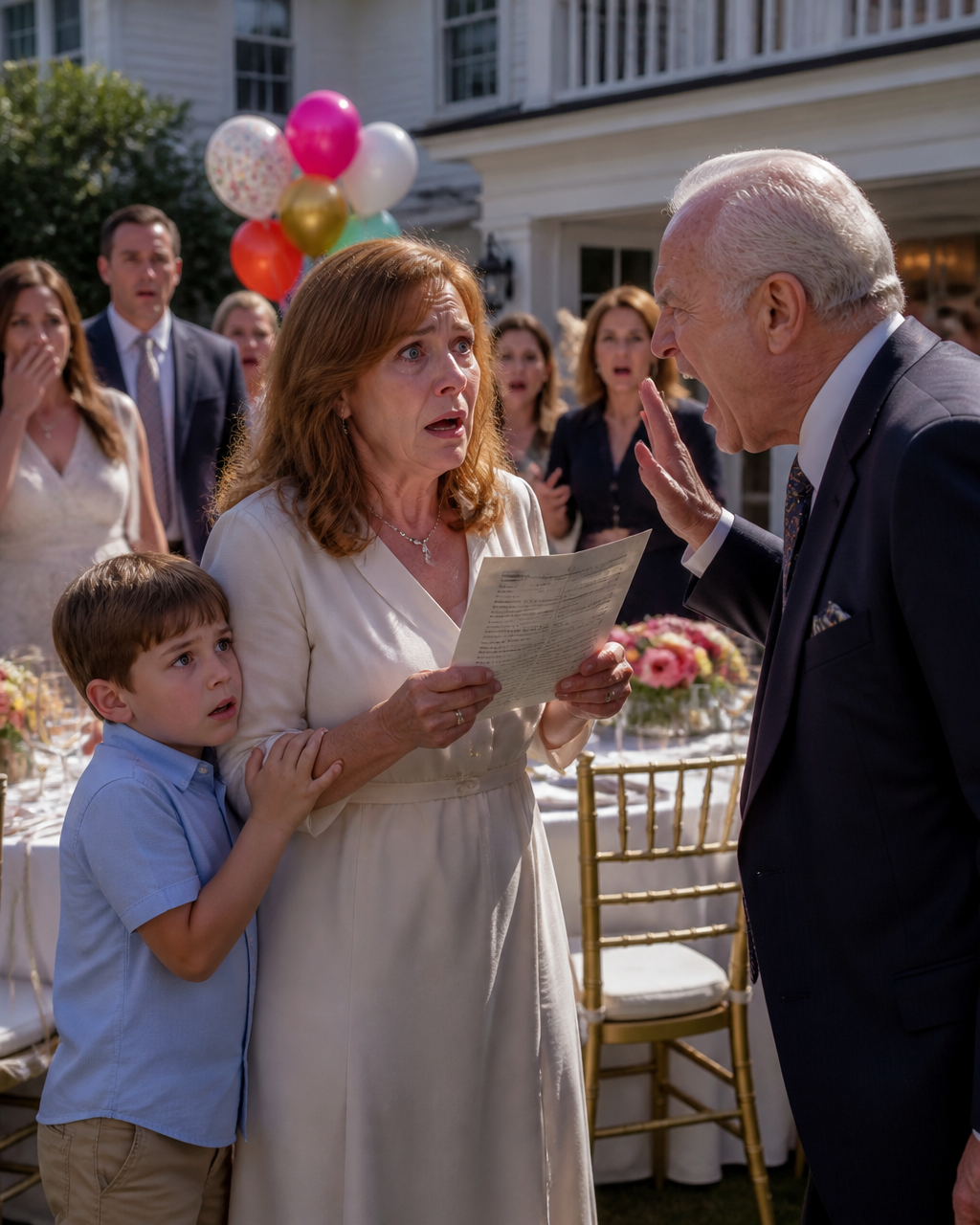
The silence hit first.
Not the peaceful kind.
The waiting kind.
The kind that sits in a room before a storm breaks.
I closed the front door slowly behind me and looked toward the living room.
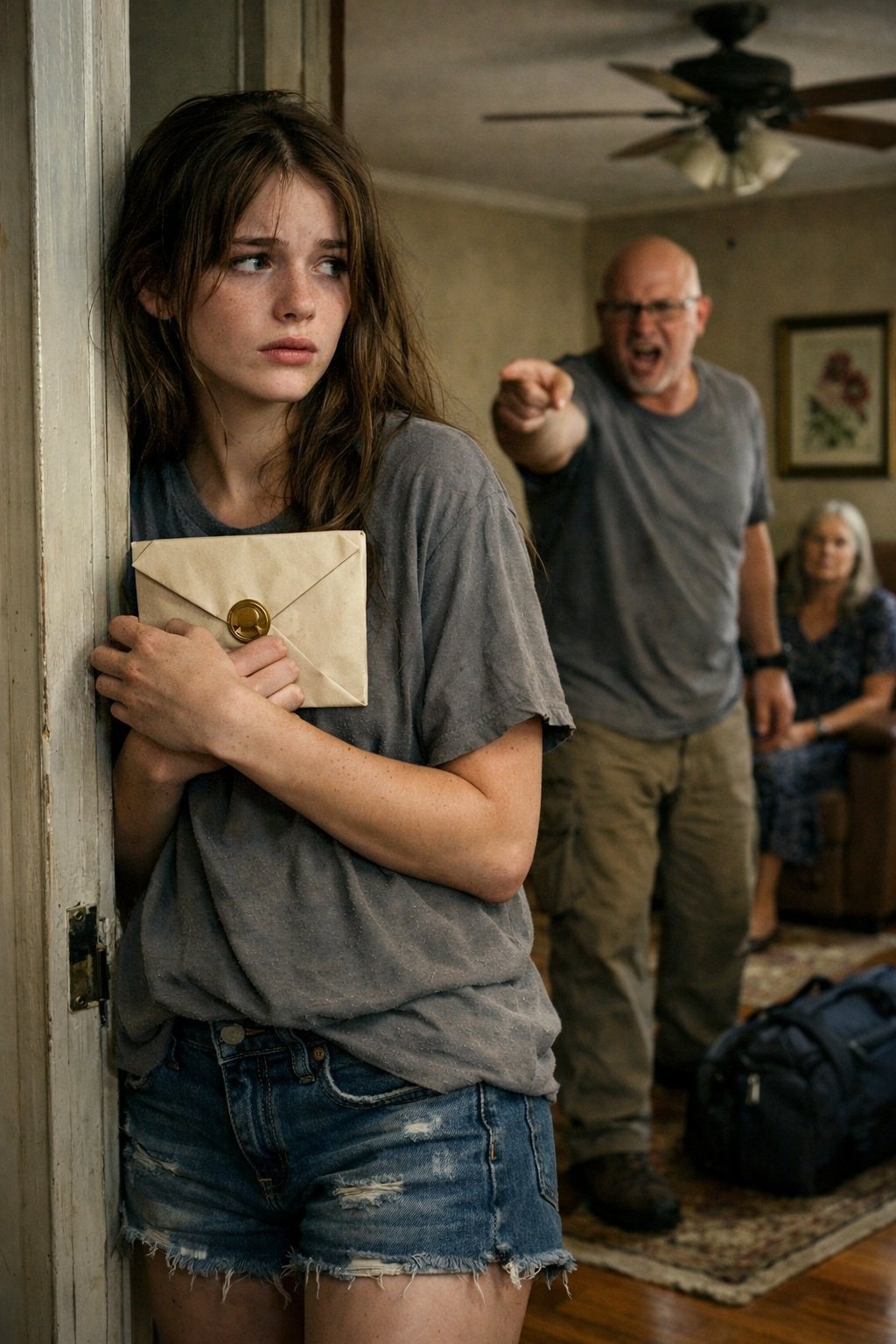
Dad sat in his recliner with the television muted, one thick hand gripping the armrest hard enough to whiten his knuckles. Mom perched stiffly on the sofa, her wineglass untouched on the coffee table. Harper stood beside the fireplace with her arms crossed, phone glowing in her hand like she’d been waiting to record something.
Three faces turned toward me at once.
And suddenly I understood.
Harper had told him.
Dad stood up.
Not quickly.
Slowly.
Which was always worse.
“Where were you?” he asked.
“At work.”
“You ignored your sister.”
“I said I couldn’t babysit.”
Mom let out a sharp breath through her nose, already irritated by my tone.
“You could’ve helped for one night,” she said. “Families help each other.”
I almost laughed.
Families.
That word sounded strange in this house.
“I was covering someone’s shift.”
Harper rolled her eyes dramatically. “You work at a diner, Ava. Stop acting like you’re running a hospital.”
I looked at her.
Perfect makeup.
Perfect hair.
A new bracelet glittering under the lamp.
Probably another gift from some man who mistook selfishness for charm.
Meanwhile my sneakers had holes in the soles.
Dad stepped closer.
“You embarrassed your sister.”
“No,” I replied quietly. “I said no to her.”
“There’s no difference.”
Something inside me tightened.
Not fear.
Exhaustion.
Years and years of exhaustion layered so deep it felt woven into my bones.
“I’m tired,” I said. “Can we do this tomorrow?”
Harper scoffed.
“Oh, she’s tired. Imagine that.”
Dad pointed toward me suddenly.
“Your sister needed help.”
“And I needed to keep my job.”
“You think your job matters more than family?”
The hypocrisy almost stole my breath.
For years they’d reminded me I was a burden. An embarrassment. A cautionary tale.
But somehow, whenever Harper wanted freedom, I magically became family again.
“I already help,” I said carefully. “I pay rent for the garage apartment. I buy my own groceries. I watch Mia three times a week—”
“You owe us,” Mom snapped.
The words cracked through the room instantly.
Silence followed.
Because there it was.
The truth underneath everything.
Not love.
Debt.
I looked at her slowly.
“Owe you?”
Her lips pressed into a thin line.
“We gave up a lot because of your mistakes.”
My chest tightened, but I kept my voice steady.
“You mean Liam.”
Mom stood.
“That’s not what I said.”
“It’s what you meant.”
Harper groaned dramatically. “Oh my God, are you seriously doing the victim thing again?”
I turned toward her.
“You dumped your kid on me four nights last week.”
“Because I have a life!”
“So do I.”
She barked out a laugh. “No, you don’t.”
Dad slammed his palm against the wall.
“Enough!”
The room shook quiet again.
He stared at me with that same look he’d worn my entire childhood—a mixture of disappointment and irritation, like I existed slightly wrong.
“You will stop talking back.”
Something in me finally snapped loose.
“No.”
The word hung there.
Heavy.
Dangerous.
Dad blinked once.
Mom looked stunned.
Harper actually smiled, like she was excited to watch what happened next.
Dad stepped forward slowly.
“What did you say?”
I swallowed hard.
But I held his stare.
“I said no.”
The room became impossibly still.
Even the old refrigerator humming in the kitchen seemed to stop.
Dad’s face darkened.
“You live under my roof.”
“I pay to live here.”
“You think that little diner paycheck means anything?”
“It means I’m trying.”
“And failing.”
Mom didn’t stop him.
Didn’t calm him.
Didn’t soften anything.
She just folded her arms.
“You’ve always been selfish,” she said coldly.
That one hurt more than it should have.
Because part of me still wanted her approval.
Even now.
Even after everything.
Dad grabbed the wooden dining chair beside the table.
At first, I honestly thought he was just moving it.
Then his arm swung.
Time split strangely.
I saw Harper’s eyes widen.
Saw Mom remain motionless.
Saw the edge of the chair coming toward me.
Then—
Impact.
Pain exploded across my jaw.
The world tilted violently sideways.
I hit the floor hard enough to taste blood instantly.
For a second, I couldn’t hear anything except ringing.
Sharp.
Endless.
My cheek burned.
My mouth filled warm and metallic.
Somewhere far away, Harper gasped.
Dad stood frozen, chest heaving.
The broken chair leg rolled across the hardwood floor.
And Mom—
Mom looked down at me and said,
“You deserved it, pig.”
Pig.
Not daughter.
Not Ava.
Pig.
I pressed trembling fingers against my mouth and stared at the blood staining my hand.
Something changed inside me then.
Not loudly.
Not dramatically.
Quietly.
Like a door locking forever.
Dad finally muttered, “Maybe now you’ll learn respect.”
I pushed myself upright slowly.
No one helped me.
Not one person moved.
I looked at each of them in silence.
Harper avoided my eyes first.
Dad looked angry, but underneath it there was something else now.
Unease.
Maybe because he realized he’d gone too far.
Or maybe because I wasn’t crying.
I picked up my bag from the floor.
Mom scoffed.
“Where do you think you’re going?”
I wiped blood from my chin carefully.
“To get my son.”
“You’re being dramatic,” Harper muttered.
I looked at her.
“No,” I said softly. “I’m done.”
Then I walked out.
—
The cold night air hit my face like ice.
My hands shook so badly I dropped my keys twice before getting into the car.
Inside the silence, I finally let myself breathe.
Then the shaking started harder.
Not from pain.
From realization.
They would never change.
Not ever.
I stared through the windshield at the glowing house.
The same house where every holiday became criticism.
Every meal became humiliation.
Every mistake I made became family mythology repeated for years.
The same house Grandma Sofia once owned before she died.
The same house everyone believed Dad inherited.
My jaw throbbed violently.
I touched it gently and winced.
Then I remembered something.
Something Grandma whispered to me six months before she passed away while Dad argued with a contractor downstairs.
“You were the only one who sat with me when I was sick,” she’d said quietly from her bed.
I thought she was rambling from medication.
But she grabbed my wrist hard.
“One day they’ll show you who they are.”
I remember smiling sadly.
“They already have.”
Her eyes sharpened then.
“No. Worse than this.”
Then she told me something I’d never forgotten.
The house wasn’t entirely Dad’s.
Not legally.
Grandma had changed the deed three years before her death.
Ninety percent to Dad.
Ten percent to me.
A hidden protection.
“A little leverage,” she called it.
At the time, I thought it meant nothing.
Ten percent sounded tiny.
Meaningless.
But later, after Liam was born and bills piled high, I’d quietly visited the county records office.
And Grandma had been telling the truth.
My name was there.
A co-owner.
Dad never knew.
Apparently Grandma’s lawyer handled everything privately before her dementia worsened.
I never mentioned it.
Because despite everything…
I still loved them then.
Now?
Blood dripped slowly from my split lip onto the steering wheel.
And for the first time in years, I stopped feeling guilty.
—
The urgent care doctor confirmed my jaw wasn’t broken.
“Bad bruising,” she said gently. “You should still file a report.”
I shook my head.
“No.”
She studied me carefully.
“You have a child?”
“Yes.”
Her expression softened with something close to sadness.
“Then think carefully about the environment you’re raising him in.”
That sentence followed me home.
Not to my parents’ house.
My home.
Tiny apartment.
Leaking pipes.
Thin walls.
But mine.
Liam was asleep on my friend Tasha’s couch when I arrived. She took one look at my face and swore loudly.
“What happened?”
I couldn’t answer right away.
Because saying it aloud would make it real.
Finally I whispered, “My father hit me.”
Tasha went still.
Then furious.
“I’m calling the police.”
“No.”
“Ava—”
“No.”
I sat beside Liam carefully, brushing hair from his forehead.
“He saw enough yelling already.”
Tasha crouched beside me.
“You can’t go back there.”
I looked at my sleeping son.
“No,” I agreed quietly.
“I can’t.”
—
The next morning Dad called eleven times.
Mom texted twice.
Harper sent one message:
You embarrassed everybody. Grow up.
I blocked her number.
Then cried harder than I had the night before.
Not because I missed her.
Because blocking your own sister feels like attending a funeral no one else notices.
—
Two weeks passed.
Then three.
I picked up extra shifts.
Moved into Tasha’s spare room temporarily.
Started saving every dollar possible.
Dad stopped calling.
Mom sent one final text:
You made your choice.
As if surviving them was betrayal.
Meanwhile Harper continued posting smiling brunch photos online like nothing had happened.
Sometimes rage would hit me unexpectedly while pouring coffee at work.
I’d remember the chair.
Mom’s voice.
Pig.
Then I’d smile at customers anyway.
Because survival rarely looks dramatic.
Mostly it looks exhausting.
—
One rainy Thursday afternoon, a man in a gray suit walked into the diner during the lunch lull.
Older.
Expensive watch.
Sharp eyes.
He ordered black coffee.
Then slid a business card across the counter toward me.
MARTIN KELLER
Real Estate Attorney
My stomach tightened immediately.
“I think you have the wrong person.”
“No,” he said calmly. “I’m looking for Ava Bennett.”
Every instinct told me to panic.
Instead I folded a napkin carefully.
“What do you want?”
“I represented your grandmother.”
That made me freeze.
He lowered his voice.
“She asked me to contact you if certain circumstances arose.”
A cold feeling moved down my spine.
“What circumstances?”
He looked directly at my bruised jaw, where faint yellow traces still lingered.
“Family instability.”
Silence stretched between us.
Then he said words that changed everything.
“Your grandmother left more to you than you realize.”
—
I met him after work in his office downtown.
The entire drive there, my hands sweated against the steering wheel.
Part of me thought it had to be a scam.
Or a misunderstanding.
But Martin Keller had documents.
Real ones.
Grandma hadn’t only given me ten percent ownership.
She’d created a legal contingency.
If evidence of abuse, coercion, or financial instability emerged within the household…
I had the right to force sale proceedings.
My pulse thundered.
“I don’t understand.”
“She didn’t trust your father’s judgment,” Martin admitted carefully. “Especially after your mother died.”
I blinked.
“My mother?”
“Yes.”
The room tilted slightly.
Martin frowned.
“You didn’t know?”
Know what?
Dad had remarried when I was eight. Mom—Diane—had raised me most of my life.
But my biological mother died when I was little.
That much I knew.
Or thought I knew.
Martin hesitated.
“Your grandmother believed your father became… volatile afterward.”
Volatile.
Such a small word for what I remembered.
Broken plates.
Doors slammed so hard the walls shook.
Screaming over tiny mistakes.
Grandma must have seen it worsening.
“She wanted you protected,” Martin continued. “Especially if you ever had a child.”
My throat tightened.
“She knew.”
“She suspected.”
Tears blurred my vision suddenly.
Because someone had known.
Someone had seen me.
Even when I was invisible in my own home.
Martin slid another folder toward me.
“Legally, you have options.”
I stared at the paperwork.
Sale petitions.
Ownership rights.
Property division laws.
Real power.
Terrifying power.
“I don’t want revenge,” I whispered.
“Then what do you want?”
The answer came instantly.
“Peace.”
—
Six months later, Dad still thought he owned the world.
Harper still hosted loud brunches on the back patio.
Mom still bragged about the house to neighbors like it proved something.
None of them knew the legal process had already begun quietly behind the scenes.
Inspection notices.
Tax reviews.
Ownership disclosures.
Every document passed through lawyers before reaching them.
At first Dad ignored the letters.
Then came the mandatory mediation request.
I still remember his voicemail after receiving it.
“Ava, call me immediately. There’s some mistake with the property records.”
I deleted it.
Three days later Mom called screaming.
“You put your name on this house?”
I almost laughed.
“No,” I said calmly. “Grandma did.”
Silence.
Then breathing.
Fast.
Angry.
Dad grabbed the phone next.
“You think this is funny?”
“No.”
“You ungrateful little—”
“Careful,” I interrupted softly.
He stopped.
Probably because my voice no longer sounded afraid.
“You assaulted me,” I continued. “I have medical records. Witnesses. Documentation.”
“You wouldn’t dare.”
“You taught me survival.”
The silence after that felt enormous.
Then he hung up.
—
They tried everything after that.
Guilt.
Threats.
Fake apologies.
Harper even showed up at the diner crying dramatically enough to deserve an award.
“You’re tearing this family apart!”
I stared at her across the booth.
“No,” I said quietly. “I stopped letting it tear me apart.”
Her tears vanished instantly.
“You’re seriously doing this over one fight?”
One fight.
I almost admired the audacity.
“You watched him hit me.”
“You provoked him.”
There it was.
The family script.
Always my fault.
I stood.
Conversation over.
As I walked away, Harper hissed behind me,
“You think you’ve won? You’re still trash.”
I paused beside the coffee station.
Then looked back at her calmly.
“Maybe,” I said. “But I’m not trapped anymore.”
—
The court approved the forced sale two months later.
Dad contested it.
Lost.
Apparently judges don’t react warmly to documented violence combined with hidden ownership rights.
Especially not when Grandma’s handwritten letters surfaced.
Letters describing concerns about Dad’s temper.
Letters specifically naming me and Liam.
Dad looked stunned during the hearing.
Like consequences were something invented for other people.
—
The house sold fast.
Huge property.
Excellent neighborhood.
Developers practically fought over it.
The final number made Harper physically pale.
Because suddenly the comfortable life she treated like birthright had an expiration date.
They received their share, of course.
Legally I couldn’t take everything.
But the house?
Gone.
The symbol of control they wielded over me for years?
Gone too.
And the best part?
I stayed quiet the entire time.
No revenge speeches.
No dramatic confrontations.
Just signatures.
Paperwork.
Deadlines.
That was all it took.
—
The eviction notice arrived on a Tuesday morning.
Technically it wasn’t an eviction.
More like mandatory vacancy before ownership transfer.
But emotionally?
It landed like a bomb.
I know because Harper called me shrieking so loudly I had to hold the phone away from my ear.
“You evil little snake!”
In the background I heard Dad yelling.
Mom crying.
Something crashing.
I sat in my tiny kitchen feeding Liam cereal while sunlight streamed through the window.
Peaceful.
Ordinary.
“Ava!” Mom screamed suddenly after grabbing the phone. “How could you do this to us?”
I stirred sugar into my coffee slowly.
Interesting.
She’d never asked that after Dad hit me.
“You called me a pig while I bled on your floor.”
Silence.
Then shaky breathing.
“You’re destroying your family.”
“No,” I replied softly. “I’m ending the damage.”
Dad took the phone next.
For the first time in my life…
He sounded afraid.
“Where are we supposed to go?”
I closed my eyes briefly.
Because despite everything, a small wounded part of me still hated hearing fear in his voice.
Then I remembered the chair.
Liam looked up at me from across the table with sleepy eyes exactly like mine.
And I understood something clearly.
If I didn’t end this cycle now, one day my son might believe love was supposed to hurt.
“We all have to live with our choices,” I said quietly.
Then I hung up.
—
Three months later, I signed papers for a small townhouse across town.
Nothing fancy.
But it had two bedrooms.
A little backyard.
And windows that let in morning sunlight.
Liam ran through empty rooms laughing while I stood in the kitchen holding my keys.
Mine.
Nobody could throw us out.
Nobody could demand obedience as rent for survival.
Nobody could make my son feel unwanted in his own home.
Tasha cried harder than I did during move-in day.
“You did it,” she whispered.
No.
Not exactly.
I survived it.
That’s different.
Sometimes survival doesn’t look heroic.
Sometimes it looks like a tired woman signing papers with shaking hands while healing bruises nobody bothered apologizing for.
—
A year later, Harper got divorced.
Dad downsized into a cramped condo he constantly complained about.
Mom tried reaching out twice around the holidays.
I kept boundaries firm.
Polite.
Distant.
Because forgiveness and access are not the same thing.
And some doors lock for good reason.
One evening Liam climbed into my lap while we watched cartoons.
“Mommy?”
“Yeah, baby?”
“Are we rich now?”
I laughed softly.
“No.”
“Then why are you smiling all the time?”
The question hit me unexpectedly hard.
I looked around our little living room.
Secondhand couch.
Toy dinosaurs everywhere.
Laundry waiting to be folded again.
Safe.
We were safe.
I kissed the top of his head.
“Because this home is happy,” I whispered.
And for the first time in my life…
It really was.