The promise I made to Willa in that hospital room felt holy.
But trauma is a strange inheritance.
You can swear your child will never suffer the way you did… and still hand them the same pain with softer words and prettier wrapping.
At first, I thought I was different from my mother because I adored my daughter openly. I kissed her cheeks constantly. I told her she was beautiful. I saved every drawing she made, every crooked paper flower, every spelling test with glitter stickers across the top.
But love is not always the opposite of damage.
Sometimes damaged people love so desperately that fear poisons the love itself.
Willa was four the first time I heard my mother’s voice come out of my mouth.
She spilled orange juice across the kitchen table while I was paying bills. Money was tight. Eric had been distant for months, distracted in ways he refused to explain. I had slept four hours the night before. The dog was barking. The dryer was broken.
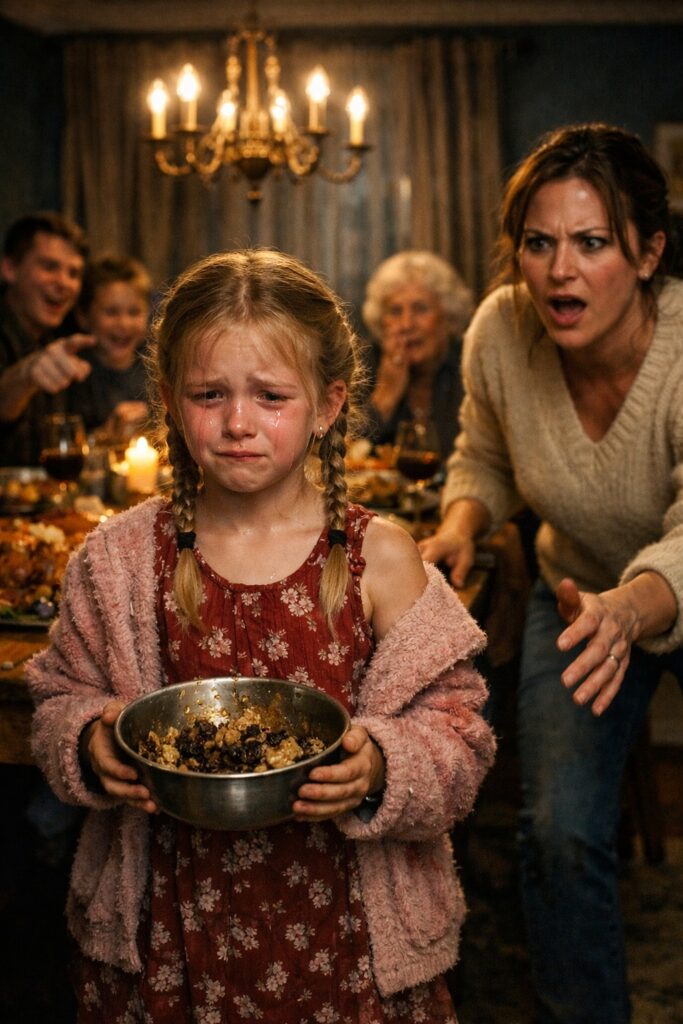
And suddenly there was juice everywhere.
I snapped.
“For once, can you be careful?”
Willa froze instantly.
Not because I yelled loudly.
Because children know tone the way sailors know weather.
Her little face crumpled. “I’m sorry, Mommy.”
Then she started cleaning the table with shaking hands so small they could barely hold the towel.
And something inside me turned cold.
Because I knew that posture.
I knew that panic.
I knew exactly what it meant for a child to feel responsible for keeping an adult calm.
That night after I tucked her into bed, I sat on the bathroom floor and cried silently into a towel so she wouldn’t hear me.
I told myself it was one bad moment.
But bad moments began multiplying.
I became obsessed with being perfect. Perfect mother. Perfect house. Perfect routines. And every time life slipped out of control, I tightened harder.
If Willa cried in public, I felt humiliated.
If she forgot homework, I took it personally.
If she interrupted me while I was overwhelmed, irritation sliced through me so sharply it scared me.
And afterward always came guilt.
Heavy. Suffocating guilt.
I would kneel beside her bed after she fell asleep and stroke her hair whispering apologies she never heard.
I started avoiding mirrors because I could see my mother living behind my expressions.
Then came the afternoon that changed everything.
Willa was eight.
She had been unusually quiet all day, sitting at the dining room table coloring while I cleaned the kitchen. I remember the sunlight through the curtains. I remember the smell of lemon cleaner.
I remember because afterward I replayed the moment a thousand times.
She walked up beside me holding a drawing.
It was a picture of our family.
Me. Eric. Herself.
But in the drawing, she had colored herself almost transparent. Faint gray crayon. Barely visible.
“Why did you draw yourself like that?” I asked.
She shrugged without looking at me.
“So I don’t bother anybody.”
The room went silent.
Not outside. Outside, cars still passed. The refrigerator still hummed. Somewhere a dog barked.
But inside me?
Silence.
Absolute.
Devastating silence.
Because suddenly I was twelve years old again holding a curled certificate nobody cared about.
I was six years old staring at crushed cardboard clouds.
I was every ignored version of myself standing in front of my own child.
And I realized the most horrifying thing trauma can do:
It can make victims fluent in the language of harm.
Even when they swore never to speak it again.
That night I drove to my parents’ house alone.
My mother answered the door wearing reading glasses and irritation.
“You should’ve called first.”
For once, I didn’t swallow my feelings.
“For my entire life,” I said, voice shaking, “did you ever actually love me?”
She stared at me as though I’d spoken another language.
Then she scoffed softly. “Oh, please. You always were too sensitive.”
There it was.
The sentence that built my childhood.
Too sensitive.
Not hurt. Not neglected. Not lonely.
Just defective for feeling it.
I looked past her into the familiar house with its polished cabinets and quiet cruelty tucked into every corner.
And suddenly I understood something I never had before:
My mother had not broken me because she hated me.
She broke me because someone had first broken her.
That realization did not excuse her.
But it cracked something open inside me.
For the first time, I stopped waiting for her to become the mother I deserved.
And for the first time, I understood that healing was not proving I was lovable enough for damaged people to love me correctly.
Healing was learning not to pass the wound forward.
When I got home, Willa was asleep curled against Eric’s chest on the couch.
A cartoon flickered silently across the television.
I knelt beside her and brushed hair from her forehead.
Then I whispered the words I should have heard as a child:
“You never have to earn love by being small.”
And this time, I made myself a promise I intended to keep.