Rachel Torres looked exhausted before she even sat down.
We met in a coffee shop downtown, the kind with exposed brick, expensive pastries, and people pretending not to listen to conversations. Rachel was in her early thirties, with dark hair pulled into a low ponytail and eyes that had learned not to trust a friendly room.
She recognized me instantly.
“Kimberly,” she said softly. “I’m sorry.”
I had expected defensiveness. Maybe fear. She was being sued by my sister, after all. Instead, Rachel looked at me like someone who had been carrying a letter through a storm and had finally found the right door.
“How did you know?” I asked.
She wrapped both hands around her coffee cup.
“My grandmother,” she said. “Dorothy Torres. She was your grandmother Margaret’s best friend.”
The name Dorothy unlocked a faint childhood memory: a small woman with silver hair who smelled like lavender and carried peppermints in her purse. She and Grandma Margaret had sat together at church socials, laughing with their heads close.
Rachel told me they had been friends for more than forty years.
“My grandmother knew something was wrong,” Rachel said. “Because Margaret knew.”
For a moment, the coffee shop noise disappeared.
Rachel reached into her bag and pulled out a photograph. Two elderly women stood arm in arm outside a church, both wearing bright Sunday jackets. Grandma Margaret smiled at the camera, but her eyes looked tired.
“Margaret didn’t believe what your mother said about you,” Rachel continued. “At first, she was confused. Hurt. She thought maybe you were angry with her. Then little things stopped making sense.”
Cards never acknowledged.
Phone calls never returned.
Messages that disappeared.
Lisa arriving with stories that sounded rehearsed.
My grandmother, Rachel said, began writing everything down.
“She kept a journal. Dates. Conversations. Contradictions. Every time Patricia or Lisa said something that didn’t add up.”
I pressed a hand against my chest.
“She knew?”
Rachel nodded. “She knew enough to be suspicious. Then one day she called you directly from Dorothy’s house, using my grandmother’s phone.”
The memory hit me so hard I almost stood.
I had been twenty-seven, sitting in a grocery store parking lot after work, when an unknown number called. I almost ignored it. Then I heard Grandma Margaret’s voice.
“Kimmy?”
She sounded older than I remembered. Smaller.
We both cried. We both apologized for abandoning each other, only to realize neither of us had.
The call lasted twelve minutes before my phone died.
When I called back the next day, the number was disconnected.
I had spent years thinking I imagined the importance of that call.
Rachel’s eyes filled.
“After that, Margaret changed her will. Or tried to. She also gave the journal to my grandmother with written instructions. Dorothy was not supposed to give it to you until you were ready to fight. Margaret believed if it came too early, your mother would destroy it or convince people you were unstable.”
“She died thinking I didn’t love her,” I whispered.
“No,” Rachel said firmly. “She died knowing you did.”
That broke me.
Not loudly. Not dramatically. I simply folded forward and covered my face with my hands while nineteen years of grief found the one door I had locked hardest.
Rachel waited.
When I could breathe again, she said, “When Lisa sued me, my grandmother said it was time. Court makes evidence matter. Your family couldn’t dismiss it as drama anymore.”
Dorothy Torres had waited five years knowing where I lived, holding my grandmother’s journal like a match in a dark room.
Lisa’s lawsuit had created the arena.
Lisa had tried to silence Rachel.
Instead, she had opened a door my grandmother built before she died.
Two weeks later, I sat in a conference room with Rachel, her attorney Margaret Webb, Erica, and Dorothy Torres herself.
Dorothy was eighty-four, tiny but sharp-eyed. She held my hands between hers.
“Your grandmother loved you fiercely,” she said. “Don’t let anyone tell you different.”
Attorney Webb was practical, calm, and terrifyingly prepared. She specialized in psychological abuse and defamation defense. She explained that truth was a complete defense against defamation. Rachel’s post had accused Lisa of having a pattern of bullying and manipulation. If we could prove that pattern was substantially true, Lisa’s case would fall apart.
The DVD video mattered.
The emails mattered.
Grandma’s journal mattered.
My testimony mattered.
“Your sister’s attorney will attack your credibility,” Webb warned. “He’ll bring up estrangement. He may bring up mental health claims your mother spread. He will try to make you look jealous.”
I almost laughed.
Jealous.
Of what? Lisa’s borrowed life? Her stolen inheritance? Her ability to smile while someone else suffocated?
Still, fear moved through me.
Because courtrooms are not built for wounded children. They are built for facts, procedure, exhibits, objections. I had spent my life being told my pain was not admissible.
Now it would be entered into evidence.
The night before trial, I opened Grandma Margaret’s journal for the first time.
Her handwriting slanted gently to the right. Some entries were shaky. Some angry. Some heartbreakingly tender.
One near the end made me press the page flat with trembling fingers.
Kimmy was never difficult. She was a child asking to be loved in a house that had forgotten how. If I do not live to see the truth come out, I pray she knows I saw her. I always saw her.
I closed the journal and looked at the old DVD on my table.
For nineteen years, Lisa had owned the story.
Tomorrow, she would meet the evidence.
King County Superior Court was quieter than I expected.
I had imagined chaos. Flashing cameras. Shouting. Some cinematic thunderclap when I walked through the doors.
Instead, there was polished wood, fluorescent lighting, low murmurs, and the soft shuffle of papers. Ordinary surroundings for extraordinary wreckage.
Lisa sat at the plaintiff’s table in a cream blazer, hair blown smooth, face arranged into wounded dignity. She looked expensive, controlled, and faintly annoyed, as though the court itself had inconvenienced her.
My mother sat behind her in the front row.
Patricia Jenkins wore pearls.
Of course she did.
She had always believed appearances were a kind of armor. Church clothes, soft perfume, perfect posture, a face trained to suggest sacrifice. To strangers, she looked like a devoted mother supporting her wronged daughter.
When I walked in, Lisa saw me first.
Her mouth tightened.
For one second, I saw the same girl from the living room. The one holding my inhaler just out of reach. The one who smiled because power was more pleasurable when the powerless could see it.
My mother looked through me.
Not at me.
Through me.
Even then, even after everything, her first instinct was to make me disappear.
Judge Patricia Coleman entered at nine. She was in her early sixties, with silver hair cut bluntly at her jaw and the expression of a woman allergic to nonsense. She reviewed the matter, confirmed exhibits, and allowed preliminary arguments.
Lisa’s attorney painted Rachel as a resentful former employee who had published malicious claims to ruin a successful woman’s reputation.
Attorney Webb stood and told the court Rachel had spoken the truth.
Not opinion.
Not gossip.
Truth.
Then I was called.
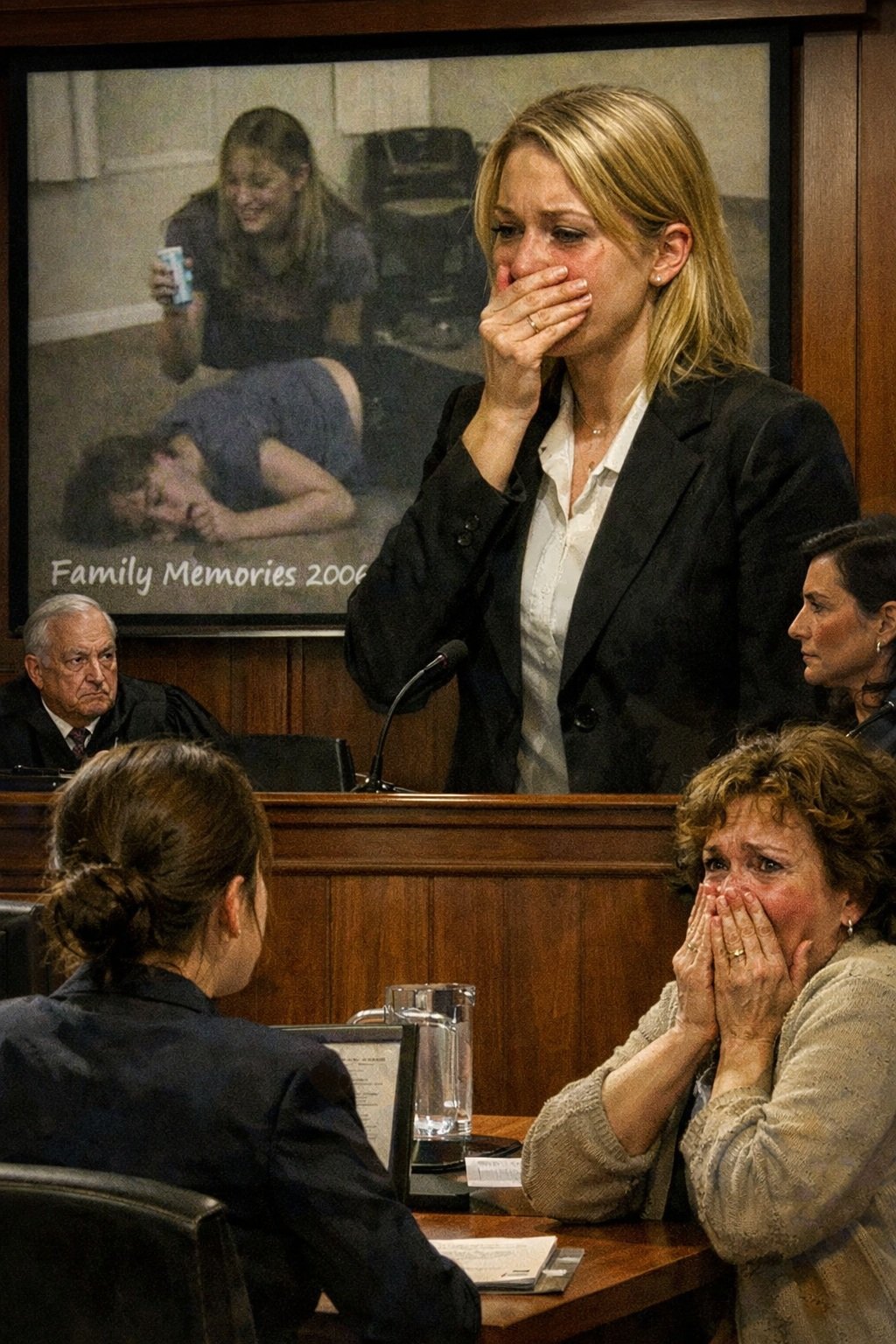
My legs felt hollow as I walked to the witness stand. I raised my right hand. I swore to tell the truth.
For a second, the word truth seemed too large for the room.
Lisa’s attorney approached with a smile sharpened at the edges.
“Ms. Jenkins, you are estranged from your family, correct?”
“Yes.”
“For three years?”
“Yes.”
“And before that, your relationship was difficult?”
“My family described it that way.”
“But you would agree there was tension.”
“I would agree there was abuse.”
His smile thinned.
He asked if I had ever been diagnosed with mental instability. I said no.
He asked if my mother had expressed concern about my mental health. I said yes, but only to other people, never to me, never with an offer of help, never with the name of a doctor.
“She used concern as a rumor,” I said. “Not as care.”
A stir moved through the gallery.
He asked if I resented Lisa.
I looked at my sister.
“No,” I said. “Resentment requires wanting what someone else has. I wanted what she took.”
Attorney Webb rose.
“Your Honor, the defense moves to admit Exhibit A: recovered email archives from a family DVD dated 2006, authenticated by certified digital forensic specialist Erica Lawson.”
Lisa shifted.
My mother froze.
The judge allowed it.
Emails appeared on the screen.
Delete the video from the camera.
Don’t mention Kimberly’s episodes to Grandma.
Perfect. Keep it up.
We can’t let her ruin your relationship with Grandma.
There’s too much at stake.
The courtroom changed.
It was not dramatic in the way movies teach you to expect. No one screamed. No one gasped loudly. But the air sharpened. People leaned forward. Lisa’s attorney stopped taking notes.
More emails followed.
Throw away the card before Mom sees it.
Tell Aunt Carol Kimberly is having another episode.
Grandma asked about Kim again. I said she was too busy to visit.
We’ve worked too hard to let Kimberly ruin this now.
My mother’s face lost color slowly, as if some invisible hand were draining it.
Then Attorney Webb submitted Exhibit B.
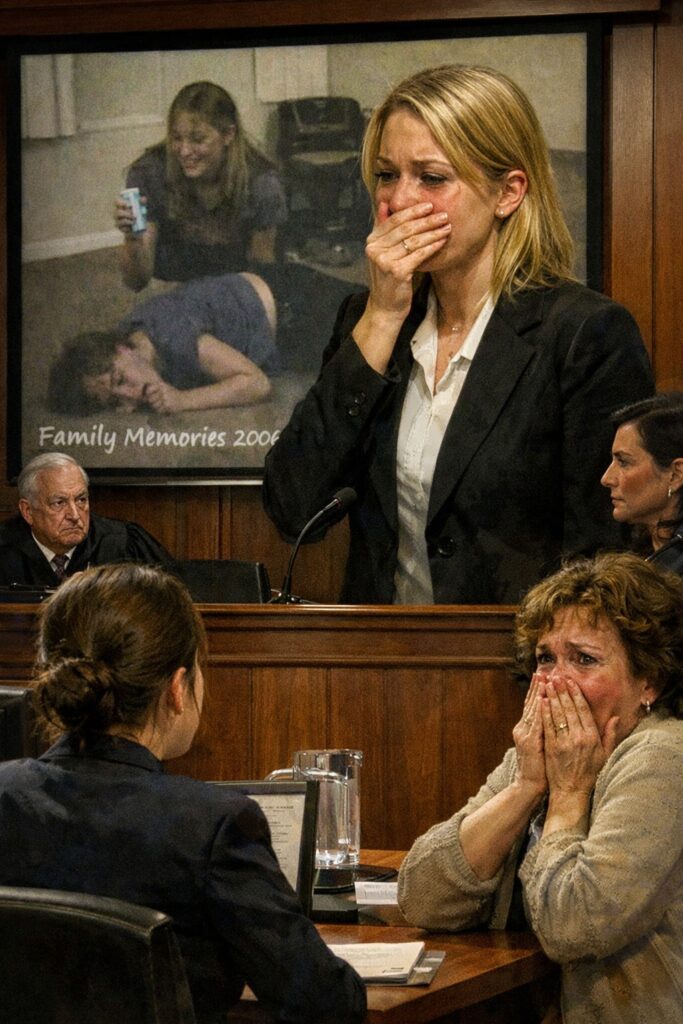
The video.
I looked down at my hands as it played.
But I heard it.
The wheeze.
The laugh.
Lisa’s young voice.
“Gasp, loser.”
Someone in the gallery whispered, “Oh my God.”
The video continued. My teenage body crawled across the carpet. Lisa held the inhaler. My parents sat in the background and did nothing.
Judge Coleman’s face tightened.
Lisa’s attorney objected weakly to relevance.
Attorney Webb did not raise her voice.
“This evidence directly supports Ms. Torres’s statement that Ms. Jenkins Monroe has a documented pattern of bullying and family manipulation. It also establishes the family’s later efforts to conceal the incident.”
The judge overruled the objection.
Exhibit C was Grandma Margaret’s journal.
Dorothy Torres testified to the chain of custody. A handwriting expert had authenticated it. Selected entries appeared on the screen.
Patricia called again. More lies about Kimberly. I know my granddaughter. She would never refuse to speak to me.
Lisa visited today. Sweet to my face, but checking my desk where I keep financial papers.
Called Kimberly directly. She thought I did not want her. My own granddaughter thought I abandoned her. Patricia has been lying to both of us.
Then the final entry.
If I do not live to see justice for Kimmy, let this record speak.
Lisa stood so fast her chair scraped the floor.
“That’s fake!” she shouted. “She loved me! She would never write that!”
Judge Coleman’s voice cut through the room.
“Ms. Jenkins Monroe, sit down.”
Lisa did not sit.
“She’s jealous!” Lisa cried, pointing at me. “She’s always been jealous of me!”
Attorney Webb turned calmly.
“Your Honor, the defense moves to admit Exhibit D: Kimberly Jenkins’s professional background.”
On the screen appeared my company profile.
Founder and CEO of MedBreath Technologies. Respiratory support devices. National contracts. Acquisition offer pending.
Attorney Webb looked at Lisa’s attorney.
“Ms. Jenkins built a medical device company valued in the millions after surviving the very neglect shown in that video. The claim that she is here because of jealousy is not supported by fact.”
For the first time all morning, I spoke without being asked.
“I am not here because I envy Lisa,” I said. “I am here because my grandmother spent twelve years writing down the truth, and I refuse to let her be the only person in our family brave enough to say it.”
The courtroom went silent.
Lisa trembled.
My mother lowered her head.
And for the first time in my life, they could not turn the channel, close the magazine, or pretend they did not hear me breathing.
The verdict came three days later.
Lisa lost.
Decisively.
Judge Coleman ruled that Rachel Torres’s statements were substantially true. Lisa did have a documented pattern of bullying, manipulation, and cruelty. Rachel’s blog post had not destroyed Lisa’s reputation with lies.
It had damaged her reputation with facts.
Truth, the judge said, is an absolute defense against defamation.
Lisa was ordered to pay Rachel’s legal fees.
Forty-two thousand dollars.
It was the first thing I ever saw my sister forced to give back.
But the courtroom loss was only the first crack.
Because the evidence was now public record.
The emails. The journal excerpts. The video.
Within a week, the story escaped the courthouse.
A local reporter requested the file. Then another. Someone wrote an article about a marketing executive whose defamation suit exposed a decades-long family scheme. They did not publish the full asthma attack video at first, but they described enough.
A teenager crawling for an inhaler.
A sister laughing.
Parents watching.
The internet did what the internet does. It judged quickly, loudly, and without mercy.
Lisa’s employer launched an internal investigation. She had been a senior marketing director, the kind of woman who gave presentations about leadership culture and team trust while destroying people in conference rooms. Former employees began commenting anonymously.
Rachel was not the only one.
There were others.
People Lisa had isolated. Assistants she had humiliated. Colleagues whose ideas she had stolen, then framed as incompetent. One woman wrote, “I thought I was crazy until I read this.”
I knew that sentence.
I had lived inside that sentence.
Two weeks after the verdict, Lisa was terminated for conduct unbecoming of a company representative.
Her husband filed for divorce a month later.
I had met Andrew only twice. He was polite in the way people are when they have been briefed to distrust you. Lisa had told him I was unstable, jealous, and prone to inventing stories for attention.
Then he watched the video.
He read the emails.
According to a mutual cousin who finally found the courage to contact me, Andrew told Lisa he did not know who he had married.
Lisa screamed that I had ruined her life.
But that was never true.
Lisa had built her life on a floor she stole from under me. All I did was stop holding it up.
My mother’s collapse was slower and, in a way, crueler.
Patricia Jenkins could have survived poverty better than shame. She could have endured legal trouble better than public pity. Her god was reputation, and now that god had turned its face away.
At church, the whispers began before she reached her pew.
For thirty-five years, she had been the perfect mother in the second row. Women’s ministry. Charity drives. Casseroles after funerals. Birthday cards signed with Bible verses. She had weaponized goodness so effectively that no one thought to question what happened behind her front door.
Then the church women’s group chat got the emails.
By Wednesday, the pastor asked her to step down from leadership “until things settled.”
Things did not settle.
Friends stopped calling. Invitations disappeared. People who once praised her devotion now looked at her as though trying to reconcile the pearl earrings with the mother who watched her child suffocate.
Three weeks after trial, she came to my apartment.
I opened the door because I saw her through the peephole and wanted to know what a fallen idol looked like up close.
She looked old.
Not naturally old. Defeated old. Her gray roots showed. Her lipstick was uneven. Her blouse was wrinkled. Patricia Jenkins had spent my entire childhood polished to a shine, and now the world had finally touched her with dirty hands.
“How could you do this to your family?” she asked.
No hello. No apology.
Just accusation.
I stood in the doorway and did not move aside.
“You mean how could I tell the truth about what my family did to me?”
Her mouth trembled.
“We raised you.”
“You housed me.”
“We fed you.”
“You also taught my sister to hold my inhaler while I was having an asthma attack.”
Her eyes flashed. For one second, the old Patricia surfaced.
“You always exaggerate.”
I almost smiled.
“Not anymore. There’s video now.”
That silenced her.
Tears came next. Patricia had always believed tears were keys. She cried about being misunderstood. She cried about pressure. She cried about Lisa needing more attention because Lisa was special, fragile, destined for better things. She said I was strong. She said she thought I could handle more.
“You were my mother,” I said. “You were not supposed to decide which daughter could survive being unloved.”
She reached for me.
I stepped back.
“Grandma died thinking I abandoned her because of you.”
Her face crumpled then, but I did not mistake it for remorse. Patricia was not grieving my pain. She was grieving the fact that pain had witnesses.
“We can fix this,” she whispered. “Come home. We can be a family again.”
I opened the door wider, but only so she could leave.
“You lost me nineteen years ago,” I said. “In that living room. The court just made it public.”
“Kimberly—”
“Goodbye, Mom.”
I closed the door.
My hands shook after. My knees nearly failed.
But I did not cry.
For the first time, I felt the difference between grief and freedom.
Grief is realizing your mother never loved you the way you needed.
Freedom is realizing you no longer have to keep auditioning for the role of daughter.
Lisa’s letter arrived a month later.
Six pages.
Dense handwriting.
No apology.
She began with childhood memories, carefully chosen and polished until they resembled evidence. The time we built a snowman. The time she gave me half her Halloween candy. The time she cried when I left for college.
I remembered the snowman differently. She knocked its head off because mine was taller.
The candy had been the pieces she hated.
And when I left for college, she cried because my father made her help carry boxes.
The letter shifted after page two.
Mom pressured me.
I was only fourteen.
You don’t know what it was like being expected to be perfect.
Then came the inventory.
I lost my job.
Andrew left.
People stare at me in public.
Mom barely speaks to anyone.
Then the sentence that told me everything.
Haven’t I suffered enough?
I sat at my desk with the letter in front of me and felt nothing like triumph.
Revenge stories lie about that part.
They make exposure look clean. They make justice look like a door slamming while violins rise. In real life, watching people fall after they hurt you does not heal the original wound. It only proves the wound was real.
Lisa wanted forgiveness the way she had wanted my inhaler: as an object she could hold up and use.
If I forgave her publicly, she could become a redemption story. She could go on podcasts. She could cry about toxic family systems and childhood pressure. She could say we were healing.
She wanted one final service from me.
I wrote back on one page.
Lisa,
I understand Mom shaped much of what happened. I understand you were a child when the cruelty began. But you were not a child for nineteen years.
You had chances to tell the truth. You chose not to.
You had chances to stop lying to Grandma. You chose not to.
You had chances to reach out to me privately. You chose not to.
I do not hate you. I do not wish you harm. But I will not give you forgiveness as a tool to rebuild your reputation.
Find peace if you can. It will not come through me.
Kimberly
I mailed it before I could soften it.
Six months after trial, probate court issued its ruling.
Grandma Margaret’s estate would be reviewed and partially redistributed due to undue influence. The court found sufficient evidence that my mother and Lisa had manipulated an elderly woman by feeding her false information about one granddaughter while positioning the other as loyal and deserving.
Lisa was ordered to return approximately one hundred eighty thousand dollars.
Money she had spent.
Money tied up in her house, her car, her lifestyle.
My attorney called it a significant victory.
I sat alone afterward with the number written on a legal document and waited to feel joy.
Instead, I thought of Grandma Margaret sitting at a small desk, writing in her journal with aching hands because it was the only weapon she had left.
The money had never been the deepest theft.
They had stolen time.
Phone calls.
Birthdays.
Ordinary afternoons I might have spent drinking tea in my grandmother’s kitchen while she told stories about my grandfather. Years I could not recover.
I did not keep the money.
I used it to create the Margaret Jenkins Fund, a small foundation for adults escaping family psychological abuse. Therapy vouchers. Legal consultations. Emergency deposits for apartments. Practical help for people everyone else told to “just leave.”
People say that as if leaving does not require money, documents, transportation, courage, and somewhere to sleep.
My grandmother tried to protect me too late to save our years together.
Now her name protects others.
My father emailed me two weeks after the foundation website went live.
The subject line read: From your father.
I almost deleted it.
Robert Jenkins had been a quiet man all my life. People mistook that for kindness. I did too, once. But silence in the presence of cruelty is not peace. It is permission.
His email was short.
He said he did not expect forgiveness.
He admitted he had known more than he ever allowed himself to say. He knew Patricia lied. He knew Lisa was cruel. He knew I was being pushed out of the family, but he told himself I was strong enough to survive it.
He wrote: I chose comfort over my daughter. I am ashamed.
Then he told me Grandma Margaret had called him a year before she died and begged him to protect me.
He promised her he would talk to my mother.
He never did.
I read the email five times over three days.
Part of me wanted to write back with every memory of his cowardice sharpened into blades.
Instead, I wrote:
Thank you for finally telling the truth. It is more honesty than you gave me when it could have mattered. I do not know if I can forgive you, but I can stop hating you. That is all I have right now.
It was not reconciliation.
It was not absolution.
But it was honest.
After nineteen years of lies, honest felt like holy ground.
That fall, Rachel invited me to speak at a support group for adults estranged from their families. I almost said no. I was not a therapist. I was not healed in some final, glowing way. I still checked exits in crowded rooms. I still carried an inhaler in every purse. I still flinched when someone said I was “too sensitive.”
But I went.
Twenty-three people sat in folding chairs beneath fluorescent lights. Mostly women. Some men. All wearing different versions of the same exhaustion.
I told them about the living room.
The inhaler.
The DVD.
The journal.
I told them the most dangerous lies in toxic families are often spoken gently.
You’re dramatic.
You’re remembering wrong.
We’re only worried about you.
Family is family.
When I finished, a woman in her fifties approached me. Her eyes were red.
“Everyone says I should forgive,” she whispered.
I took her hands.
“Forgiveness is not rent you owe for surviving,” I said. “And family is supposed to be where you are seen. If they spent years making you invisible, you are allowed to walk away.”
She hugged me and cried into my shoulder.
I held her.
And for a moment, I was seventeen again, gasping on the floor.
Only this time, I was not alone.
A year after the trial, I returned to Seattle for Grandma Margaret’s birthday.
Not to my parents’ house.
Never there.
I went to the cemetery on a cold April morning with a bouquet of yellow roses and a copy of the foundation’s first annual report tucked under my arm.
The grass was damp. The sky was low and gray, the kind of Pacific Northwest morning that makes the whole world feel unfinished.
Grandma’s headstone was simple.
Margaret Elaine Jenkins
Beloved Wife, Mother, Grandmother
She Saw the Good
I knelt and brushed pine needles from the stone.
“Hi, Grandma,” I said.
My voice broke on the second word.
I told her everything.
About Rachel winning. About Lisa losing the case. About the probate ruling. About the fund in her name. About the first woman we helped move into a studio apartment after thirty years with a family that called her selfish for wanting a locked door.
I told her MedBreath had expanded into three new hospitals. I told her I had hired Erica’s firm for permanent cybersecurity because neither of us trusted deleted files anymore. I told her Rachel was writing again.
Then I took out her journal.
The original stayed in a fireproof safe now, but I carried a scanned copy of the last page.
I read it aloud.
Kimmy was never difficult. Never the problem. She was just a girl who deserved to be loved.
The cemetery wind moved through the trees.
For years, I had imagined closure as something dramatic. A confrontation. A verdict. An apology spoken with the right amount of tears.
But kneeling there, I understood closure was quieter.
Closure was believing the truth even when no one was forced to admit it.
Closure was building a life where the people who harmed you were no longer main characters.
Closure was breathing without asking permission.
My phone buzzed as I stood.
A message from Rachel.
You okay?
I smiled.
Getting there, I wrote back.
At home in Portland that evening, I opened every window in my apartment.
Cool air moved through the rooms. On my desk sat a framed photograph Dorothy had given me: Grandma Margaret and me when I was twelve. Her arm wrapped around my shoulders. My smile wide and unguarded.
It was the only childhood picture where I looked safe.
Beside the frame sat my own notebook.
For months, I had been writing in pieces. Memories. Reflections. Things I wished someone had told me when I was younger. That night, I wrote the title page.
The Invisible Daughter
Then the dedication.
For Grandma Margaret, who saw me when I could not see myself.
And for everyone still waiting to be seen.
Your turn is coming.
I set down the pen and opened the bottom drawer.
Inside lay my rescue inhaler.
I still needed it sometimes. Asthma does not vanish because the truth comes out. Bodies remember. Trauma does too.
But there was a difference between illness and suffocation.
One belonged to my lungs.
The other had belonged to my family.
They no longer owned either.
A few months later, I received one final message from Lisa.
Not a letter this time. An email.
It contained only three sentences.
I watched the video again.
I finally saw your face.
I am sorry.
I stared at it for a long time.
Maybe it was real.
Maybe it was another attempt to open a door.
Maybe both things could be true.
I did not answer.
Some apologies arrive too late to become bridges. They can only become markers on the road behind you, proof that even the people who denied the fire can sometimes smell the smoke after the house is gone.
I wished Lisa healing.
I wished her honesty.
I wished her far away from me.
The next spring, the Margaret Jenkins Fund hosted its first public event. Fifty people came. Survivors. Advocates. Attorneys. Therapists. People who understood that family abuse often leaves no bruises visible enough for strangers to respect.
I stood at the podium under warm lights and looked out at the room.
Rachel sat in the front row.
Erica beside her.
Dorothy Torres, small and fierce at eighty-five, held a yellow rose in her lap.
I began with the truth.
“When I was seventeen,” I said, “my sister held my inhaler during an asthma attack and laughed while I crawled across the floor. For nineteen years, my family told the world I was the problem. Then one forgotten DVD, one brave grandmother’s journal, and one woman’s refusal to be silenced brought the truth into a courtroom.”
The room was silent.
Not uncomfortable.
Listening.
I took a breath.
Clear. Deep. Mine.
“If you are still inside a family that makes you feel invisible, I want you to hear me. The confusion you feel is not proof you are weak. It is proof someone trained you to doubt your own pain. The patterns you notice are probably real. The memories you carry deserve respect. Document what you can. Find safe people. Build toward freedom one practical step at a time.”
I looked at Dorothy.
“My grandmother did not live to see justice. But she lived believing it was possible. That belief saved me.”
Afterward, people lined up to speak with me. They told me stories in lowered voices. Sisters who stole inheritances. Mothers who smiled in public and destroyed in private. Fathers who stayed silent because silence was easier than courage.
I could not fix all of it.
But I could witness.
And sometimes being witnessed is the first breath after years underwater.
Late that night, after the chairs were folded and the lights turned off, I walked outside alone. Portland glittered under a thin rain. Cars hissed over wet pavement. Somewhere nearby, someone laughed.
My chest tightened—not from asthma, but from the sudden force of memory.
Seventeen-year-old me on the carpet.
Fourteen-year-old Lisa smiling.
My parents watching.
Grandma Margaret writing.
Rachel speaking.
Erica recovering.
Dorothy waiting.
The judge listening.
Me, finally, breathing.
I lifted my face to the rain and let it touch my skin.
For nineteen years, they tried to make sure I had no voice.
Now my voice filled rooms.
For nineteen years, they told people I was unstable, dramatic, difficult.
Now I knew the truth.
I had been a girl trying to survive a house that mistook cruelty for order and silence for peace.
I was never invisible.
I was hidden by people afraid of what would happen if anyone really saw me.
But truth has a strange way of breathing underground. It waits beneath floorboards. It hides in old journals. It sleeps inside forgotten discs. It survives in the memory of one friend, one witness, one woman brave enough to write a sentence online.
And when the moment comes, truth rises.
Not always with revenge.
Not always with applause.
Sometimes it rises as a woman standing at an open window, breathing cold evening air, finally understanding that the people who tried to erase her were never powerful enough to decide whether she existed.
I placed Grandma’s photo by the window.
Then I turned off the lights.
In the darkness, my apartment felt peaceful.
Not empty.
Peaceful.
And for the first time in my life, I did not listen for footsteps behind me.
I did not wait for someone to call me dramatic.
I did not reach for permission to breathe.
I simply breathed.
THE END