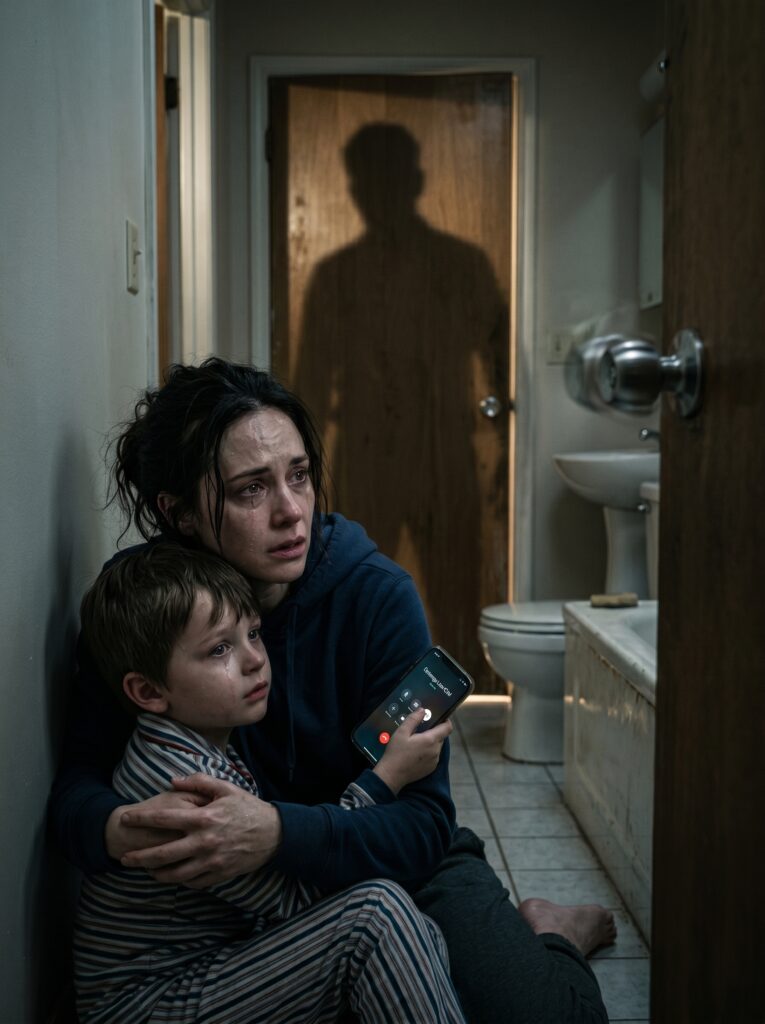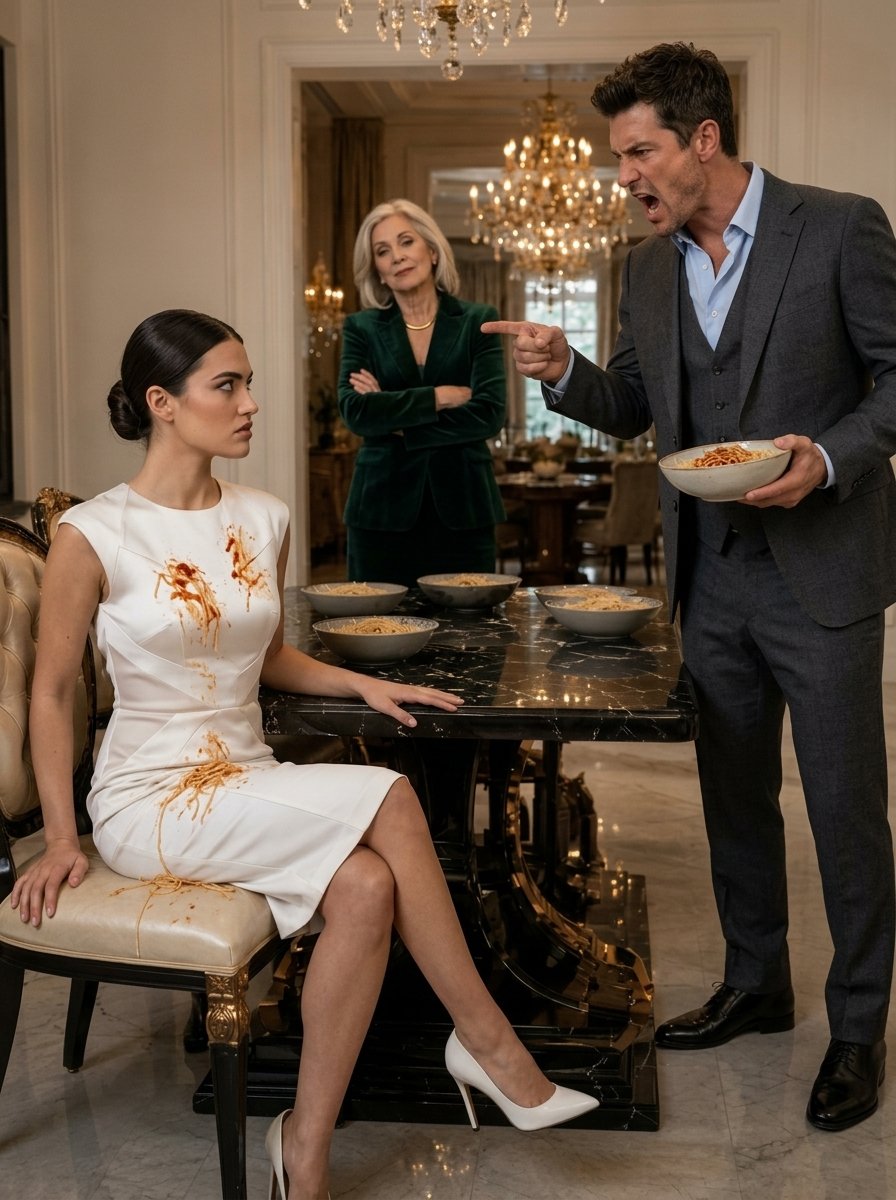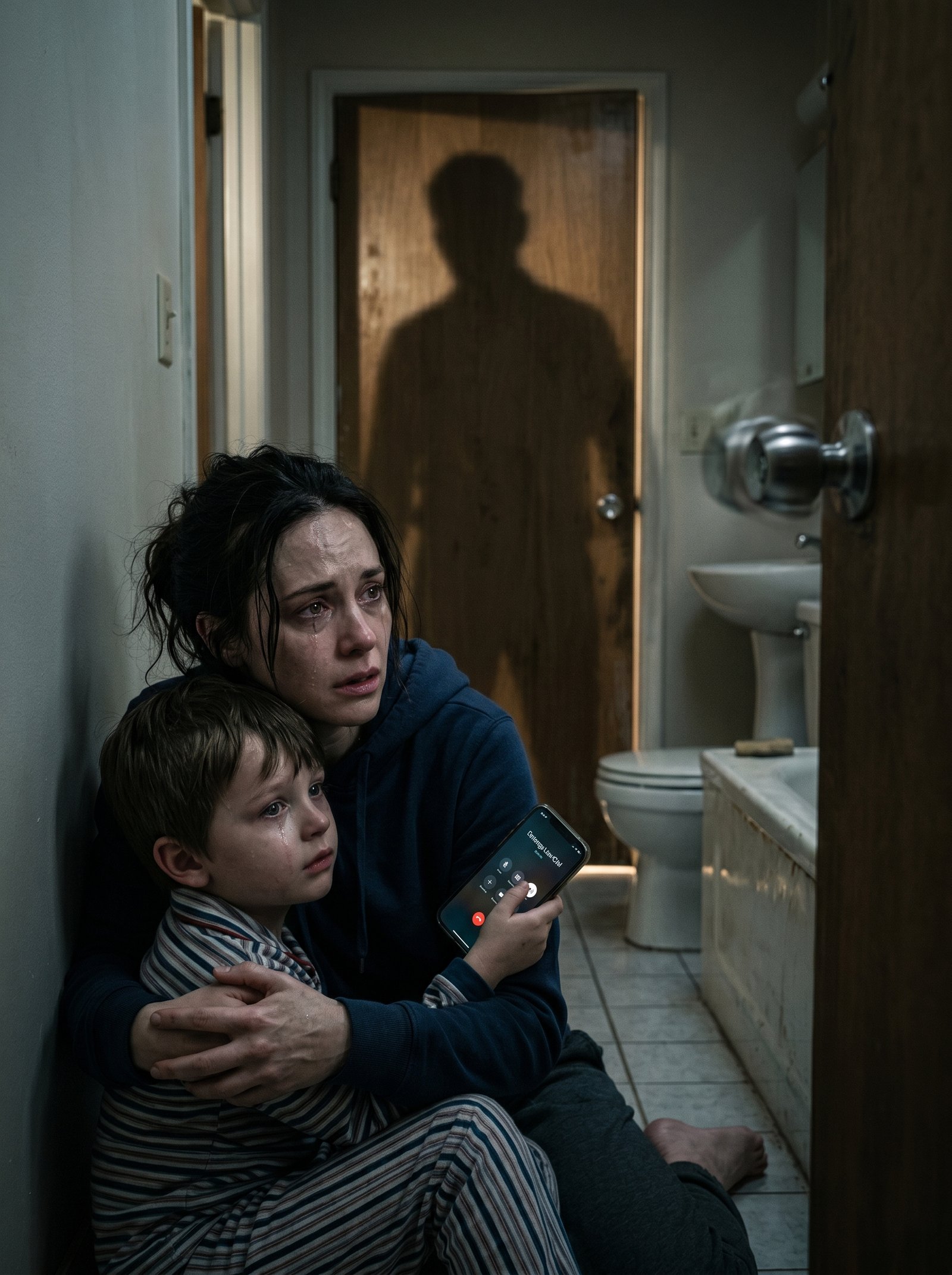
I was lying on the bathroom floor, barely breathing, my son Noah pressed against me trembling and drenched in sweat, both of us poisoned by the plate of chicken my own husband had served us for dinner — and then I heard him whisper into his phone, “It’s done… soon you’ll both be gone,” and I knew if I made a single sound, we were finished. I had 911 on the line, phone gripped so hard my fingers had gone completely numb, the operator whispering “do not open that door under any circumstances” while Noah’s little fingers dug into my wrist like he was holding on for dear life, and I stroked his hair with shaking hands trying to keep us both calm. Then the front door opened.
Two sets of footsteps — Daniel’s confident, controlled stride I’d know anywhere, and a woman in thin heels clicking against the hardwood like a countdown. She said nervously “they’re not here,” a suitcase hit the floor, and Daniel snapped “what do you mean they’re not here” before he started tearing through cabinets and slamming drawers. Then his footsteps turned. Straight down the hallway. Straight toward us. The bathroom handle jerked violently. “Rachel,” he called, and every drop of fake tenderness he ever used on me was completely gone. “Open the door.” I said nothing. The handle rattled harder. “I know you’re in there.” The woman’s voice trembled — “Daniel, maybe we should go” — and he told her to be quiet. Then his palm slammed against the door.
And I pressed my back against that door with every ounce of strength I had left in my poisoned, trembling body, one hand braced against the floor, the other still holding that phone like it was the only thing keeping us alive, because it was — “Ma’am, I need you to stay with me, units are two minutes out,” the operator said, and two minutes had never felt so much like forever in my entire life. Noah buried his face into my shoulder and I could feel his whole body shaking, this little boy who still slept with a nightlight, who still asked me to check under his bed, now understanding in the most horrifying way that the real monster never lived under the bed at all — he lived in our house, he sat at our dinner table, he kissed us goodnight.
Daniel hit the door again, harder this time, and the frame cracked just slightly and I felt it vibrate through my spine, and the woman hissed “Daniel someone is going to hear us” and he growled back “there’s nobody out here for miles, stop panicking,” and that’s when I realized — he had planned this so carefully, so completely, he had chosen this night, this location, this meal, this poison, and there was a woman standing in my living room helping him do it. I had cooked for this man for eleven years.
I had built a life inside these walls. And somewhere between the life I thought I had and the bathroom floor I was now bleeding onto from a cut on my knee I hadn’t even noticed, the person I used to be had already started dying before the poison ever touched my lips. Then I heard it — sirens. Faint at first, like something inside a dream you’re desperate not to wake from, and Noah heard them too because his head snapped up and his red swollen eyes found mine in the dark and I put one finger to my lips — not yet, baby, not yet. The woman’s heels stopped clicking. “Daniel.” Her voice had changed completely. “Daniel, those are police sirens.” A long, horrible silence followed, the kind that has weight to it, the kind you can feel pressing down on your chest, and then I heard something I had never once heard in eleven years of marriage — I heard Daniel Carter afraid. “How,” he whispered. Not a question. Just one word, breathed out like the walls themselves had betrayed him. And I closed my eyes, held my son tighter, and whispered back so quietly that only God and Noah could hear me — “Because I never stopped fighting.”
The sirens got louder and the woman in the heels completely fell apart first — I heard her gasping, heard the frantic clicking as she paced, heard her whisper-screaming “I told you, I told you this was too far, I told you we should have just left the country” and that single sentence cracked open something inside my chest because this had been a plan with options, with alternatives, with conversations I was never meant to survive long enough to know about, and Daniel had chosen this one, had looked at every exit and decided the one where Noah and I stopped breathing was the cleanest.
The front door rattled. Someone was trying to leave. “Don’t you move,” a voice boomed from outside, deep and authoritative and the most beautiful sound I had ever heard in my life besides Noah’s first cry the night he was born, and then everything happened at once — pounding on the front door, flashlight beams cutting under the bathroom door and sweeping across the hallway, voices overlapping, “Police, open the door, hands where we can see them,” and Noah grabbed my face in both his small hands the way he used to when he was three years old and wanted to make sure I was really listening and he said “Mama, they’re here, Mama we’re okay” and I completely broke apart, silently, tears running straight into his hair while I held the back of his head and rocked him because I could not let him hear me fall to pieces, not yet, not until we were safe, not until the door between us and Daniel was no longer the only thing standing between my son and a grave his own father had dug for him.
The bathroom door — my door, the one I had held with my body — was knocked on gently this time, three soft taps completely different from everything that came before it, and a woman’s voice said quietly “Ma’am, this is Officer Daniels, you are safe, we have the individuals detained, I need you to open the door when you’re ready,” and I sat there for a full five seconds unable to move because my body had been in survival mode for so long it didn’t immediately understand what safety felt like anymore. Noah opened it. Of course he did — eleven years old, poisoned, terrified, and still braver than I could ever take credit for — he reached up and turned that handle himself and the light from the hallway came flooding in and two officers were crouching right there at eye level with us and one of them took one look at Noah and immediately took off his jacket and wrapped it around my son’s shoulders without saying a single word and I watched that small, wordless kindness completely finish what the sirens had started and I finally, finally let myself cry out loud.
They walked us out through our own living room and I made the mistake of looking, and Daniel was against the far wall with his hands behind his back and the woman — young, younger than I expected, mascara destroyed, wearing a dress I recognized because I had seen it in a shopping bag he said was a gift for his sister — was sitting on the floor of my home, in my living room, against the couch I had picked out, under the family photos I had framed, and she looked up at me with an expression I still think about because it wasn’t guilt and it wasn’t defiance — it was shock, like she was only just now, in this moment, understanding exactly what she had been standing next to. Daniel didn’t look at me at all. And somehow that told me everything I had spent eleven years trying not to know.
They took us to the hospital in separate ambulances and I remember lying there watching the ceiling of that vehicle blur past while a paramedic pressed something cold against my arm and asked me questions I answered on autopilot — yes, we ate the same food, yes, around seven o’clock, yes, my son too, yes, he’s eleven — and somewhere between the IV going in and the oxygen mask being adjusted I stopped answering and just stared because my mind had finally, after hours of pure survival, been given one quiet moment and it chose to fill that moment with every single ordinary Tuesday I had ever spent in that house, every grocery run, every school pickup, every argument about the thermostat, every anniversary dinner where I had looked across the table at Daniel Carter and felt grateful, actually genuinely grateful, and I had to grieve all of those moments simultaneously while a stranger checked my pulse and the ambulance moved through the dark. Noah was in the next bay when we arrived and the first thing he said when he saw me being wheeled in was “Mom, I told them you were the one who called 911” like he needed me to get the credit, like even poisoned and exhausted and eleven years old he was worried about making sure I was recognized for the thing that saved us, and I laughed, I actually laughed, the kind that comes from somewhere so deep it brings everything else up with it and the nurse thought I was going into shock which honestly was a reasonable assumption.
They pumped our stomachs, they monitored us through the night, and somewhere around three in the morning when Noah had finally fallen into a real sleep with the blanket tucked up to his chin and the machines beeping steadily and the nurses moving softly in the hallway, my sister arrived — she had driven four hours straight after a single phone call from a detective, no bags packed, still in her house slippers — and she walked into that room and looked at me and didn’t say anything, just pulled a chair directly next to my bed and sat down and took my hand, and that was the moment the last wall I had been holding up since dinner finally came completely down.
The detective came the following morning, a woman named Reyes with kind eyes and a no-nonsense voice, and she sat across from me and told me carefully and clearly that the substance found in the food was confirmed as poison, that Daniel had searched for it online using our home computer eleven days earlier, that the woman’s name was Christine and she was twenty-six and had been seeing Daniel for fourteen months and had known about the plan for at least three of them, and that a one-way flight for two had been booked for six the following morning under names that were not ours. Detective Reyes put a folder on the table and folded her hands on top of it and said “Mrs. Carter, you did everything right” and I nodded but what I was actually thinking was that I had done everything right for one single night after doing everything wrong for eleven years by loving someone who was simply very, very good at being loved. The charges were serious — attempted murder, two counts, premeditated, with evidence of planning that made the prosecutor’s case so clean it almost never went to trial at all.
Christine cooperated fully in exchange for a reduced charge and I chose not to spend any more of my life thinking about her because she had already taken enough of it without my permission. Daniel stood in that courtroom and finally looked at me — the first time since the living room wall — and I had spent weeks imagining what I would feel in that moment, had prepared myself for rage or devastation or the particular heartbreak of looking at someone you once loved and seeing a stranger, but what I actually felt was nothing, a clean and total nothing, like a room that has been emptied and is waiting for something new, and I held that feeling carefully all the way through the verdict, all the way through the sentencing, all the way to the parking lot where Noah was waiting with my sister and he ran to me the way he used to when he was small and I caught him and held on and pressed my face into the top of his head and breathed, just breathed, because we were here, we were standing in ordinary afternoon sunlight and we were here.
We moved three months later to a town neither of us had ever been to, a place with no history attached to it, and on the first night in our new house Noah and I sat on the kitchen floor and ate takeout straight from the containers because we had no furniture yet and he looked around at the empty walls and the bare floors and said “Mom, I think I’m going to like it here” and I looked at my son — this brave, extraordinary boy who held my face in his hands on a bathroom floor and told me we were okay before he even knew for certain that we were — and I thought yes, baby, I think we are going to like it here too, I think we are going to be more than okay, I think we are going to build something in these empty rooms that no one will ever be able to take from us again, and for the first time in longer than I could honestly remember, I believed it completely.
SUMMARY:
This is the story of Rachel, a mother who survived the unthinkable — being poisoned by her own husband at their dinner table, along with their eleven-year-old son Noah. While lying on the bathroom floor, barely breathing and fighting to stay conscious, she managed to call 911 and hold the door between her son and the man who was supposed to protect them both. What followed was a night of pure survival — whispering to a 911 operator in the dark, feeling the door crack under her husband’s fist, hearing a strange woman’s heels clicking through her own home — until sirens finally broke through the silence and the nightmare ended. Daniel Carter, her husband of eleven years, had planned everything — the poison, the getaway, the woman he was leaving with — eleven days in advance, booked on a flight that was supposed to leave the next morning. Rachel and Noah survived. Daniel was convicted of two counts of attempted premeditated murder. They moved to a new town, sat on the floor of an empty house eating takeout, and chose to begin again.
THE LESSON:
The most dangerous betrayal in life is not always the one that comes loudly — it doesn’t always announce itself with anger or warning signs you can clearly see. Sometimes it comes quietly, wearing a familiar face, sitting across from you at your own dinner table, saying goodnight with a smile. Rachel’s story reminds us that survival is not just physical — it is the decision, even when your body is failing and fear is consuming everything, to keep holding the phone, to keep stroking your child’s hair, to keep pressing your back against that door. It reminds us that the bravest thing a person can do is refuse to disappear quietly when someone has decided it is time for them to go. And perhaps most importantly, it reminds us that an empty room is not always a loss — sometimes an empty room is the most hopeful thing in the world, because it means you are still here, still breathing, and everything that fills it from this point forward belongs entirely to you.