Part3: Base was quiet when we touched down, the kind of quiet that only exists after something loud has passed through it, and Chief Reyes cut the engines and the rotors wound down slow and I sat in the bird for an extra thirty seconds just letting the stillness settle over me the way you let cold water run over a burn — because the adrenaline was leaving now and what it left behind was not emptiness exactly but more like clarity, the specific kind that only arrives when you have stopped pretending something is fine long enough to remember what fine actually feels like — Sergeant First Class Donna Okafor met me on the tarmac with a clean towel and a protein bar and the expression of a woman who had seen me walk off a bird after hard calls before and knew better than to ask how I was doing before I had eaten something, and she said “three for three, Captain, all critical stable, the seven-year-old is out of surgery, infant is with her mother, fourteen-year-old asked the ER nurse if the lady soldier was coming back” and something moved behind my sternum that I did not have a word for yet so I just nodded and unwrapped the protein bar and ate it standing on the tarmac in a torn gray dress under a blood-streaked flight suit while the sun finished setting behind the tree line and the base flag went still against its pole — and that was when my phone started doing something it had not done all evening, it started ringing from a number I did not recognize, area code local, and I almost let it go to voicemail because I was tired in the particular way that has nothing to do with sleep, but something made me answer, and the voice on the other end was female and young and slightly hoarse, and she said “is this Captain James, the trauma doctor from the highway” and I said “I’m not a doctor, I’m a flight surgeon, but yes” and she said “my name is Becca, I’m the fourteen-year-old’s older sister, I was in the car, I wasn’t hurt bad, I just — I needed to call because nobody would tell me who you were and I had to find out because when my sister was screaming and I couldn’t get to her you were the one talking to her and I heard you tell her she was going to be okay and I need you to know that she believed you, she actually stopped screaming because she believed you, and I just needed the person who did that to know that it mattered” — and I stood on that tarmac and I did not say anything for four full seconds which is a long time when someone is waiting, and then I said “your sister was incredibly brave and so were you” and Becca said “I didn’t do anything” and I said “you called a stranger to say thank you when you could have just gone home and been relieved, that’s not nothing, that’s actually everything” and she went quiet and then said “are you okay” and I almost laughed because a seventeen-year-old who had just been in a highway collision was asking me if I was okay, and I said “I’m getting there” and I meant it more than I had meant anything I said at that vineyard in the last two days — I went to the locker room and peeled off the flight suit and stood under hot water for seven minutes and watched the gray dress finally give up and let the last of the evening go down the drain, and when I came out Okafor had left a fresh uniform on the bench, pressed, creased, name tape straight, Captain’s bars catching the fluorescent light like they had been waiting there for me the whole weekend — and I put it on piece by piece the way I always did, deliberately, because a uniform is not a costume, it is an accounting, it is every decision and every shift and every hour in every classroom and every field exercise and every time someone asked if I was planning to go back to school and I had to decide whether to explain myself or just keep moving forward, and when I looked in the mirror I did not see what Lydia Whitmore saw when she smiled at army green, I saw the thing I had built over a decade with no help from anyone’s approval — and then I drove to the hospital because I needed to see for myself, I needed to look at a chart and confirm what Okafor had told me, because that is the part they never show in movies, the part where you go back and make sure, the part where you check the numbers and read the notes and stand outside a recovery room and breathe once before you walk away — the seven-year-old’s name was Marco and he was asleep with a dinosaur sticker on the back of his hand that one of the nurses must have given him, and his mother was in the chair beside him and she looked up at me with the expression that parents get, the one that is too large for any sentence, and I said “I’m Captain James, I was on scene earlier” and she stood up slowly like her legs had not quite remembered how to work yet and she took both my hands in hers and did not say anything at all, and that silence was the most complete thing anyone had offered me all weekend — I left the hospital at 10:47 p.m. and sat in my car in the parking garage for a few minutes and looked at my phone which had fourteen messages, three from Graham, two from his sister who I had never spoken to before, one from Parker which I stared at for a long time without opening, one from Lydia Whitmore which I stared at even longer, and eight from a number saved in my phone as Colonel David Park who was my commanding officer and who did not text eight times unless something significant had happened or was about to — I opened Colonel Park’s messages first because that is the correct order of things, and the first message said “outstanding work today Captain,” the second said “all three civilians stable, commendation being drafted,” the third through seventh were logistics and debrief scheduling, and the eighth sent at 10:31 p.m. said “also saw the video” — and I stopped on those four words because I did not know what video, I had not been thinking about video, I had been thinking about airways and pressure and a seventeen-year-old named Becca who called a stranger to say thank you — so I opened a browser and I searched my own name for the first time in my life and what I found was a forty-seven second clip that someone at the vineyard had recorded on their phone, shaky, backlit by the afternoon sun, capturing the exact moment the crew chief ran across the ceremony lawn and shouted Captain James, and then capturing me pulling free of Graham’s hand, and then the dress tearing, and then me walking toward the Black Hawk without looking back, and the caption on the video said simply “she left a wedding to save three kids and nobody at that wedding even knew who she was” and it had been viewed two million, three hundred thousand times in six hours — and I sat in that parking garage and read comments until my eyes went dry, strangers from places I had never been saying things like “this is what service actually looks like” and “I want to be her when I grow up” and “whoever that man was who let her ride with the luggage owes her an entire apology” and one comment near the top with forty thousand likes that said “notice how she didn’t hesitate, not even for a second, because some people spend their whole lives becoming the person they are in that moment” — and I put my phone face down on the passenger seat and looked at the concrete wall of the parking garage for a while, and then I picked it up again and opened Graham’s messages, the first said “Riley please call me,” the second said “I handled this wrong, I handled all of it wrong,” and the third sent at 9:58 p.m. said “I watched the video and I kept thinking that I know that woman and then I realized that was the problem, I thought I knew you but I was only ever watching the version my family made room for and I’m sorry, I don’t know if sorry reaches far enough but I am” — and I read it twice and I believed that he meant it, I believed that the video had cracked something open in him that months of Sunday brunches had slowly closed, and I believed that he was sorry in the sincere way that people are sorry when they finally understand what they chose to overlook — and I also knew, sitting in that parking garage at 10:53 p.m. with Marco’s chart still in my memory and Becca’s voice still in my ear and my uniform sitting straight on my shoulders, that sorry and enough were two completely different things, and that I had spent the better part of a year making myself smaller to fit inside a family that had never once tried to grow large enough to deserve me — so I opened Lydia Whitmore’s message last, and it said “Riley, I owe you an apology, I think I may have misunderstood what you do” and I looked at that sentence for a long time, at the word misunderstood, at the way it made her the person who had simply gotten confused rather than the person who had smiled while her son let me ride with the luggage, and I thought about Marco asleep with a dinosaur sticker on his hand, and Becca’s hoarse voice saying she believed you, and Chief Reyes saying good to have you back in the bird, and Colonel Park’s commendation being drafted, and two million three hundred thousand strangers who had watched a forty-seven second video and immediately understood something that the Whitmore family had spent months refusing to see — and then I set my phone on the seat, started the car, and drove back to base, because tomorrow there would be a debrief and a commendation and a fourteen-year-old who might want to know if the lady soldier was coming back, and the day after that there would be more, there was always more, and I had never once needed anyone’s permission to show up for it.
The debrief was at 0800 and I was there at 0745 because that is the only way I know how to arrive at things that matter, and Colonel Park was already in the room with his coffee going cold beside his elbow the way it always did when he had been there long enough to forget about it, and he looked up when I walked in and did something he had not done in the three years I had served under him, he stood up, just stood up quietly from his chair the way you stand for something you respect without needing to perform it, and he said “Captain James” and I said “Colonel” and we sat down and went through the debrief the way professionals do, methodically, honestly, without decoration, every decision documented and justified and handed to the record so that the next crew on the next call could learn from whatever we had done right and whatever we could have done better — and when it was over he slid a single sheet of paper across the table and said “commendation for valor under non-combat conditions, ceremony at the end of the month, your name goes on the wall” and I looked at that paper and thought about Lydia Whitmore telling me army green was too severe and felt something so quiet and complete move through me that it did not even need a name — I spent the rest of that morning on base doing the ordinary things that exist on the other side of extraordinary ones, paperwork and inventory checks and a call with the hospital confirming all three civilians had been upgraded from critical to stable, and at 1:14 p.m. I got a message from a number I had saved the night before, Becca, and it said “my sister wants to draw you a picture, is that weird” and I said “that is the opposite of weird” and she sent back a single exclamation point which is the correct response when you are seventeen and relieved and still figuring out the vocabulary for gratitude — and somewhere in between the paperwork and the phone calls I made a decision that I had actually been building toward for longer than I had admitted to myself, not a dramatic decision, not an angry one, the quiet kind that arrives fully formed after the noise has cleared, the kind that does not need a speech or a confrontation or a vineyard full of witnesses, just a person alone in a room with themselves finally agreeing on something — I called Graham at 2:30 p.m. and he answered on the first ring which told me he had been holding his phone all day and I said “I need you to listen and I need you not to explain anything until I’m finished” and he said “okay” and I could hear in that one word that he already knew, the way people know things before they are said when the truth has been living in the room with them long enough — and I told him that I believed he loved me, I believed that completely, but I had learned in the last two days that love without witness is just a private feeling that costs the other person everything in public, and that every time he had looked away or gone quiet or given his mother an embarrassed smile or let his family put me in the second car with the luggage, he had made a choice, not out of cruelty but out of comfort, and comfort chosen over someone’s dignity is still a choice, and I could not build a life on the understanding that I would be respected in private and managed in public, that I would be Captain James in a helicopter and Graham’s fiancée in a gray dress at a table where nobody refilled your coffee — and he did not say anything for a long time and then he said “I know” and those two words were the most honest thing he had said to me in months, no defense, no negotiation, just I know, and I said “I hope you find the version of yourself that doesn’t need to look away” and I meant it without bitterness because bitterness requires ongoing investment and I was choosing to spend mine elsewhere — I sent the ring back on a Tuesday in a padded envelope with no note because everything that needed to be said had been said on that phone call, and I did not cry about it the way people expect you to cry about the end of something, I felt instead the particular relief of a person who has been holding their shoulders up for so long they forgot it wasn’t their natural posture, and then I stood up straight in the real way and noticed the difference — the commendation ceremony was on a Friday afternoon at the end of the month and the base auditorium held two hundred people and every seat was filled, and Colonel Park read the citation in that flat official voice that makes serious things sound more serious, and when he pinned the commendation to my chest I looked straight ahead the way you are supposed to and I thought about Marco and the fourteen-year-old whose name I had since learned was Gracie and the infant whose mother had held my hands in the hospital room without saying anything, and I thought about Chief Reyes saying good to have you back in the bird, and Donna Okafor leaving a pressed uniform on a bench without being asked, and Becca calling a stranger from a hospital waiting room just to say that it mattered — those were the things pinned to my chest along with the medal, the actual weight of it, the real accounting — after the ceremony there was a reception in the hall outside and I was standing with a plate of food I was not eating when I heard the door open and I turned and felt every muscle in my body do something complicated because standing in the entrance of the base auditorium in a dark blazer and an expression I had never seen on her before was Lydia Whitmore, and beside her was Graham’s sister Nora who had texted me twice and whom I had always actually liked, and behind them both, smaller than I remembered her looking, was Aunt Vivian who had asked me at brunch if I was planning to go back to school — and the room did not go quiet dramatically the way rooms do in movies, people kept talking and eating and laughing, the world did not pause for Lydia Whitmore’s arrival the way she was accustomed to it doing, and I watched her look around the room full of uniforms and medals and people who knew exactly who I was and I watched something move across her face that I think was the specific discomfort of understanding that you have been the smallest person in a situation you thought you were managing — she crossed the room toward me and I did not move toward her or away from her, I just stood where I was, which is the only position I had ever actually needed to take, and she stopped in front of me and she looked at the commendation on my chest and then she looked at my face and she said “I owe you more than an apology” and I said “you don’t owe me anything, Mrs. Whitmore” and I meant it, not as a kindness exactly but as a fact, because I had stopped needing things from people who had to watch a viral video to discover my value, and she said “I want you to know that I understand now what I didn’t then” and I looked at her and said gently but without any softness in it “I know that you do, and I hope that understanding belongs to you now and not just to the moment” because there is a difference between being humbled by a circumstance and actually changing the way you see people, and only time would tell her which one it was, and I was no longer going to be the person waiting around to find out — Nora hugged me properly, the way she always had when her family wasn’t watching, and whispered “for what it’s worth I always knew” and I said “I know you did” and that was the truest exchange I had in that building all afternoon — Vivian shook my hand and said “you must be very proud” and I said “I’m grateful” because pride is about the self and gratitude is about everyone who made the thing possible, and those are not the same feeling even when they arrive wearing similar clothes — they left after twenty minutes and I watched them go and felt nothing dramatic, no triumph, no residual ache, just the clean feeling of a chapter that had finished its last sentence and was ready to be closed — Donna Okafor appeared at my elbow with two cups of coffee, real coffee, the kind that gets refilled without asking, and handed me one and said “you know that video is at four million views now” and I said “I heard” and she said “the fourteen-year-old drew you a picture, it arrived at the base this morning, I put it on your desk” and I said “what is it a picture of” and Okafor smiled into her coffee cup and said “a helicopter and a lady in a dress tearing it and walking away and she wrote at the bottom in purple crayon, this is the bravest thing I ever saw” — and I stood there in that auditorium with my commendation and my coffee and Gracie’s description of me in purple crayon and the complete unhurried knowledge of who I was and what I was worth and what I was going to do next, and none of those things had arrived in a vineyard or a viral video or the expression on Lydia Whitmore’s face when she finally understood — they had been built in every early morning and every late shift and every room where somebody tried to make me smaller and I quietly, consistently, without drama or announcement, refused — and the rotors would come again, they always did, and when they did I would be ready, not because I had proven something to anyone, not because two million strangers had watched a forty-seven second clip and understood what the Whitmore family had spent a year refusing to see, but because I had never once stopped being ready, not even in a gray dress, not even riding with the luggage, not even at a table where nobody refilled your coffee — and that was the whole story, and it needed no epilogue, because women like me do not wait around for the ending to arrive, we are already on our way to the next thing before the last one has finished applauding. it…
SUMMARY:
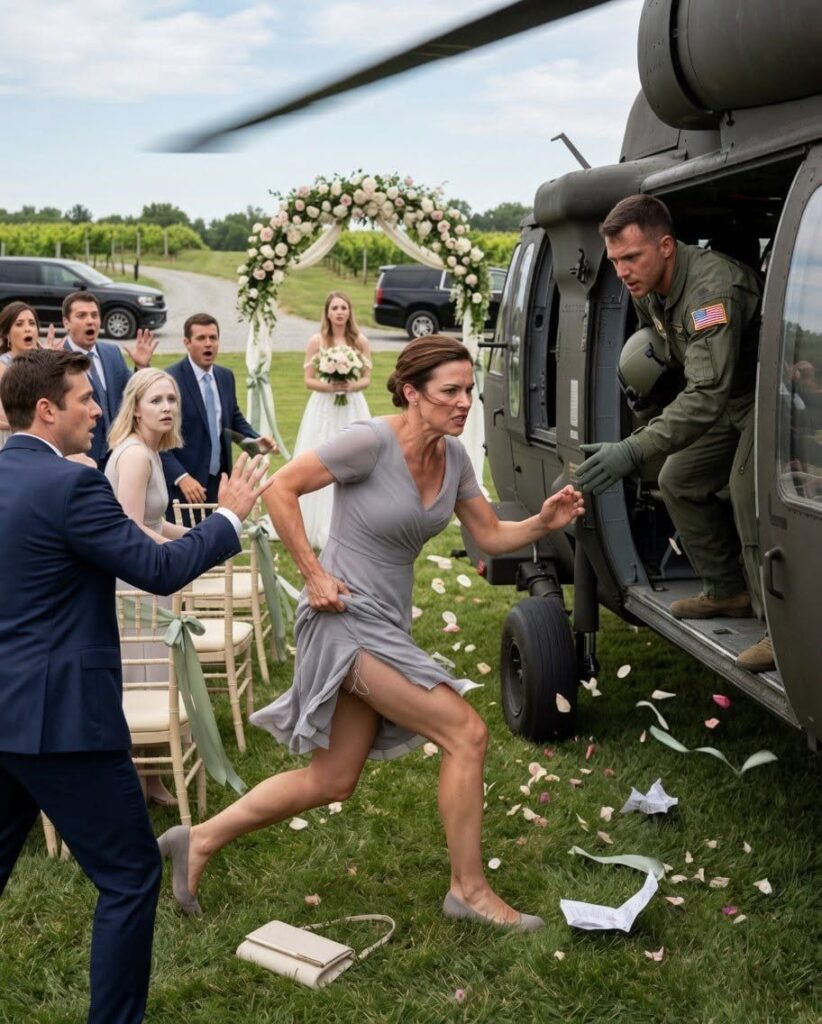
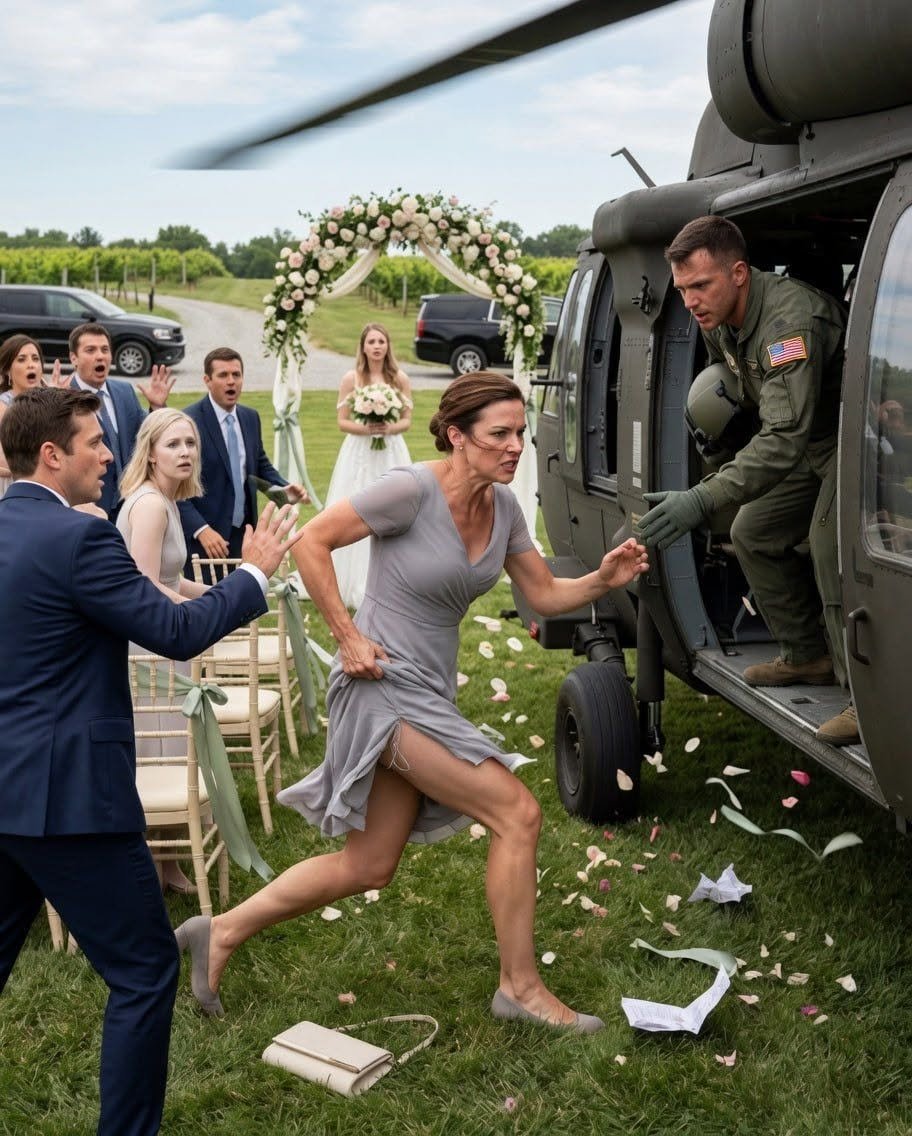
Riley James is a decorated military flight surgeon engaged to Graham Whitmore, a man who loves her privately but consistently fails her publicly. His family, led by his polished and controlling mother Lydia, spends months quietly diminishing Riley, calling her a nurse, seating her with the luggage, asking her to wear softer colors so she doesn’t clash with the wedding palette, and treating her military career like an awkward hobby she hasn’t outgrown yet. Graham watches every single moment of it and responds with silence, embarrassed smiles, and a hand squeeze under the table that he mistakes for support. Riley endures it all with the stillness of someone trained to function under pressure, but inside she is taking note of every choice he makes and every moment he looks away. Then at his cousin’s vineyard wedding, a Black Hawk helicopter lands in the middle of the ceremony and a crew chief runs past every stunned Whitmore and stops in front of Riley and shouts Captain James, and in that single moment the entire family finally meets the woman Graham had been asking to make herself smaller for a year. Riley tears her dress, walks to the helicopter, and spends the next four hours saving three children on a highway while the vineyard reception carries on without her. She returns to base, receives a commendation for valor, ends her engagement with quiet dignity, and stands in a room full of people who have always known exactly who she is, holding a cup of coffee that someone refilled without being asked, and a crayon drawing from a fourteen year old girl who wrote at the bottom in purple letters that watching Riley walk toward that helicopter was the bravest thing she ever saw. Lydia Whitmore eventually comes to the ceremony to apologize. Riley receives it graciously and needs nothing from it. The ring goes back in a padded envelope with no note. Riley drives back to base because there is always more work to do and she has never once needed anyone’s permission to show up for it.
THE LESSON:
The people who are most quietly powerful are often the ones the world keeps asking to be less. Riley never shouted, never made a scene, never demanded to be seen. She simply kept being exactly who she was, with complete consistency, in every room she entered, whether that room respected her or not. And the truth about people who are built the way Riley is built is that they do not need a viral video or a helicopter or a commendation ceremony for their value to be real. It was always real. The only thing that changed at that vineyard was that the people who had chosen not to see it finally ran out of places to look away. The lesson is not that the world will eventually recognize you. The lesson is that you have to be so completely and consistently yourself that when the moment of truth arrives, you do not have to become anyone, you just have to keep walking toward the helicopter. And the other lesson, the one that lives quietly underneath the first one, is about the people who watch you being diminished and choose comfort over your dignity and call it love. Love that cannot stand up for you in public is not love enough to build a life on. You deserve someone who says your name correctly in every room, not just the ones where nobody important is watching. Know your worth before the helicopter arrives. Because it will arrive. And when it does, you want to already be ready.