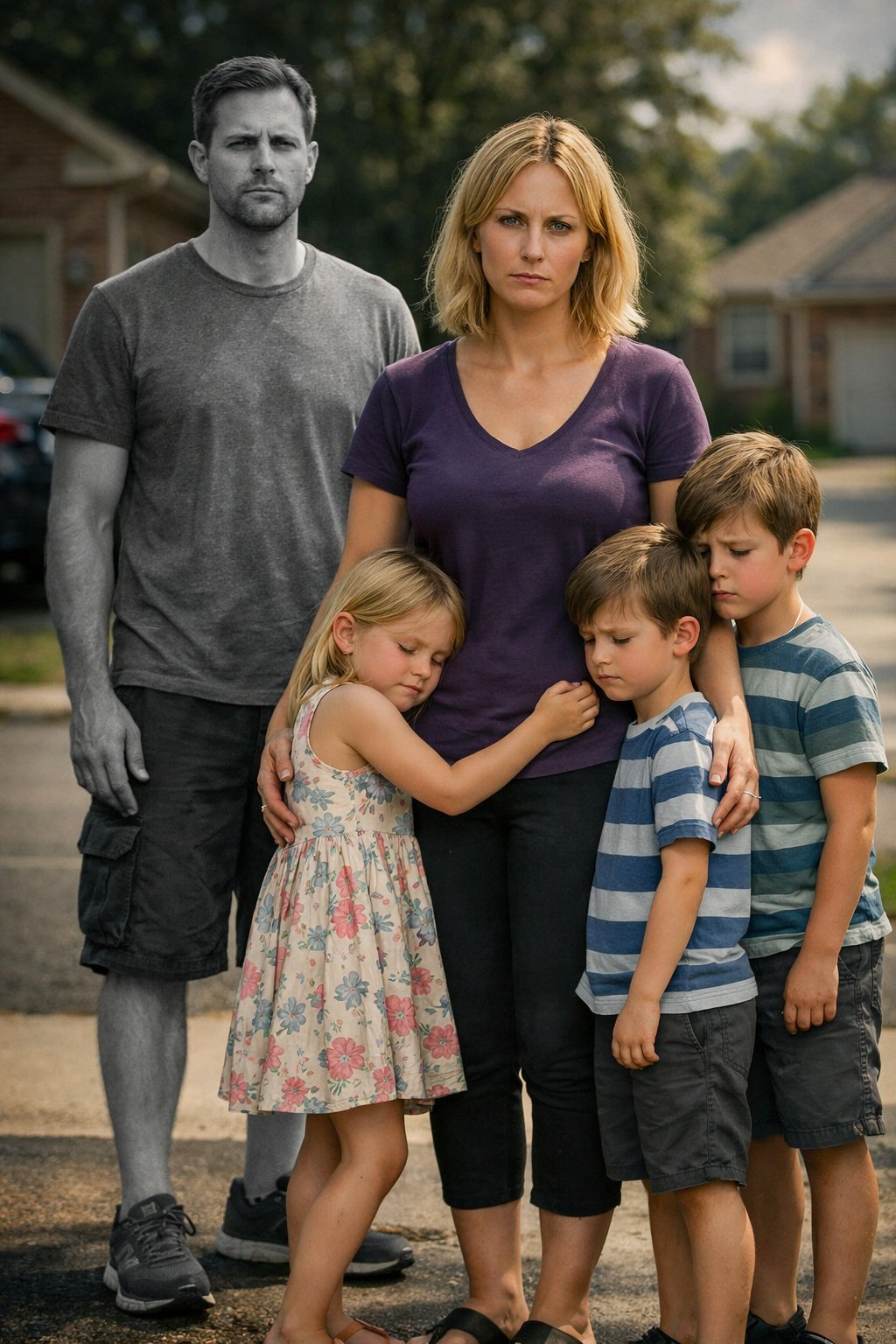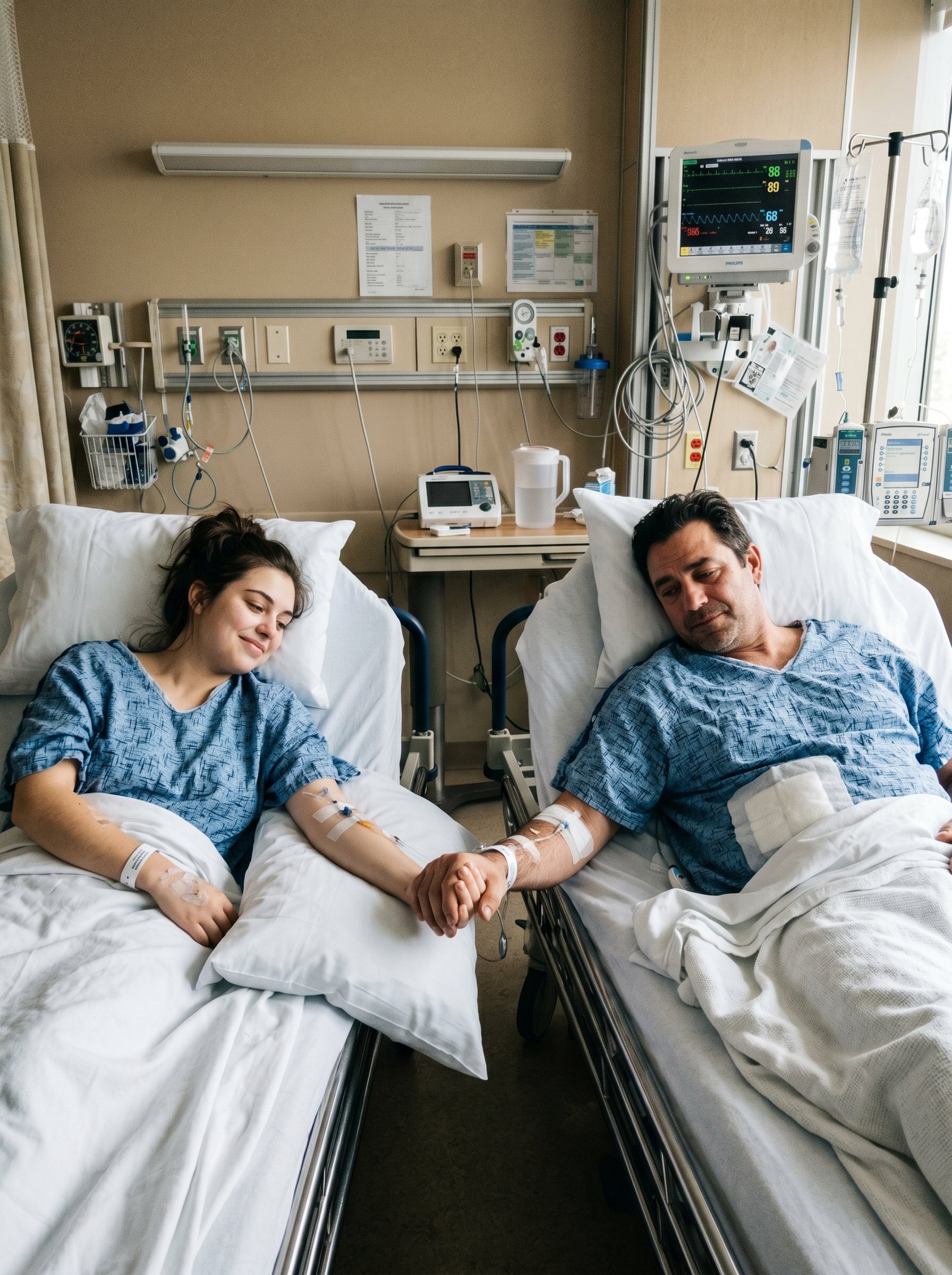
The Final Chapter: I always thought justice would feel like relief. Like a door finally closing on the worst chapter of your life. But standing outside the courthouse on the day Mark was arraigned, I realized that justice doesn’t feel like relief at all. It feels like standing in the rain after a long drought — necessary, real, and nothing like what you imagined it would be. Mark arrived with his attorney through a side entrance. I saw him briefly from across the steps. He looked thinner. Grayer. Like grief had carved something out of him too — and despite everything, despite every lie and every moment of cowardice and every night I had spent destroyed by what his choices cost us, some small part of me recognized that he had lost Ava too. I didn’t let that soften me. But I let myself acknowledge it, because I had promised myself I would stop lying — even to myself. The arraignment was short. Mark entered a plea of not guilty, which my attorney had told me to expect. “It’s procedural,” she said quietly beside me. “It means nothing yet.” What meant something was the fact that he was standing in that courtroom at all. That Ava’s name was in an official legal document. That the morning she died was no longer just a private family tragedy that could be quietly buried alongside her. After it ended, I walked back to my car alone. Jenna had offered to come but I had asked her to let me do this one by myself. I sat in the driver’s seat for a long time without starting the engine. Then I opened my phone and typed a message to Miss Greenwood. It said simply: “The charges were filed. Thank you for not staying quiet. Because of you, people are finally listening.” She replied within minutes with just three words. “For Ava. Always.” I cried the whole drive home. But they were different tears than the ones that had been drowning me for months. These ones felt like they were cleaning something out rather than filling something up. The trial preparation took several months. During that time, my life restructured itself in ways I hadn’t planned but desperately needed. I went back to work part time, because sitting alone in the house had started to feel less like grieving and more like disappearing. My colleague Sandra covered for me on the hard days without making me explain myself, and I decided then that I would spend the rest of my life trying to be that kind of person for someone else — the kind who just shows up and asks no questions. I kept going to the grief support group every week. Diane became something close to a friend — the kind forged in shared darkness rather than shared joy, which turned out to be the stronger kind. She never told me how to feel. She never rushed my timeline. She just kept showing up beside me, which taught me more about surviving loss than anything anyone ever said out loud. I also did something I hadn’t expected to do. I started writing. Not for anyone else at first — just for myself, in a plain notebook I bought from a drugstore on a Tuesday afternoon without thinking too hard about it. I wrote about Ava. About her voice and her laugh and the way she smelled after a bath. About Mr. Bun-Bun and the chicken nuggets and the morning she told me through her rabbit that I worked too much. She was right, I wrote one night. She was absolutely right. And I should have worked less and held her more and not cared so much about the emergency meeting that made me hand her to someone else that morning. I wrote that. And then I sat with it. Because the guilt of that last decision — letting Mark take her instead of rearranging my own morning — had been sitting in my chest like a stone since the day she died. My grief counselor, a quiet woman named Dr. Farris whom I had started seeing individually, helped me work through it over several sessions. “You made a normal parenting decision on a normal morning,” she said. “You could not have known. And carrying blame for that is not honoring Ava. It’s punishing yourself for being human.” I didn’t fully believe her the first time she said it. Or the fifth time. But somewhere around the fifteenth time, sitting in her small office with the window cracked and the sound of the street coming through, I started to let it in. I was not responsible for what happened to my daughter. Mark’s choices were Mark’s choices. And I was done carrying weight that didn’t belong to me. Four months after the arraignment, Lauren reached out again. Not by phone this time but by letter, handwritten, dropped through my mail slot without a return address though I recognized her handwriting from the one time I had seen her sign something at that company Christmas party two years ago. She wrote that she had cooperated fully with the investigation. That she had told the detective and the DA everything she knew without being asked twice. That she thought about Ava every single day. That she was in therapy and that nothing her therapist said made the guilt smaller, only more manageable. And then she wrote one line near the end that I had to read three times before I could move past it. She wrote: “Ava held my hand in the car that morning and told me my coat was pretty. I think about that every day. I’m so sorry I didn’t know. I’m so sorry I couldn’t save her.” I folded the letter and put it in the box where I kept Ava’s drawings. I didn’t know what to do with my feelings about Lauren. I wasn’t ready to forgive her because I wasn’t sure forgiveness was even the right word for what I needed to offer. But I also couldn’t hold her fully responsible for something she genuinely hadn’t known. What I could do was set it down. Stop turning it over in my hands. Let it exist without needing to resolve it right now. Some things, Dr. Farris had told me, don’t need a verdict. They just need time. The trial began on a gray Monday morning seven months after Mark’s arraignment. I sat in that courtroom every single day. Not because my attorney required it. Not because it was easy — it wasn’t. Some days the testimony was so specific about Ava’s final hours that I had to press my hand flat against my knee under the table just to keep myself anchored in my body. But I was there because Ava couldn’t be. And someone who loved her needed to be in that room every day, looking at the evidence, hearing her name, making sure she wasn’t reduced to a case number and a set of medical records. Mark’s attorney argued exactly what that first letter had predicted — tragic accident, unforeseeable outcome, no criminal intent. He brought in medical experts who testified about the speed of severe allergic reactions and how difficult they can be to predict. He painted Mark as a grieving father who had made an error in judgment during a moment of personal weakness. What he couldn’t explain away was the security footage. He couldn’t explain why Mark had returned to the daycare afterward and asked specifically which cameras covered the entrance. He couldn’t explain the six months of deception. He couldn’t explain why Mark had told paramedics that Ava had eaten only her normal breakfast when he watched another woman hand her a drink he never checked. And he couldn’t explain away the testimony of the café cashier, who took the stand and stated clearly and without hesitation that the smoothie contained dairy, that the cups were labeled, and that the label was visible. Mark’s own face in the footage — the way he scanned the parking lot, the way he positioned himself between Lauren and the daycare cameras — told a story his attorney could not rewrite. The jury deliberated for three days. I spent those three days at home with Jenna, unable to eat a full meal, unable to watch television, barely able to hold a conversation. Patricia called me each evening, not to discuss the trial but just to talk. About Ava. About the summer she had taken her to the aquarium and Ava had pressed her entire face against the glass of the jellyfish tank and fogged it up with her breath and laughed. About the way she had called Patricia “Gamma” until she was three and then very seriously switched to “Grandma” because a boy at her playgroup said Gamma was a baby word. I laughed during those conversations. Real laughter, the startled kind that arrives before you can prepare yourself for it. And each time it happened, I let myself feel it without guilt. Because Ava would have wanted me to laugh. I knew that with complete certainty. She was that kind of child — the kind who filled rooms with sound and light and expected the people around her to be filled too. On the third evening, my attorney called. “Emily. They have a verdict.” I don’t fully remember the drive to the courthouse. Jenna drove and I sat in the passenger seat holding my phone with both hands even though there was no call to take. The courtroom was very quiet when the jury filed back in. I kept my eyes forward. The foreperson stood. And the verdict came. Guilty. Not on every count the DA had pursued. The judge would later clarify that the conviction applied specifically to criminal negligence — a father who knowingly failed to protect his child from a known and life-threatening risk. It was not a murder conviction. It was not the most severe outcome possible. But it was the truth, spoken out loud, in a room full of witnesses, recorded in a permanent legal document. My daughter’s death was not simply a tragedy. It was the result of a choice. And someone was being held responsible for it. I didn’t celebrate. I didn’t feel triumphant. I sat very still while the courtroom stirred around me and I thought about pink pajamas and stuffed rabbits and a little girl who made her toys talk and asked for chicken nuggets and pressed her forehead against mine when she was tired. I thought about the last morning. About kissing the top of her head. About saying I’ll pick you up later and her saying Can we get nuggets and me saying You already know the answer and her saying Yesss in that happy voice that I would give every remaining day of my life to hear one more time. Outside the courthouse afterward, a journalist asked if I wanted to make a statement. I hadn’t planned to. But I stood in front of the microphone and said what was true. “My daughter’s name was Ava. She was four years old. She loved her stuffed rabbit and chicken nuggets and making people laugh. She deserved to grow up. And I will spend the rest of my life making sure she is not forgotten.” That was all. I walked back to the car. Jenna took my hand. And we drove home in silence — the good kind of silence, the kind that doesn’t need to be filled, the kind that means you are not alone even when no one is speaking. That night, I sat in Ava’s room for the first time since she had died. I hadn’t been able to go in before. The door had stayed closed for months like a boundary my body refused to cross. But that night I sat on the edge of her small bed and picked up Mr. Bun-Bun from her pillow and held him in my lap. And I talked to her. I told her about the trial. About Miss Greenwood, who had been brave enough to send me that video. About Detective Reyes, who had taken us seriously. About Patricia, who had chosen her granddaughter over her own son. About Jenna, who had never once left. About Diane from the support group and Dr. Farris and Sandra at work and all the quiet, ordinary people who had held me up without being asked. I told her I was angry. That I expected I would be angry for a very long time and that I had decided to stop pretending otherwise. I told her I was also okay. Not healed — I understood now that healed was not the destination. The destination was simply forward. One day at a time, one foot in front of the other, carrying her with me in every step. I told her that I had started writing about her in a notebook. And that the notebook had grown into something larger — pages and pages of her, of us, of the life we had shared in four short, enormous years. I told her I didn’t know yet what I would do with those pages. Maybe nothing. Maybe everything. I told her that Mr. Bun-Bun was coming to live on my nightstand now, if that was okay with her, because I wasn’t ready to let him sit in an empty room. I told her that she had been the best thing that had ever happened to me. That being her mother was the truest and most important thing I had ever done. That I would carry her name and her laugh and her ridiculous stuffed rabbit voice for every single day I had left on this earth. And then I sat quietly in her room for a long time, in the dark, in the silence that used to feel like absence but that night — just that night — felt something close to peace. I don’t know what the next chapter of my life looks like. I know that I will never stop missing her. I know that some mornings will still feel impossible and some nights will still hollow me out completely and that grief does not follow a schedule or honor your plans or care how much progress you’ve made. But I also know that I am still here. That I got out of bed every day when every part of me wanted to stay down. That I watched the video when it would have been easier to close my phone. That I walked into the police station and the courtroom and the grief group and the therapist’s office and every hard room that the past year put in front of me. That I said my daughter’s name out loud in a courthouse and in a notebook and in the dark of her bedroom and I will keep saying it for as long as I live. Ava. My girl. My whole heart. I am still here. And I am not done yet.
SHORT SUMMARY:
Emily Carter’s world collapsed the morning her four-year-old daughter Ava died from a severe allergic reaction at daycare — a morning that was supposed to be ordinary, that started with pink pajamas and a stuffed rabbit named Mr. Bun-Bun and a promise of chicken nuggets after pickup. But five days after burying her daughter, Ava’s daycare teacher Miss Greenwood sent Emily a security footage video with four words that changed everything: “Your husband is lying.” The footage revealed that Mark, Emily’s husband, had brought his secret girlfriend Lauren to the daycare that morning — and Lauren, never told about Ava’s life-threatening dairy allergy, had handed the little girl a smoothie filled with dairy as a sweet gesture while Mark stood right beside her and said nothing. What followed was not just the unraveling of a marriage built on six months of lies, but a mother’s fierce and exhausting fight through grief, investigation, legal battles, and raw human betrayal to make sure her daughter’s death was never quietly written off as simply a tragedy. From a security camera to a courtroom verdict, Emily refused to look away — even when looking away would have been so much easier. And in fighting for Ava, she slowly, painfully, found her way back to herself.
THE LESSON WE CAN ALL LEARN:
The most dangerous lies are not always the dramatic ones. Sometimes the lie that destroys everything is the small, quiet one — the detail left out, the allergy never mentioned, the truth withheld for just long enough that the damage becomes irreversible. Mark never intended for Ava to die. But his decision to prioritize his secret over his daughter’s safety in one single moment cost her everything. And his choice to stay silent afterward, to manage the narrative instead of telling the truth, compounded that loss into a betrayal so deep it could never be undone. The lesson is not simply about honesty in marriage, though that matters deeply. The lesson is about what happens when we become so consumed by protecting our own comfort, our own secrets, and our own image that we stop paying full attention to the people who need us most — especially the small, trusting, completely vulnerable ones who have no idea we are not fully present. Children do not need perfect parents. But they need present ones. They need parents who are paying attention. Who check the label. Who say the words. Who choose their child’s safety over their own convenience every single time without exception. And the second lesson belongs to Emily — because her story teaches us that grief does not have to mean silence, that being destroyed does not mean being defeated, and that fighting for truth even when you are barely standing is one of the most profound acts of love a mother can offer her child. She could have stayed on the couch. She could have accepted the story she was given. She could have let the quiet version of events become the permanent one. Instead she watched the video. She made the calls. She walked into every hard room. She said her daughter’s name out loud until the world had no choice but to listen. That is the lesson. Pay attention to the people you love while you still have them. Tell the truth even when it costs you. And when the world tries to bury what matters — speak up, show up, and refuse to be quiet. Because some stories deserve to be told. And some children deserve to be remembered. Ava was one of them.