The black SUV smelled like leather and air conditioning and something sterile that reminded me immediately of military briefing rooms, and as the door closed behind me and the beach disappeared through the tinted window I caught one last glimpse of my father still standing in the sand with his hand half raised like he had started to reach for something and then forgotten what it was, and Vanessa was a smaller figure behind him with her arms wrapped around herself in a way I had never seen her stand before, smaller somehow, like the air had gone out of her, and then the vehicle turned and they were gone and it was just me and Admiral Hale and two silent officers in the front seat and that black folder sitting on the seat between us like a quiet explosive, and the Admiral did not speak immediately which told me everything I needed to know about how serious the next three days were going to be,
because men like Thomas Hale who have spent forty years in command understand that silence before a conversation is not emptiness, it is preparation, and when he finally did speak he did not start with the mission or the documents or the name circled in red ink, he started by asking me how my back was, just like that, casual and direct, “how is your back, Commander,” and something about the simplicity of that question after five years of nobody asking cracked something open very quietly inside my chest and I told him honestly that some mornings were harder than others and he nodded like that was exactly the answer he expected and exactly the answer he respected and then he said “what I am about to tell you does not leave this vehicle until we reach the facility, and what happens at the facility does not leave those walls until the inquiry is closed, do you understand,”
and I said yes sir and he opened his own copy of the folder and turned it toward me and pointed to a series of communication logs dated the same night everything went wrong, the night the building caught fire, the night the strike order came through on a frequency it was never supposed to come through on, the night four men walked out alive because I refused to move until every single one of them was clear, and the logs showed something that made the hair on my arms rise despite the cold air in the vehicle, they showed that the unauthorized order had been transmitted from a domestic location, not overseas,
not from any forward operating base or field command, but from inside the continental United States, from inside a building I recognized by its facility code, a building where my father had worked as a civilian defense consultant for the last six years, and I sat with that information for a long moment while the California freeway rolled past outside and the Admiral watched me with those careful patient eyes and I said very slowly “are you telling me what I think you are telling me” and he said “I am telling you that we have communications, we have timestamps, we have a voice pattern analysis that is currently sitting at ninety-one percent confirmation, and we need a witness who was physically present that night to testify to what the order sounded like and where it appeared to originate from the field side,”
and I understood then why he had been looking for me for five years, not because I was a hero, not because of the men I pulled out of that building, but because I was the only surviving field commander from Operation Nightfall who had actually heard the voice on that frequency, heard it clearly enough to recognize it, and had enough credibility and documented service record to make that testimony hold up in front of a military tribunal, and I also understood something else in that moment, something cold and clarifying, I understood why my family had spent five years keeping me quiet and small and disgraced, why the rumors were never corrected,
why my father never once asked what happened overseas, because a disgraced daughter who left the military in shame is easy to dismiss, and a dismissed woman cannot testify to anything that matters, and I looked down at my hands in my lap, steady as always, and I thought about eleven minutes inside a burning building and four men who made it out and a voice on a frequency that should have been silent, and I looked up at Admiral Hale and I said “I remember exactly what he sounded like,” and the Admiral nodded once and said “I know you do, that is why you are the only person who can end this,” and then his phone rang and he answered it and whatever was said on the other end made his jaw tighten in a way that sent ice straight through my spine, and he lowered the phone and looked at me with an expression I had only ever seen on commanders delivering news that changes everything, and he said “Commander Reed, your father just called his attorney,” and outside the window the California sun was still blazing over everything like nothing in the world had changed, but inside that vehicle the last version of the life I thought I understood had just quietly collapsed, and I exhaled slowly and said the only thing left to say — “then we need to move faster than Thursday.”
The facility was forty minutes outside the city behind three security checkpoints and a gate that required biometric clearance, and when we pulled inside I felt something shift in my body the way it always does when you return to a world that was once your entire life, that particular combination of muscle memory and grief that comes from loving something deeply and then losing it under circumstances you were never allowed to explain, and the moment I stepped out of the vehicle two things happened simultaneously, a young female officer handed Admiral Hale an urgent dispatch and a man I recognized from five years ago walked out of the main building toward us,
Captain Derek Souza, one of the four men who had walked out of that burning building in the eleven minutes I refused to leave, and he stopped when he saw me and for a moment neither of us said anything because there are categories of human experience that language was simply not built to carry, and then he crossed the distance between us and stood at attention and saluted me the same way the Admiral had on the beach and his voice was rough when he said “we have been waiting for you to come back,” and I had to look away for just a second because five years of holding everything together in private has a cost and I had been paying it alone for long enough that kindness from unexpected directions had become almost harder to absorb than cruelty, and then the Admiral finished reading the dispatch and his expression told me that whatever window we had was closing faster than anyone anticipated, and he said “Reed, your father’s attorney has already contacted two members of the oversight committee, which means someone is moving to have this inquiry reclassified before it can be opened formally,
we have approximately eighteen hours before that becomes possible,” and eighteen hours felt both impossibly short and strangely clarifying the way deadlines do when you have spent years living without any direction at all, and they brought me into a briefing room that smelled like recycled air and burnt coffee and the specific exhaustion of people who had been working around the clock, and spread across the central table were five years worth of documents, communication intercepts, facility logs,
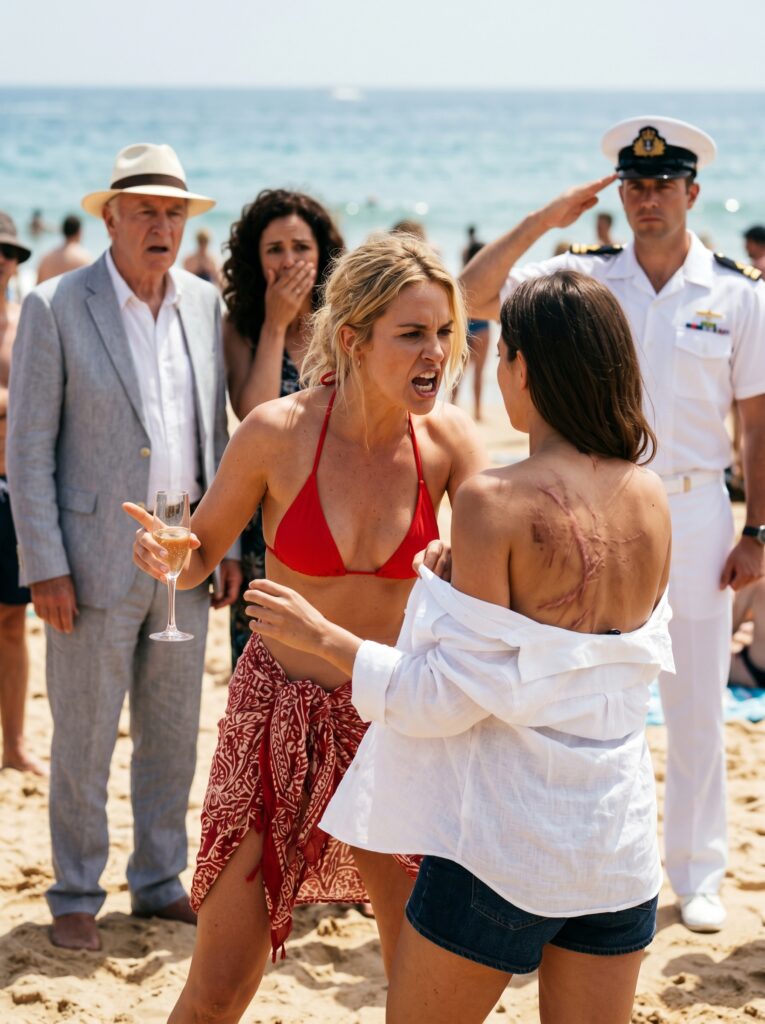
financial records, and testimony transcripts from three other witnesses whose accounts were credible but incomplete, credible but incomplete because none of them had been inside that building, none of them had heard the voice on that frequency with their own ears at the moment the unauthorized order came through, and I sat down and I pulled the materials toward me and I started reading with the kind of focus that only exists on the other side of surviving something that should have killed you, and two hours in I found the piece that locked everything together, a communication log from forty-seven minutes before the strike order, a log that showed a personal cell number, unencrypted, transmitting a location confirmation to the same domestic facility code the Admiral had shown me in the vehicle, and the cell number was registered to a name I had seen on birthday cards and holiday dinners and framed photographs in my father’s study, and I sat back in my chair and I understood finally and completely that my father had not simply been silent out of weakness or shame or the particular emotional cowardice of men who were never taught to handle inconvenient truth, he had been silent because his silence was load-bearing, because everything my family had spent five years building around my disgrace was not negligence and it was not indifference, it was architecture, carefully constructed architecture designed to make sure that if this day ever came the only witness who mattered would have no credibility left to stand on, and I thought about Vanessa on that beach ripping my shirt open in front of officers and laughing at my scars and I wondered for the first time whether that too had been something other than ordinary cruelty, whether humiliating me in front of active military personnel had been one final attempt to make sure I could never walk back into a room like this one and be taken seriously, and the rage that moved through me in that moment was not hot the way rage usually is described, it was cold and precise and entirely focused, the same cold focus that had kept me standing in a burning building for eleven minutes while everything around me collapsed, and I turned to Admiral Hale and I said “I am ready to give my testimony,” and he said “are you certain, Commander, because once this begins there is no version of this that protects your family from what comes next,” and I looked at the communication logs and the facility codes and the five years of careful silence that was supposed to have buried me completely and I said “they stopped being my family the night they decided their reputation was worth more than the truth about what happened to me,” and the Admiral nodded once and the recording equipment was activated and I began to speak, clearly and steadily and without stopping, for three hours and forty minutes, laying out every detail of Operation Nightfall from the moment the frequency crackled to life with a voice that had no business being on that channel to the moment the building ignited to the eleven minutes I spent making sure four men reached the exit while fire moved across the walls around me, and when I finished the room was completely silent and the lead investigator looked across the table at me and said quietly “Commander Reed, what you have just provided is sufficient to proceed,” and I nodded and stood up and walked out of that briefing room into a corridor where Captain Souza was waiting with two cups of terrible facility coffee and he handed me one without saying anything because some people understand that the moments after you have finally told the truth about the worst night of your life are not moments that require words, and I wrapped both hands around that cup and I stood there in that corridor breathing slowly while somewhere in the city my father’s attorney was making phone calls that were already too late, and my phone showed four missed calls from Vanessa and one text message that said only “please call me” which was the first time in five years she had used the word please in any communication directed at me, and I set the phone face down on the bench beside me because there are conversations that deserve more than a corridor and a cup of bad coffee and eighteen hours of adrenaline still moving through your system, and three days later the inquiry was formally opened and the reclassification attempt was denied and the name circled in red ink in that black folder appeared in a military tribunal summons that made national news by the following Monday, and I was sitting in a small apartment two miles from the facility when I saw the coverage on my laptop, not my father’s house, not Vanessa’s curated world, my own space, quiet and mine, with my sleeves rolled up to my elbows in the afternoon light because I had made a decision somewhere between that beach and that briefing room that I was done covering myself up for the comfort of people who had never once tried to understand what I carried, and when the Admiral called that evening he did not congratulate me or say anything dramatic, he simply said “the four men from Nightfall have all submitted supporting testimony, they wanted you to know,” and I sat with that for a long moment, four men who had spent five years carrying the same classified silence I had, four men who had walked out of a burning building because someone refused to leave until they did, and I thought about what it means to hold something together under impossible pressure not because anyone is watching or recording or will ever know your name, but simply because it is the only thing left that is true, and I thought about scars and what they actually are, not evidence of damage, not proof of disgrace, not something to hide beneath long sleeves on a hot California beach, but the specific and permanent record of every moment you chose to remain standing when everything around you was designed to make you fall, and I looked down at my arms in the quiet light of my own apartment and for the first time in five years I did not feel broken, I felt like exactly what I was — a woman who survived, who remembered, who waited, and who finally, on a beach in San Diego with champagne and catered seafood and the wrong people watching, began the long walk back to herself.
SHORT SUMMARY:
This is the story of Commander Reed, a decorated military veteran who survived a classified mission called Operation Nightfall that left her body covered in burn scars and shrapnel wounds. Instead of receiving recognition, she returned home to a family that allowed everyone to believe she had left the military in disgrace. For five years her father said nothing, her sister Vanessa mocked her publicly, and the truth about what really happened that night — the unauthorized strike order, the burning building, the eleven minutes she stood inside fire to save four men — was buried deliberately and carefully by people who valued their reputation more than her sacrifice. Then on a private beach in San Diego, in front of the very officers her sister had used as an audience for humiliation, Admiral Thomas Hale walked across the sand and saluted her in front of everyone. What followed was a race against time, a classified briefing room, five years of documents finally laid out on a table, and a testimony that could not be silenced anymore. Commander Reed spoke for three hours and forty minutes and brought the entire carefully constructed lie crashing down — and in doing so she did not just expose the truth about one mission, she finally reclaimed the truth about herself.
THE LESSON:
The people who work the hardest to silence you are usually the ones who are most afraid of what you would say if you ever decided to speak. Not every scar is evidence of weakness. Some scars are the permanent record of the moment you chose to remain standing when everything around you was designed to make you fall. Your silence was never your shame — it was their weapon. And weapons only work as long as you allow someone else to hold them. The truth does not expire. It does not weaken with time. It simply waits — patiently and permanently — for the moment you are finally ready to walk back into the room and let it be heard. Healing does not always look like forgiveness. Sometimes it looks like rolled up sleeves in the afternoon light and the quiet knowledge that you no longer owe anyone the comfort of your own invisibility.