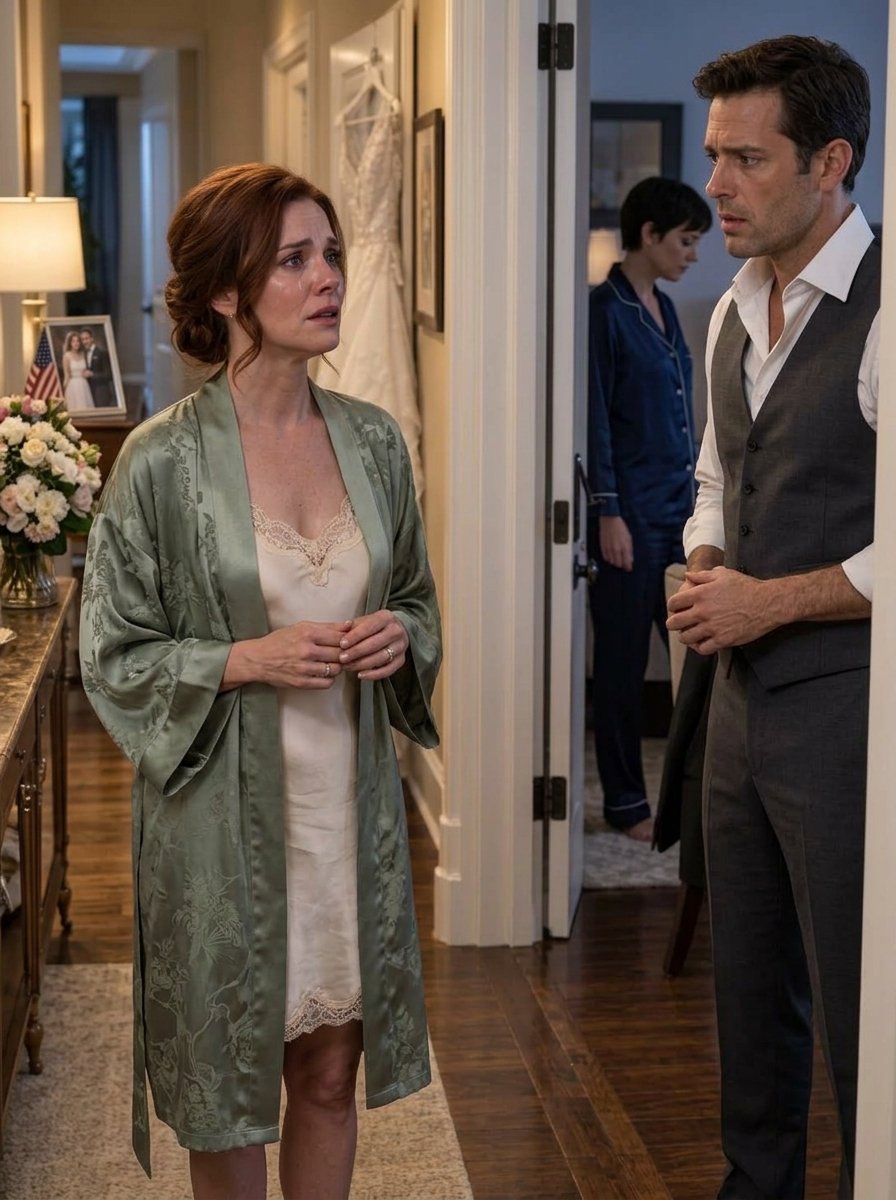
On Thanksgiving, my son flew his wife and children to Hawaii for a luxury vacation and left me behind in the house with a note on the kitchen counter. I didn’t break down. I called movers. Five days later, my phone kept ringing nonstop.
The note had been pinned to the refrigerator with a turkey-shaped magnet. It said, “We left for Hawaii. Don’t worry, Mrs. Margaret. At your age, it’s better for you to stay home and rest.”
I read it three times. Then I went upstairs. Emily’s and Jack’s beds were made, but their backpacks and jackets were gone. Daniel and Rebecca’s suitcases were gone too. The SUV and Rebecca’s car had disappeared from the garage.
There was nobody in the house to ask. I stood there with the note and the answer they had chosen for me.
They had left a longer version on the kitchen counter. “We decided to spend Thanksgiving in Hawaii this year. We didn’t tell you earlier because we knew you would insist on coming. The flight is long, and you get tired so easily now. We’ll be back in a week. There’s soup in the freezer.”
I was seventy-three. I did get tired sometimes. That was not the same as needing my son and his wife to decide whether I could travel.
I set the note on the table. The house was the one Daniel had invited me into four years earlier, after my husband, Arthur, died.
He had said he didn’t want me alone, and that it would be good for the children to have me close. I believed him. I sold my small apartment in Oak Park and moved to Scottsdale.
Part of the money from that sale went toward the down payment on Daniel’s house. I bought the refrigerator, the living room furniture, the washing machine and dryer, the dining room set, curtains, guest beds, and other things that turned an empty house into a home. I even bought the Italian coffee maker Rebecca liked to show off to her friends.
At first, they called me a blessing. That was how it felt, too. The children were close, Daniel was nearby, and I had a place in their daily lives. I made dinner, helped with groceries, and picked Emily and Jack up from swim practice when I could.
Then “when I could” began to sound like “when they needed me.”
One afternoon, I said I wanted to meet a friend downtown. Rebecca pursed her lips and looked at the time.
“And who’s supposed to pick up the kids from swim practice?”
“I thought Daniel was doing it today.”
“He has a lot going on,” she said. “Can’t you go another day?”
I went another day. I told myself it was one small favor, and most of the time it was. That was how I explained the next favor, too.
When my back hurt and I said I couldn’t help with dinner, Daniel sighed.
“Mom, we’re only asking you to help with dinner. It’s not that much.”
“I said my back is hurting.”
“I know. I’m just saying it would help.”
I got up and helped anyway. I didn’t want the children to hear us arguing. I also didn’t want to become the person who made every request into a test of whether she was loved.
That is embarrassing to admit. I was afraid that if I stopped being useful, there would be no reason for them to want me there.
When I bought something for myself, Rebecca had a way of bringing the conversation back to the household.
“Well, good thing you can still afford things, because expenses in this house are really tight.”
I would nod or change the subject. I had sold my apartment and brought money into their home. Still, I began to feel that even spending my own money required an explanation.
Six months before Thanksgiving, I heard Rebecca talking on the patio. She didn’t know I was close enough to hear her.
“We can’t ask her to move out. She watches the kids, pays for things, and even buys groceries. It’s not her we’re keeping around. It’s her money that’s saving us.”
I stayed where I was. I didn’t walk outside and ask her to repeat it. I didn’t tell Daniel. I carried it around instead, telling myself I might have misunderstood, though I knew exactly what I had heard.
That morning in the empty house, the note made it harder to pretend those words were separate from the way I was being treated. They had kept the trip from me because they thought I would insist on coming. They had not asked. They had decided I was too old, too tired, and too much trouble.
I poured myself coffee. Then I looked around the dining room, at the furniture I had paid for, the curtains I had ordered, and the blender Rebecca had wanted after saying, “A beautiful house can’t have old appliances.”
I went upstairs to my room and opened the bottom drawer of my nightstand. I had kept receipts in a blue folder. Arthur used to tease me about it.
“Maggie, you even keep receipts for a loaf of bread.”
I smiled when I heard his voice in my memory. “Thank you, old man,” I whispered.
I took out a notebook and wrote, “Things That Belong to Me.” Then I started a list: refrigerator, living room furniture, dining room set, washer, dryer, television, coffee maker, guest beds, curtains, lamps, dinnerware, patio furniture.
I wasn’t listing every fork or towel. I was writing down the larger things I had bought, the things I could identify and support with receipts. I wanted to leave their personal belongings alone. I wanted to be exact, not angry.
I called a moving company. The person who answered told me there would be an added charge because it was a holiday weekend.
“That’s fine,” I said.
“When do you need the service?”
“Tomorrow morning at eight.”
That night, I did not cry. I slept badly, and once I got up to check the list again. But I did not call Daniel to ask him to come home. I did not send a message saying I was hurt and hoping he would tell me I mattered. I had spent too long waiting for them to notice what I was giving.
The movers arrived the next morning. I walked them through the house with my list and the folder. I showed them the refrigerator and the dining set, then the furniture in the living room.
“These are the things you want moved?” one of them asked.
“Yes. They’re mine.”
He glanced at the list. “And the things that belong to your son and his family stay?”
“Everything that’s theirs stays.”
I was glad he asked. I didn’t want anyone to mistake this for a tantrum or a house emptied out of spite. I wanted my belongings moved, and I wanted to leave without taking a single thing I couldn’t call mine.
As they worked, I checked the rooms. The children’s beds were still there. I left them. I left their clothes, toys, and school things. I left the soup in the freezer.
The movers took the furniture, appliances, curtains, and other items I had listed. The house looked different each time I walked back through it. The rooms were bare where my things had been, but there was nothing hidden about what I was doing. I had the receipts. I had made a careful list. I was leaving.
I used part of what remained from selling my apartment to rent a place in Scottsdale. It was smaller than Daniel’s house and had room for what I owned. I didn’t need to make it feel like a grand new beginning. I needed somewhere I could live without being asked to prove that I deserved a place at the table.
For the next few days, I unpacked slowly. I was tired, and my back reminded me of that. But I could choose when to stop. I could leave a box unopened without anyone asking why I hadn’t done more.
Five days after Daniel and his family left for Hawaii, my phone began ringing over and over. I let it ring once, then twice. I knew who it was. Finally, I answered.
“Mom, where are you?” Daniel said.
“I’m in my new place.”
There was a pause. “What do you mean, new place?”
“I moved out.”
“You moved out of the house?”
“Yes.”
“Why would you do that while we were gone?”
I looked at the blue folder beside me. “You left me a note saying you’d decided I should stay home. I decided I should live somewhere else.”
Rebecca spoke from somewhere near him. “You took the furniture?”
“I took what I bought.”
“We came back to an almost empty house,” she said. Her voice was tight. “The kids’ rooms are still there, but the rest, ”
“I left your belongings. I took mine.”
Daniel cut in. “You can’t just do this without talking to us.”
“You didn’t talk to me about Hawaii.”
“We were going away for a week,” he said. “It wasn’t meant to be this big.”
“Then why didn’t you tell me?”
He didn’t answer right away. Rebecca said, “We thought you’d want to come, and we thought the flight would be too much for you.”
“You thought I would insist,” I said. “That’s what the note says.”
“We were trying to make it easier,” Daniel said.
“For whom?”
He exhaled. “Mom, you know we appreciate everything you’ve done.”
I had heard that sentence before, usually after I had done something for them. “I want you to look at the receipts before you tell me I took things that weren’t mine.”
They both went quiet. Then Daniel said, “Can you come over when we’re back? We’ll talk about it.”
“You’ll be back in two days?”
“Yes.”
“All right. I’ll come then.”
I did not want to settle this over a phone with Rebecca listening from the other end and Daniel trying to keep the conversation small. I wanted them to see the list and receipts. I also wanted to say what I had avoided saying for months.
When they returned, Daniel asked me to come to the house. I brought the blue folder and the notebook. Rebecca and Daniel were both there. Emily and Jack were in another room; I didn’t want to make them sit through an argument about furniture and money.
Daniel looked at the folder when I set it down.
“You brought all the receipts?”
“I brought the ones for the things I moved.”
Rebecca crossed her arms. “We never said those things weren’t yours.”
“You called it an almost empty house.”
“That’s how it felt when we got back,” she said. “The living room was bare.”
“The living room set is on the list. I bought it.”
Daniel opened the folder. I had put the receipts in order, but I didn’t need him to inspect every page. The items were already written down in my notebook. I pointed to the larger purchases and showed him the receipts I still had.
He looked at one, then another. Rebecca leaned over his shoulder.
“I didn’t know you kept these,” she said.
“Arthur used to make fun of me for keeping them.”
Daniel turned a page. “You bought the washer and dryer?”
“Yes.”
“And the refrigerator?”
“Yes.”
He lowered the receipt. “I thought those came with the house.”
“They didn’t.”
Rebecca looked down at the list. “You could have told us you were going to take everything.”
“I told you by leaving the things that belonged to you and taking the things that belonged to me.”
“That’s not what I mean,” she said. “We didn’t expect you to move.”
“I didn’t expect you to leave me behind without asking.”
Daniel rubbed his forehead. “We thought you’d be more comfortable at home. It’s a long flight. We were trying not to push you.”
“You could have asked whether I wanted to go.”
“We knew you’d say yes,” he said.
“That is not the same as asking.”
He looked at the receipts again. Rebecca’s arms had come down. “We weren’t trying to make you feel unwanted.”
I waited. The note was still plain in my mind: At your age. You get tired so easily. There’s soup in the freezer.
Daniel said, “We thought it would be easier if we just went.”
There it was. Not a misunderstanding about who had bought the furniture. Not a mix-up over the dates. They had chosen a trip, decided I would be inconvenient, and left me to read the explanation after they were gone.
Rebecca turned toward him. “You said she wouldn’t mind staying home.”
“I thought she wouldn’t,” he replied.
“You didn’t ask me,” I said.
Neither of them answered. Daniel stared at the receipt in his hand. Rebecca picked up the list and set it back down.
I didn’t want an apology that turned into a request to come back because the house was missing its furniture. I didn’t want to return to the same arrangement and wait for the next time my age became a reason they could decide for me.
“I’m not moving back in,” I said.
Daniel looked up. “Mom, don’t make this permanent over one trip.”
“It wasn’t one trip. It was the note, and the way you spoke to me about helping, and what I heard Rebecca say about my money.”
Rebecca’s mouth tightened. “You heard that?”
“Yes.”
She looked at Daniel, then back at me. “I was frustrated. I didn’t mean it the way it sounded.”
“You said you were keeping me around because of my money.”
“I was talking about the expenses,” she said. “We were stretched, and you helped. I shouldn’t have said it like that.”
Daniel set the receipt down. “We needed your help. That doesn’t mean we don’t love you.”
“I’m not asking you to say you love me,” I told him. “I’m telling you I won’t keep paying for a home where I’m treated like help that happens to live there.”
He started to reply, then stopped. Rebecca looked toward the empty space where the living room furniture had been. Neither of them asked me to give the things back. The receipts were between us, and the list was clear.
“I can’t give you the down payment back,” I said. “I’m not pretending I can. But the furniture and appliances I bought are mine, and I’ve moved them. I’m not coming back to live here.”
Daniel nodded once, though he looked unhappy. “So that’s it?”
“That’s where I’m living.”
The children came into the room then. Emily looked at me, then at the notebook. Jack asked if I would still see them. I told them I would, and that I loved them. I didn’t make them responsible for what their parents had done.
Daniel said he would call me. I told him he could, but I wasn’t going to resume picking up the children or covering household expenses as if nothing had happened. If we were going to see each other, it would have to be because we wanted to, not because I was paying for the space I occupied.
I took the folder home with me. My new place was still partly unpacked, and the coffee maker had not found a permanent spot. I made a cup, sat down, and let the phone stay quiet.