The biting, relentless Chicago wind whipped violently against my thin, worn wool coat as I pushed my heavy body through the heavy glass double doors of St. Jude’s Medical Center. It was 4:00 A.M., the darkest, coldest part of a Tuesday morning in late January. The city was asleep, buried under a fresh foot of snow, but my world was entirely, terrifyingly awake.
I was completely, utterly alone.
There was no nervous, excited husband gripping my hand. There was no frantic family pacing the waiting room, holding balloons and eagerly awaiting news. There was just the blindingly bright, sterile fluorescent light of the emergency room lobby, the rhythmic, agonizing tightening in my lower abdomen, and the suffocating ghost of a man who had walked out of my life seven months prior without a single backward glance.
Julian Vance.
I had met Julian when I was working double shifts at a high-end downtown diner to pay off my community college debt. He was charming, intelligent, and carried an air of quiet, refined sadness that drew me to him. We had fallen into a fast, deep, consuming love. We had moved into a small, drafty apartment together.
And then, on a rainy afternoon in June, I had sat him down on our cheap, secondhand sofa, tears of joy in my eyes, and told him I was pregnant.
I had expected him to sweep me into his arms. I had expected him to cry tears of joy.
Instead, Julian had gone perfectly still. His face had drained of all color, turning a sickly, terrifying shade of ash. He had stared at my stomach for a long, silent minute, a look of profound, agonizing heartbreak crossing his features. He stood up, kissed my forehead with lips that felt as cold as ice, and walked out the front door.
He never came back. His phone was disconnected. The bank accounts were closed. He vanished into the ether, leaving me to face the terrifying prospect of single motherhood on a waitress’s salary.
For seven brutal months, I had wept over Julian’s sudden, silent departure. I had convinced myself that I was inadequate, unlovable, and that the reality of a child had simply terrified a man who wasn’t ready for commitment. I had swallowed my grief, worked until my feet bled to save every penny for the baby, and built a thick, protective armor of resentment to survive.
Twelve brutal hours of high-risk labor followed my arrival at St. Jude’s.
The pain was a living, breathing entity attempting to tear my body in half. I gripped the cold metal bedrails of the delivery room until my knuckles turned stark white, biting my lip so hard I tasted blood to keep from screaming. I had no one to hold my hand. I had no one to whisper encouraging words. So, I whispered to myself, over and over, staring at the blank ceiling tiles.
“I’m here,” I rasped into the sterile air, promising the child fighting to enter the world. “I’m right here. I won’t leave you. I will never leave you.”
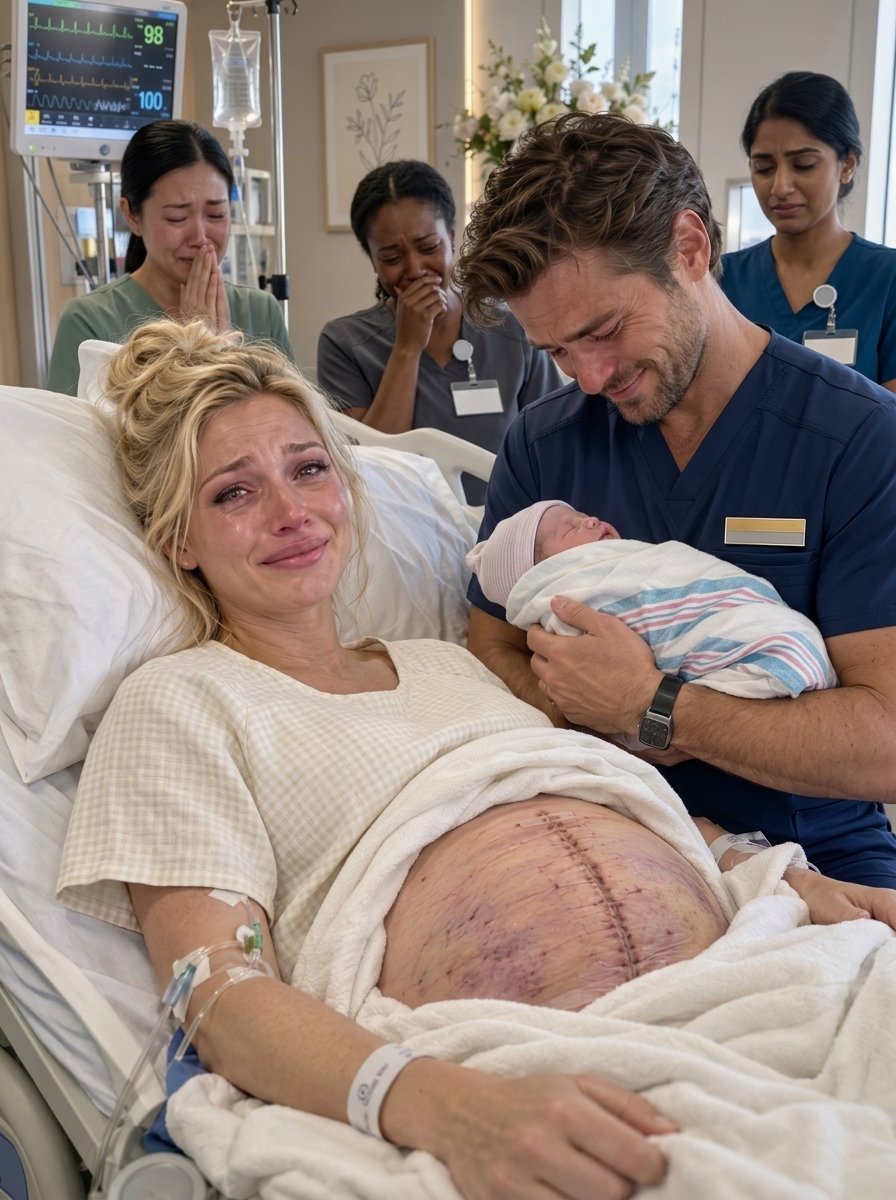
At exactly 3:17 P.M., the tense, clinical atmosphere of the room was pierced by a strong, furious, beautiful cry.
The exhaustion evaporated. The pain receded into the background. My son was hastily wiped down and placed directly onto my bare chest. He was a warm, perfect, squirming weight that instantly, completely erased months of despair and loneliness. I wrapped my arms around his tiny body, weeping tears of pure, unadulterated salvation. I was a mother.
Thirty minutes later, the chaotic flurry of nurses had subsided, leaving me in a quiet, exhausted haze.
Then, the heavy wooden door to my delivery suite swung open.
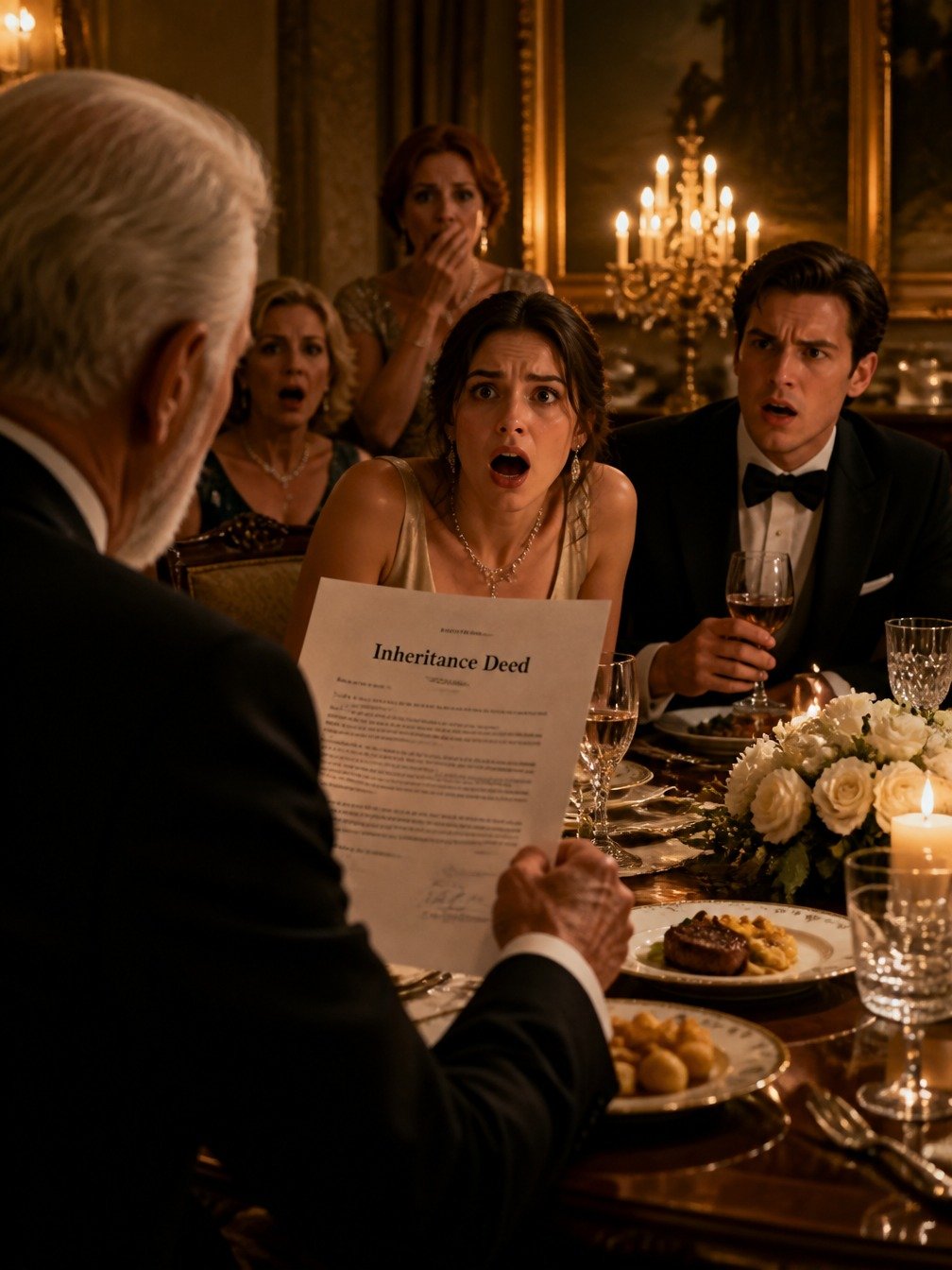
Dr. Arthur Vance, the Chief of Medicine at St. Jude’s, stepped into the room. He was a man legendary in the Chicago medical community for his stoic, unbreakable composure, his brilliant surgical mind, and his aristocratic, unyielding presence. He wore a crisp, white lab coat over a tailored suit, projecting absolute, clinical authority. He had come to perform the final, required checks on the high-risk delivery.
He picked up my medical chart from the foot of the bed, his face a mask of professional, clinical detachment.
“Evelyn Miller,” Dr. Vance said, his voice a deep, resonant baritone. “Congratulations on a successful delivery. I just need to check the infant’s vitals.”
He walked to the side of the bed. He looked down at my son, who was sleeping peacefully against my chest, his small head turned to the side.
Dr. Vance froze.
The heavy, metal clipboard slipped completely from his fingers. It hit the linoleum floor with a loud, sharp clatter that made the attending nurse jump.
The Chief of Medicine’s skin turned the color of wet cement. His jaw dropped. His lips parted, and his large, capable surgeon’s hands began to tremble so violently he had to grip the metal edge of my bedrail just to keep himself standing.
“Doctor?” the attending nurse asked, stepping forward, deeply alarmed by the sudden, terrifying shift in her superior’s demeanor. “Dr. Vance, are you alright?”
He didn’t answer her. He didn’t even hear her.
Tears—large, heavy, impossible tears—welled in his sharp, intelligent gray eyes. They spilled over his cheeks, tracking down the deep lines of his face as he stared, completely paralyzed, at the tiny, distinct, crescent-moon-shaped birthmark nestled just below my son’s left ear.
“Who…” Dr. Vance whispered. His voice cracked, shattering the stoic facade, revealing a grief so profound and sudden it seemed to steal the very oxygen from the room. “Who is the father of this child?”
I pulled my son closer, my chest tightening with sudden, defensive panic. Why was this powerful man crying over my baby?
“Julian,” I replied, my voice trembling. “His name is Julian Vance.”
Dr. Vance stopped breathing. He closed his eyes tightly. He let out a shattered, agonizing, guttural sob that tore from the deepest part of his chest, and he sank heavily into the cheap plastic visitor’s chair beside my bed, burying his face in his trembling hands.
“Evelyn,” Dr. Vance said quietly, raising his head, his voice breaking with a sorrow that terrified me. “There is something you need to know about your baby’s father.”