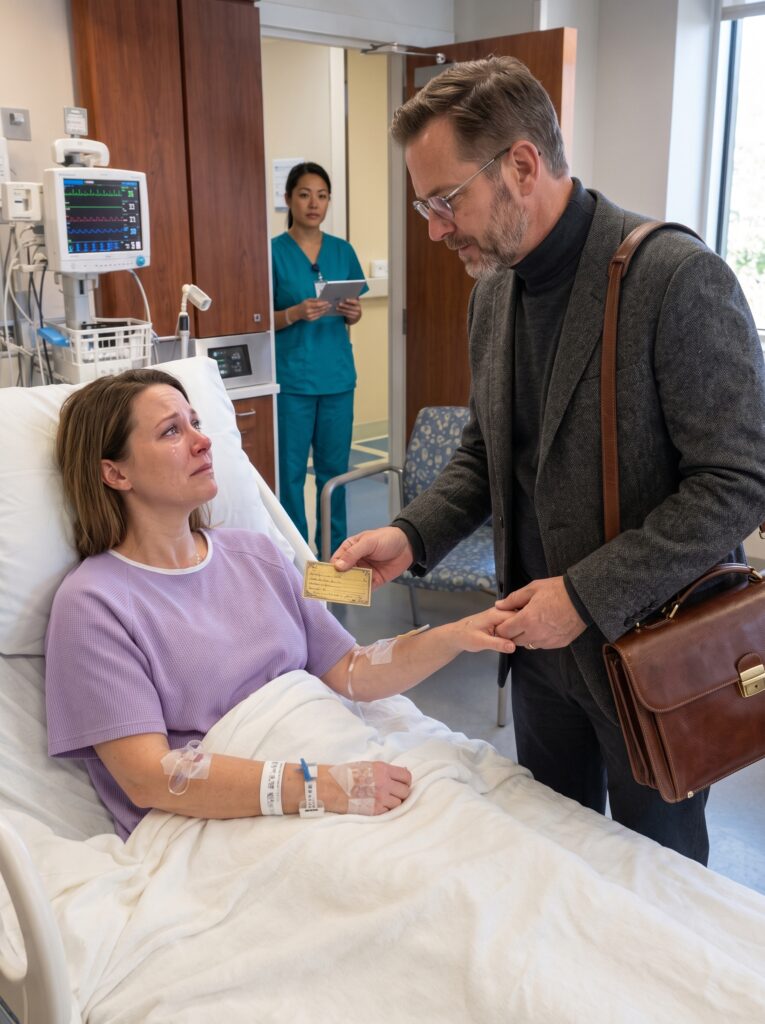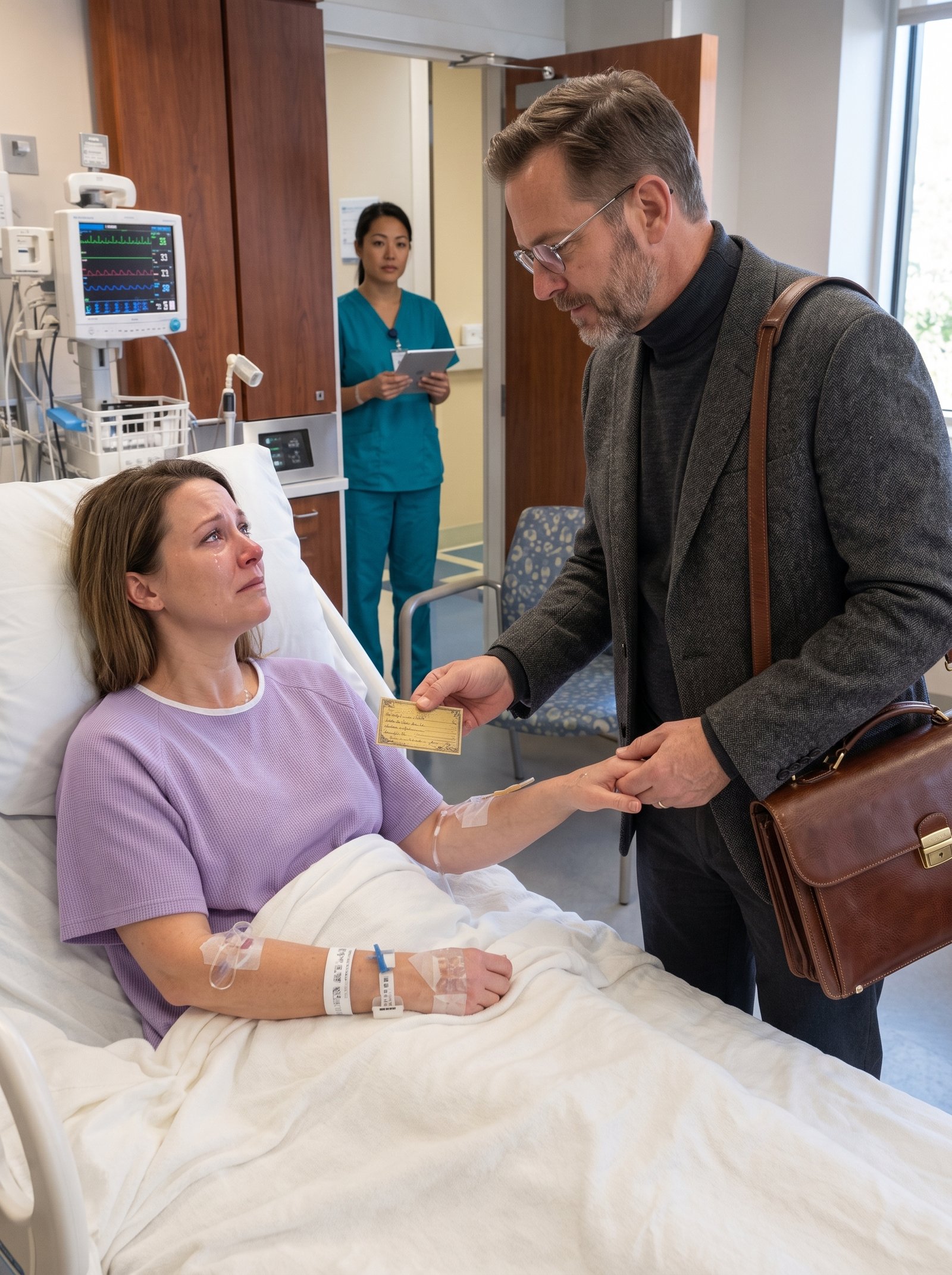
I stared at the highlighted sentence peeking out from the folder, my hands trembling too much to pull it free myself.
“Then tell me,” I said. “Tell me what the real reason was.”
Malcolm slid the document out slowly and turned it so I could read it clearly. It was a letter from an attorney’s office downtown, addressed to David, dated three weeks earlier.
Re: Petition for Conservatorship — Adrienne Davis
The highlighted sentence read: Given the upcoming surgery and associated recovery period, this would be an opportune time to file, as a medical incident may support the claim of diminished capacity.
My chest tightened in a way that had nothing to do with my recently repaired heart.
“They were planning this,” I whispered. “Before the surgery. Not after.”
“It appears that way,” Malcolm said carefully. “My legal team came across it during a routine review, once I confirmed who you were and started looking into your circumstances. I wasn’t investigating you, Adrienne. I was trying to make sure the woman who fed a hungry eight-year-old wasn’t being taken advantage of by the people who were supposed to be protecting her.”
“But why would they need a conservatorship?” I asked, my mind racing through the fog of anesthesia and grief. “I manage my own finances. I pay my own bills. I helped them, not the other way around.”
Malcolm’s expression grew heavier. “That’s exactly the concern. A conservatorship would give whoever’s appointed control over your remaining assets, including your house and your pension distributions. Given what you’ve already given each of them over the years, David’s failing practice, Sarah’s credit card debt, Michael’s car, there may not be much left to protect. Unless there’s something they believe is still coming.”
“There isn’t,” I said. “I have my pension, my Social Security, and the house, which is worth maybe two hundred thousand dollars if I sold it today.”
“Adrienne,” Malcolm said gently, “did your late husband have a life insurance policy?”
The question landed like a stone dropping into still water.
“Robert’s policy,” I said slowly. “It was substantial. I never touched it. I kept it invested, for emergencies, for the kids eventually, for whenever they’d really need it.”
“How substantial?”
“Just over eight hundred thousand dollars,” I said. “I never told them the exact number. I didn’t want it to change how they saw me, or how they treated each other while waiting for it.”
Malcolm was quiet for a long moment, something grim settling behind his glasses.
“I think,” he said carefully, “your children may already know more than you realize. And I think today, in this room, they made a decision about which mattered more to them: being here for you, or positioning themselves for what comes after you.”
The heart monitor beside me ticked steadily, but I felt anything but steady.
“What do I do?” I asked.
Malcolm closed the folder gently and set it on the bedside table, within my reach.
“First,” he said, “you rest, and you heal, because you cannot make decisions of this magnitude while you’re still recovering from surgery. Second, I’m going to connect you with an elder law attorney of my own choosing, someone whose only obligation is to you, not to anyone hoping to benefit from your estate. And third, Adrienne, whatever you decide to do about your children, I want you to know that you are not walking through this alone. Not this time.”
I looked down at the yellow lunch card still resting on the blanket beside my hand, the same one I’d handed a hungry little boy in a cafeteria nearly fifty years earlier, and felt something strange and unexpected settle into the fear.
Not everyone I’d ever helped had forgotten.
Five days later, once I was stable enough to be discharged, Malcolm arranged for me to recover not at my own home, quietly, but at a private guest suite within one of his hospital’s affiliated care facilities, close enough for follow-up appointments, private enough that no one from my family would think to look for me there right away.
The elder law attorney he connected me with, a sharp, calm woman named Priya Anand, no relation to the attorney from an entirely different story but coincidentally sharing a name I’d remember for the rest of my life, reviewed the conservatorship filing with the same measured focus Malcolm had shown in my hospital room.
“This filing is premature and, frankly, aggressive,” she told me during our first meeting. “David’s attorney built the petition around your surgery date, anticipating a recovery period where you might be too exhausted or disoriented to contest it effectively. If you hadn’t had someone looking out for you, this could have moved through the court with far less resistance than it will now.”
“What happens if I don’t contest it?” I asked, still working through the disbelief that this was even a real question I needed to ask about my own children.
“Given the language in the filing, and depending on how the judge views the timing relative to your surgery, a conservator could be appointed with authority over your remaining assets, including Robert’s life insurance policy, structured however the court determines is ‘in your best interest,'” Priya said. “In practice, that often means whoever’s appointed, frequently a family member who filed the petition, gains significant control over spending and asset management.”
“So David filed knowing this,” I said slowly. “Not out of concern. Out of opportunity.”
“Based on the timeline and the language used, that would be my professional assessment, yes,” Priya said. “Though I’d want to understand more about whether Sarah and Michael were aware of the specific filing, or simply aware of the broader plan you mentioned to Malcolm.”
I sat with that for a long moment, thinking about the phone calls I hadn’t returned since leaving the hospital, seven of them from David, four from Sarah, two from Michael, none of them asking how my recovery was going, all of them, I now realized with a sick, sinking clarity, asking where I was.
“I want to know what they were actually planning,” I said. “All of it. Before I decide what to do.”
Priya nodded and opened a second folder, one she’d apparently been building since Malcolm first brought her into this. “We had a financial investigator pull some records, entirely within legal bounds, given the active conservatorship filing already names you as the subject. David’s accounting practice isn’t just struggling, it’s facing a lawsuit from a former client alleging mismanaged funds, filed two months ago. Sarah’s credit card debt isn’t the twelve thousand she told you about last year. It’s closer to sixty thousand, spread across four cards, most of it maxed for over a year. And Michael’s car, the one you helped him buy eighteen months ago, was repossessed three weeks ago after he stopped making payments.”
Each detail landed heavier than the last, not because the amounts themselves shocked me, I had, after all, already been quietly bailing each of them out for years, but because none of them had told me the truth about how bad things had actually become. Instead of coming to me honestly, they had gone to attorneys, to calculations about timing and diminished capacity, to a plan built around exploiting the one thing I had never let them touch: Robert’s policy.
“They needed money,” I said quietly. “And instead of asking me for it, the way they always had before, they decided it would be easier to just take control of everything.”
“That appears to be the case,” Priya said gently. “I’m sorry, Adrienne. I know this isn’t easy to hear about your own children.”
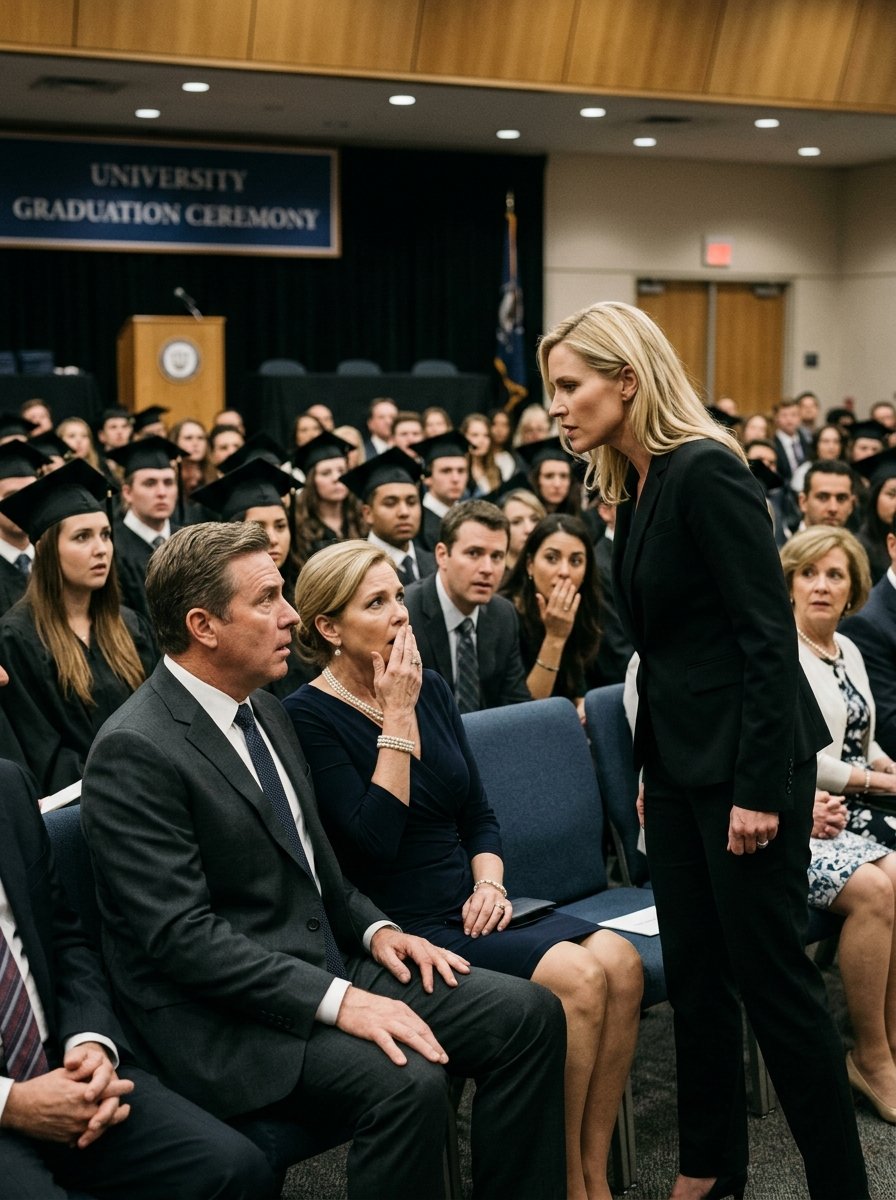
I thought about the empty chairs in my hospital room, the twenty-dollar parking fee that had apparently mattered more than watching me wake up from open-heart surgery, and felt something inside me finally shift from grief into resolve.
“I want to protect what’s mine,” I said. “Not out of spite. Because clearly, if I don’t, no one else in my family is going to make sure it’s used the way Robert and I actually intended it.”
Priya nodded, already reaching for a legal pad. “Then let’s talk about your options, starting with formally contesting the conservatorship petition, and moving into how you’d like to restructure your estate planning going forward.”
Priya filed the formal contest to the conservatorship petition within the week, along with a request for an independent medical evaluation to confirm what everyone in that hospital room already knew, that I was, and had always been, fully capable of managing my own affairs. The evaluation took less than an hour. The neurologist’s report was unambiguous.
David’s attorney tried to push forward anyway, requesting an emergency hearing before the full evidence could be reviewed, a move Priya described as “a sign of panic more than strategy.” The judge wasn’t impressed either. When the hearing finally happened, the petition was dismissed outright, the timing of the filing, so precisely aligned with my surgery date, drawing visible skepticism from the bench.
I didn’t attend the hearing. I let Priya handle it entirely, because I wasn’t ready yet to sit in a room with David and watch him explain, to a judge, why he’d decided a heart surgery was “an opportune time” to file for control over my finances.
What I was ready for came two weeks later, once I’d fully healed and moved back into my own home, when I finally called a family meeting of my own design, on my own terms, in my own living room, with Priya present as a quiet, professional witness rather than an adversary in the room.
David arrived first, visibly uncomfortable the moment he saw Priya seated in the corner with a folder in her lap. Sarah and Michael followed shortly after, exchanging a look between them that told me they’d already guessed, at least partially, why they’d been summoned.
“I know about the petition,” I said, without preamble, once everyone was seated. “I know about the lawsuit against your practice, David. I know about the sixty thousand in credit card debt, Sarah. And Michael, I know your car was repossessed three weeks before you told me you were ‘saving up for an upgrade.'”
The silence that followed was thick enough to taste.
“Mom,” David started, “it’s not what it looks like. We were worried about you managing everything alone, especially after the surgery—”
“Don’t,” I said, quieter than I expected my own voice to sound. “Don’t insult me by pretending this was about my wellbeing. You filed that petition three weeks before my surgery, David. Not after. You built your plan around a date, not a concern.”
He had no response to that. None of them did.
“I spent your whole lives making sure you never went without,” I continued. “I paid off practice debts, credit cards, car loans, and I never once asked for anything back beyond honesty. What I got instead, when I needed you most, sitting in a hospital bed after heart surgery, was an empty room and a text about parking fees.”
Sarah’s eyes filled with tears, though I no longer trusted whether they were for me or for what she was about to lose.
“I’ve restructured my estate,” I said. “Your father’s policy, the house, everything, is now held in a trust managed by an independent trustee, not any of you. The terms are clear: financial support going forward requires transparency and honesty about your circumstances, not manipulation or legal maneuvering behind my back.”
“You’re punishing us,” Michael said, the first defensive words out of his mouth since he’d sat down.
“No,” I said. “I’m protecting myself, the way none of you were willing to do for me. There’s a difference, and I think, if you’re honest with yourselves, you already know that.”
The meeting ended without resolution, without apologies that felt earned, without the reconciliation I might have hoped for in a kinder version of this story. David left first, his jaw tight with anger rather than remorse. Sarah lingered a moment longer, opened her mouth as if to say something, then closed it and followed him out. Michael was the last to leave, pausing at the door.
“I really am sorry, Mom,” he said, and for a brief moment, I almost believed him.
“I hope that’s true,” I said. “But sorry doesn’t undo what almost happened in that hospital room. Time will tell whether it means anything more than words.”
Malcolm visited two weeks later, bringing with him not paperwork this time, but a small potted plant and an update on the children’s hospital meal program he’d expanded in my name, now operating across all four of his facilities, feeding kids who might otherwise sit quietly at cafeteria tables the way he once had.
“How are you feeling?” he asked, settling into the chair across from me in my living room.
“Lighter,” I admitted. “Sadder than I expected, but lighter.”
“You did the right thing,” he said. “Not the easy thing. The right thing.”
I looked at the yellow lunch card he’d given back to me that day in the hospital, now sitting framed on my mantel, a reminder that sometimes the smallest, quietest kindness comes back around decades later, in exactly the moment you need it most.
“You know,” I said, “I gave you a lunch ticket almost fifty years ago because I couldn’t stand watching a hungry child pretend he wasn’t hungry.”
“And it changed my entire life,” Malcolm said. “I just wish I’d found you sooner. Before your children had the chance to hurt you like this.”
“Maybe,” I said. “But you found me exactly when I needed you most. That has to count for something.”
He smiled, and for the first time since waking up alone in that hospital room, I felt something steadier than grief settling into its place.
Not everyone who receives kindness forgets it.
Some of them, quietly, patiently, spend a lifetime finding a way to return it.