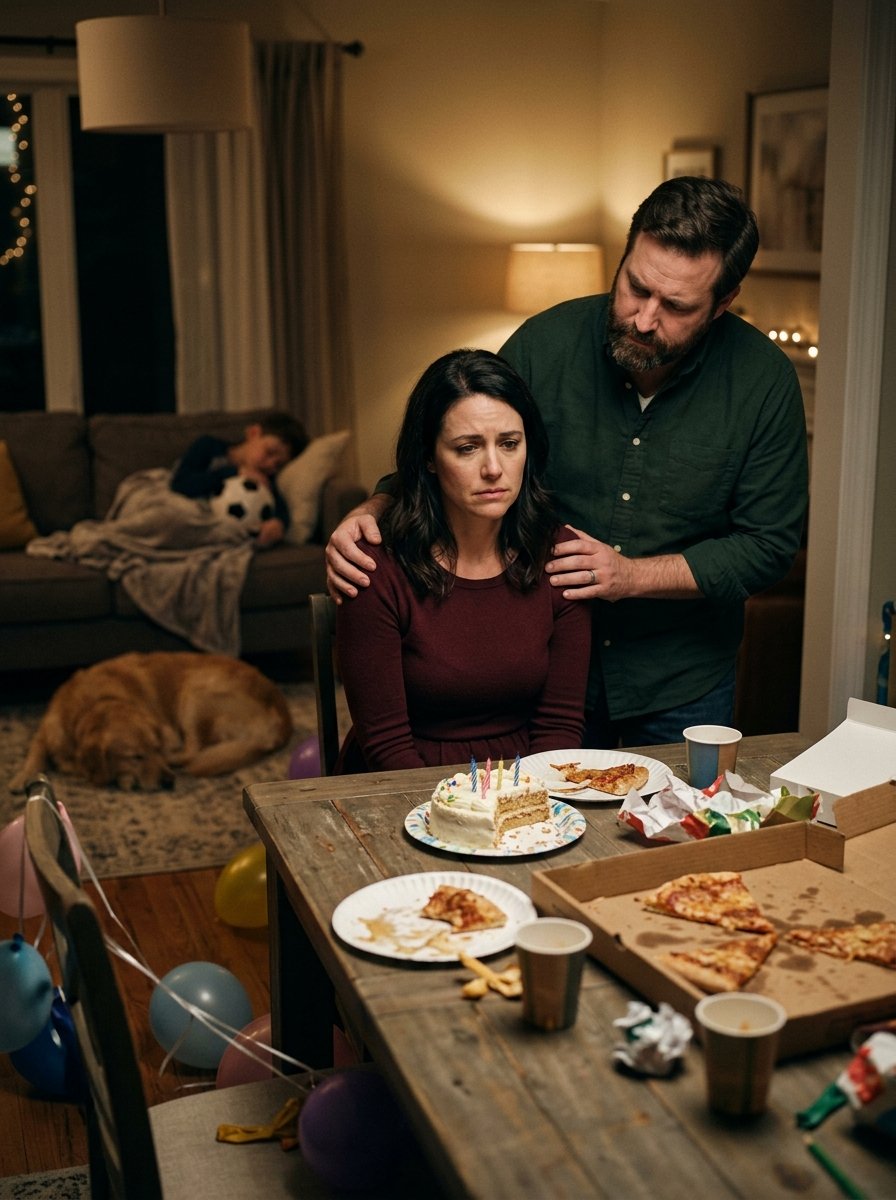
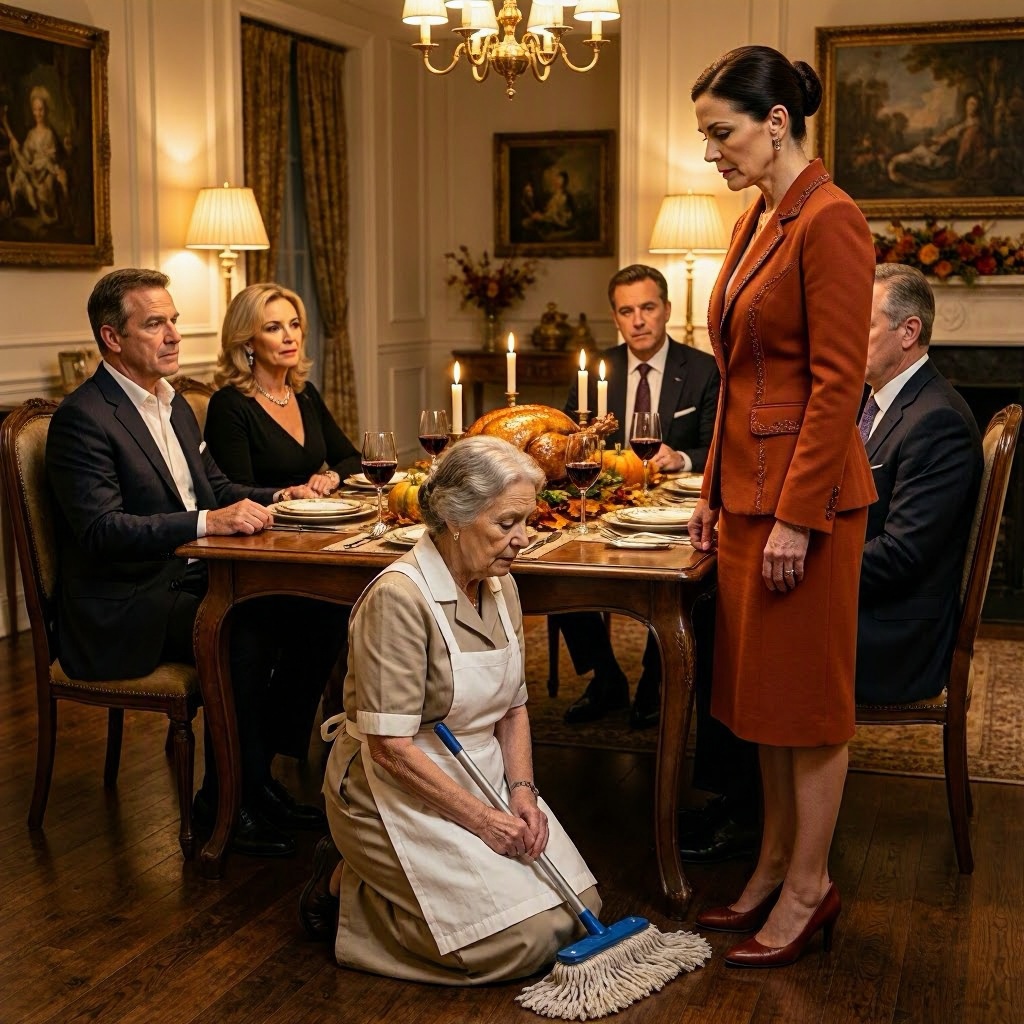
Noah kept his eyes fixed on his water glass, turning it in slow circles until the condensation pooled onto the wood.
I had spent forty-two years waking up at four in the morning to fire up the ovens at my bakery downtown, and my hands still carried the faint, permanent stiffness of someone who had kneaded thousands of pounds of dough by hand. When I finally closed the shop last month, I thought moving closer to my only son and his family would offer a quiet sort of twilight.
I had sold my small split-level across town, liquidated the remaining commercial baking equipment, and deposited the proceeds into accounts that sat quietly waiting for a purpose. Noah had called me twice a week for a month, his voice pitched high with the nervous strain of a man drowning in variable interest rates and private school tuition.
“Mom,” he had said into the receiver three weeks ago, his tone heavy with manufactured exhaustion. “We just have so much space now, and the boys miss you.
It doesn’t make sense for you to pay rent anywhere else when we have the empty rooms upstairs.”
At the time, I had nodded to the empty air in my kitchen and said yes. I did not mention that I had signed the original paperwork for their four-bedroom colonial six years earlier, providing the primary capital when the bank laughed them out of the loan office. I did not mention that the secondary lien was registered under a trust bearing my maiden name. I simply packed my grandmother’s oak dresser, my cast-iron skillets, and forty boxes of memories into a rented van and drove out to the suburbs.
Vanessa slammed the bread knife down onto the counter with a crack that made both of my grandsons flinch at the end of the table. She turned around, her gold charm bracelets clinking together in a sharp, rhythmic jangle that always preceded one of her lectures.
Her hair was pulled back into a severe ponytail that seemed to tighten her whole face, and her lips were pressed into a hard, white line.
“Let’s get one thing straight right now, Clara,” she said, using my first name as she had ever since Noah and she got married eight years ago. “We aren’t running a charity ward here, and times are tight for everyone with the property tax hikes.”
Noah cleared his throat, a small, pathetic sound like a dry twig snapping underfoot, but he didn’t look up from his glass. I looked from my son to my daughter-in-law, feeling a strange, hollow sort of calm settle into my chest. The noise in the room dropped away, leaving only the hum of the refrigerator in the corner.
“If you stay,” Vanessa continued, crossing her arms over her patterned blouse and leaning her hip against the counter, “you pay two thousand a month for board.
You clean our three-story house top to bottom every single Tuesday. You handle the yard work on the weekends, and you drive the boys to soccer and piano on Tuesday and Thursday afternoons. We’re not carrying a useless freeloader just because you’re tired of living alone.”
Noah gave one quiet, miserable nod into his water glass, his shoulders hunching slightly as if waiting for a blow that never came. He didn’t defend me. He didn’t remind her that I had paid for his college tuition without a student loan in sight. He just let the silence stretch until it felt thick enough to touch.
I only smiled, a small, neutral curve of my lips that didn’t reach my eyes, because neither of them knew yet. They thought I was an exhausted, broke old woman who had outlived her usefulness and needed a place to dry her bones.
Three days later, Vanessa taped a sheet of heavy white printer paper to the inside of my tiny third-floor bedroom door with wide strips of blue painter’s tape. The heading was printed in bold capital letters, declaring HOUSE RULES in a font that looked like it belonged on a corporate bulletin board. The list detailed the laundry schedule, the exact times the downstairs bathroom could be occupied, and a stern reminder about keeping the kitchen counters free of personal items.
By sunrise every morning, the house smelled heavily of synthetic lemon floor cleaner and cheap coffee while I scrubbed baseboards, emptied the recycling bins, and organized the boys’ backpacks before they woke up. Noah would rush past me in the hallway at seven-fifteen, adjusting his tie with a mumbled greeting, his eyes avoiding mine entirely. He looked older than thirty-four, his skin gray around the temples from the stress of pretending to be a man of means he simply wasn’t.
I spent my mornings moving between the laundry room and the upstairs bedrooms, my knees aching slightly on the hardwood stairs that creaked in the exact same spot every time. I didn’t complain. I moved through the tasks with the steady, rhythmic efficiency I had learned during my first year running the bakery on Main Street when the ovens kept blowing their pilot lights. Every chore was just another stitch in a garment I was already planning to take apart.
The breaking point arrived on a Tuesday, exactly ten days after I had moved my suitcases through their front door. I had spent the entire morning mixing, rolling, and baking a traditional lattice-crust apple pie from scratch, using the tart Granny Smiths I had bought with my own grocery money and a pinch of cinnamon that smelled like my mother’s kitchen in the winter. I left it cooling on a wire rack near the back window, the golden crust bubbling slightly with warm fruit syrup.
When I came back upstairs from folding the boys’ winter coats in the basement, I found Vanessa standing by the kitchen island with the trash can lid propped open with her foot. She was holding my pie plate upside down, sliding the entire golden, fragrant pastry straight into the black plastic liner among the coffee grounds and junk mail.
“What are you doing?” I asked, my voice remarkably even.
Vanessa didn’t even flinch, just dropped the empty ceramic plate onto the granite counter with a sharp clatter. “The boys have a wheat sensitivity now, Clara, in case you forgot your own family’s medical history,” she said, though the youngest had eaten two slices of my white-bread French toast just that morning without incident. “And frankly, I don’t want this heavy, sugary junk sitting around tempting them when I’m trying to maintain a clean kitchen aesthetic. If you’re going to bake, do it at a commercial bakery, not on my counters.”
At that exact moment, Noah walked through the back door from his office job, dropping his leather briefcase onto the island with a dull thud. He looked at the empty pie plate, then at Vanessa, and finally at me, his expression a mixture of mild annoyance and desperate exhaustion. He didn’t say a word to defend the hours I had spent rolling that dough. He just opened the refrigerator, pulled out a can of diet soda, and popped the tab.
“Dinner’s at six,” Vanessa snapped, turning her back to wipe down the stove with a microfiber cloth.
I picked up my ceramic pie plate, washed it under the cold tap with a single drop of yellow dish soap, and dried it with a clean linen towel. Without looking back at either of them, I grabbed my canvas cardigan from the hall tree and walked out the front door into the sharp afternoon light.
The air outside was crisp, smelling faintly of woodsmoke from the neighbor down the lane. As I stepped off the concrete porch, Margaret, the woman who lived directly across the street behind a dense hedge of overgrown boxwoods, was kneeling by her perennial bed with a pair of red-handled pruning shears. She looked up as the gate clicked shut behind me, shading her eyes against the low autumn sun.
“午後好,” she called out, pausing to wipe a smudge of dark dirt from her cheek with the back of a leather-gloved hand. “That smell coming from your kitchen twenty minutes ago was driving me half crazy through my open window. Is that cinnamon I smelled all the way over here?”
I walked across the cracked asphalt of the cul-de-sac, my boots crunching on the stray gravel near the curb. “It was an apple pie, Margaret,” I said, stopping by her low stone wall. “Though it didn’t survive long enough to cool.”
Margaret let out a short, dry laugh, shaking her head as she snipped a dead brown stem from a cluster of chrysanthemums. “Well, that’s a tragedy. You know, my sister’s fifty-fifth birthday party is this coming Saturday, and the bakery down on fourth closed its doors last month. I’d gladly pay fifty dollars cash right now if you could bake me another one just like it before the weekend.”
I looked down at Margaret, then past her shoulder toward the two-story colonial directly across the street. The afternoon sun was glinting off the large white sign staked firmly into the front lawn beneath the sprawling branches of the old sycamore tree. The bold red letters printed across the placard read FOR SALE BY OWNER, with a phone number I already knew by heart because I had jotted it down from the listing in the local paper three days before I ever packed my bags.
“I can do that, Margaret,” I said quietly, my fingers resting on the smooth stone of her wall. “In fact, I’ll bring it over myself on Saturday morning.”
As Margaret thanked me and went back to her pruning, I walked slowly over to the sign beneath the sycamore tree. The property was an exact mirror image of Noah’s house, built by the same developer back in nineteen-eighty-two, but this one had a classic brick patio in the back and a detached two-car garage that had once served as a pottery studio. The lockbox hung securely from the brass handle of the front door, waiting for someone with the right key.
I pulled Vanessa’s typewritten HOUSE RULES from the deep pocket of my cardigan, folded it twice into a small, neat square, and dropped it into the iron municipal trash bin near the corner. Then I pulled my flip phone from my bag, dialed the five-digit extension for Arthur Vance, the family attorney who had handled my husband’s estate and my commercial real estate holdings for thirty years, and pressed it to my ear.
“Arthur,” I said when he picked up on the second ring, my voice steady and clear against the sound of distant traffic. “It’s Clara. I’m standing across the street from number fourteen on Sycamore Lane. Let’s make the call to the listing agent and get the paperwork drawn up for a cash closing by Friday afternoon.”
Over the next ten days, the house across the street transformed from an empty listing into a functioning home. Arthur moved with the quiet efficiency of a man who had spent forty years executing real estate contracts for people who didn’t like to waste words. We bypassed the standard thirty-day escrow by utilizing a pre-cleared escrow account from the liquidation of my commercial bakery property, and by Thursday evening, I had the heavy brass key to the front deadbolt sitting on my new kitchen counter.
During that same week, my routine at Noah’s house continued with a grim, clockwork precision that neither my son nor my daughter-in-law questioned. I cleaned the third-floor bathroom on Tuesday morning, scrubbed the kitchen floor on Wednesday, and drove the boys to their piano lessons on Thursday afternoon without a single complaint crossing my lips. Vanessa took my silence for submission, her demeanor growing increasingly breezy and entitled as she assumed her domestic dominance was complete.
On Friday night, while Noah sat at the dining room table scrolling through spreadsheets on his laptop and Vanessa folded laundry in front of the television, I began the process of moving my belongings out of their guest room. It didn’t take long. I had never unpacked more than two suitcases of clothes, leaving my grandmother’s oak dresser and my heavier winter coats in storage until I knew where they belonged. I carried my things across the dark street one armload at a time under the pale glow of the streetlamp, my boots making no sound on the quiet asphalt.
By Sunday morning, the transition was complete. I had spent Saturday baking three separate apple pies for Margaret and her sister’s party, collecting one hundred and fifty dollars in crisp bills that I tucked neatly into the top drawer of my new kitchen desk. The smell of cinnamon and baked butter filled my small, sunlit kitchen while the golden leaves of the sycamore tree drifted past the window in the crisp October breeze.
At precisely ten o’clock on Sunday morning, the doorbell of my new house rang twice. I wiped my hands on my apron, walked to the front door, and pulled it open.
Noah stood on the porch, his windbreaker zipped up to his chin and his face pale in the morning light. He looked past me into the bright, orderly foyer of the house, his eyes taking in the freshly painted cream walls and the familiar oak dresser sitting against the hall wall. His mouth opened slightly, but no sound came out for several seconds.
“Mom?” he finally managed, his voice cracking slightly on the single syllable. “What… what are you doing over here? Vanessa’s looking everywhere for you. The boys have soccer in twenty minutes, and you were supposed to drive them.”
I didn’t step aside to let him in. I simply reached into the pocket of my cardigan, pulled out a thick manila envelope bearing the formal letterhead of Vance and Associates Attorneys at Law, and held it out toward him.
“Tell Vanessa she won’t be needing my two thousand dollars for rent this month, Noah,” I said, my voice dropping into that calm, flat register I used to use when dealing with suppliers who tried to short-weight my flour deliveries. “And you might want to call Arthur Vance on Monday morning to discuss the primary lien on your colonial. It turns out the secondary financing was never held by the bank you thought it was.”
Noah stared at the envelope in my hand, his fingers twitching slightly at his sides as the color drained entirely from his face. He didn’t reach for the paper. He just looked from the manila flap up to my eyes, the terrible realization finally dawning behind his panicked gaze that his mother had never been a dependent freeloader at all, but the quiet anchor holding his entire life together from beneath the floorboards.
“You… you own this house?” he whispered, his voice trembling as he looked past me at the sunny kitchen beyond.
“I bought it with cash on Thursday, Noah,” I said softly, stepping back and closing the heavy wooden door until the latch clicked firmly into place. “And I’m officially retiring from the rest of it.”
I turned away from the door, walking back into my sunlit kitchen where a fresh tray of dough was waiting on the counter, and slid the window open just enough to let the cool autumn air clear the flour from the room. Outside, the sycamore leaves drifted silently down onto the grass, settling over the quiet street where nobody would ever knock on my door with a list of rules again.